Rebecca Stott
Rebecca Stott is a British author and historian known for her works of fiction and non-fiction. She has written several acclaimed books, including 'Ghostwalk' and 'Darwin's Ghosts'. Stott is also a professor of literature and creative writing.
Books
This list of books are ONLY the books that have been ranked on the lists that are aggregated on this site. This is not a comprehensive list of all books by this author.
-
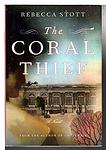
1. The Coral Thief
Set in post-Napoleonic Paris, this historical novel weaves a tale of intrigue, science, and romance through the eyes of a young medical student, Daniel Connor. Upon his arrival in the city, Daniel's life takes an unexpected turn when he encounters a mysterious and alluring woman who steals his precious coral specimens. As he navigates the vibrant streets and intellectual salons of Paris, Daniel becomes embroiled in a world of espionage and revolutionary ideas, challenging his beliefs and leading him on a quest for truth and self-discovery amidst the backdrop of a city on the brink of transformation.
-
2. The Incomparable Christ
The Incomparable Christ: Exploring the Life and Impact of Jesus Christ

The book delves into the multifaceted life and enduring legacy of Jesus Christ, exploring his profound impact on history, culture, and religion. Through a blend of historical analysis and theological insight, it examines how Jesus has been perceived and interpreted across different eras and societies. The narrative weaves together various perspectives, from early Christian writings to contemporary reflections, illustrating the diverse ways in which Jesus has inspired and challenged individuals and communities throughout the centuries. The work invites readers to consider the timeless relevance of Jesus' teachings and the transformative power of his message.
Purchase from Bookshop.org -
3. Darwin's Ghosts
The Secret History of Evolution
Spurred by a mid-19th-century naturalist’s effort to acknowledge the thinkers who came before him, this narrative uncovers a hidden lineage of evolutionary ideas stretching from Aristotle and Al-Jahiz to Buffon, Erasmus Darwin, Lamarck, Robert Chambers, and Wallace. Through vivid portraits of their experiments, arguments, and the risks of heresy and censorship they faced, it shows how scattered insights about transformation, adaptation, and the struggle for existence slowly converged into a new understanding of life’s history.