Murray Bookchin
Murray Bookchin was an American social theorist, author, and philosopher known for his work in ecology, anarchism, and social theory. He was a pioneer in the field of social ecology and a prominent advocate for libertarian municipalism.
Books
This list of books are ONLY the books that have been ranked on the lists that are aggregated on this site. This is not a comprehensive list of all books by this author.
-
1. The Spanish Anarchists
The Heroic Years, 1868-1936
This insightful work delves into the vibrant history of the anarchist movement in Spain, tracing its roots from the late 19th century to its significant role during the Spanish Civil War. It explores the ideological foundations, organizational structures, and the passionate individuals who championed the cause of a stateless society. The narrative captures the fervor and challenges faced by the anarchists as they sought to implement their vision of social revolution, highlighting both their achievements and the internal and external obstacles that ultimately led to their decline. Through a detailed examination of events and personalities, the book offers a comprehensive understanding of a pivotal period in Spanish history and the enduring legacy of anarchist thought.
-
2. The Ecology Of Freedom
The Emergence and Dissolution of Hierarchy
This influential work explores the intricate relationship between ecological and social issues, arguing that the domination of nature stems from the hierarchical structures within human societies. It delves into the historical evolution of these hierarchies, from ancient civilizations to modern industrial societies, and proposes a vision of a decentralized, ecological society where human communities live in harmony with the natural world. By challenging conventional notions of freedom and progress, it offers a compelling critique of contemporary social and environmental problems, advocating for a more egalitarian and sustainable future.
-
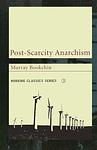
3. Post Scarcity Anarchism
None
This influential work explores the potential for a society that transcends the limitations of scarcity through technological advancements and ecological harmony. It envisions a world where resources are abundant and shared equitably, allowing for the dissolution of hierarchical structures and the emergence of a decentralized, cooperative society. The text critiques traditional capitalist and socialist systems, advocating for a new form of anarchism that emphasizes community, direct democracy, and ecological sustainability. It challenges readers to rethink the relationship between humanity and nature, urging a transformation towards a more liberated and egalitarian future.
-
5. The Next Revolution
Popular Assemblies and the Promise of Direct Democracy

Argues that ecological destruction, social inequality, and political domination flow from hierarchical, capitalist, and statist institutions and must be overcome by building direct, face-to-face democracy at the municipal level; it outlines a strategy of creating popular assemblies and confederal networks—rooted in social-ecological principles and communal responsibility—to displace both market capitalism and authoritarian socialism with decentralized, participatory self-government and collective stewardship of nature.
Purchase from Bookshop.org