John Julius Norwich
John Julius Norwich was a British historian, travel writer, and television personality known for his works on the history of Venice, Byzantium, and the Mediterranean. He was also a prominent broadcaster and served as the chairman of the Venice in Peril Fund.
Books
This list of books are ONLY the books that have been ranked on the lists that are aggregated on this site. This is not a comprehensive list of all books by this author.
-
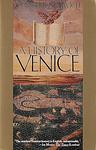
1. A History Of Venice
The Rise to Empire
This comprehensive narrative chronicles the rise and fall of one of the world's most captivating cities, tracing its evolution from a humble lagoon settlement to a dominant maritime empire. The book delves into the intricate political, economic, and cultural tapestry that defined Venice over the centuries, highlighting its strategic prowess, artistic achievements, and complex relationships with neighboring powers. Through vivid storytelling and meticulous research, it captures the essence of Venice's unique identity and enduring legacy, offering a rich tapestry of historical events and influential figures that shaped its destiny.
-
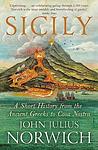
2. Sicily
A Short History from the Ancient Greeks to Cosa Nostra
This captivating historical narrative delves into the rich and tumultuous history of a Mediterranean island that has been a crossroads of civilizations for centuries. The story unfolds through a tapestry of conquests, from the ancient Greeks and Romans to the Arabs, Normans, and beyond, each leaving an indelible mark on the island's culture and architecture. The narrative paints a vivid picture of the island's vibrant cities, diverse peoples, and the complex interplay of power, religion, and art that has shaped its unique identity. Through engaging storytelling, the book offers a comprehensive exploration of the island's past, highlighting its significance in the broader context of European and Mediterranean history.
-
3. A History Of France
From Gaul to de Gaulle

This captivating narrative offers a sweeping overview of France's rich and tumultuous history, from its early beginnings to the modern era. It delves into the lives of influential figures, the rise and fall of dynasties, and the cultural and political transformations that have shaped the nation. With a blend of insightful analysis and engaging storytelling, the book paints a vivid picture of France's evolution, highlighting its pivotal moments and enduring legacy in the broader context of European history.
Purchase from Bookshop.org -
4. The Twelve Days Of Christmas [Correspondence]
Correspondence
A comedic epistolary tale unfolds through a series of increasingly exasperated letters from a woman to her suitor as she receives the notorious seasonal gifts—beginning with a partridge and escalating to flocks of birds, maids, musicians, and lords—turning courtship into chaos; the mounting deliveries overwhelm her home, enrage neighbors, draw in police and lawyers, and transform initial delight into a wry, weary plea for sanity.
Purchase from Bookshop.org -
5. Byzantium
The Early Centuries
A sweeping narrative of the Eastern Roman Empire from the founding of the new imperial capital to its fall in 1453, charting a millennium of emperors, court intrigue, theological conflicts, and wars against Persians, Arabs, Crusaders, and Ottomans. It illuminates the empire’s sophisticated administration, unrivaled diplomacy, and dazzling cultural achievements in art, architecture, and theology, while showing how it preserved classical learning and shaped medieval Europe and the Orthodox world. Vivid portraits and brisk storytelling bring to life saints, schemers, generals, and monarchs in a richly textured chronicle of survival and transformation.
Purchase from Bookshop.org -
6. A Short History Of Byzantium
A concise, fast-paced account of the Byzantine Empire from the founding of Constantinople in 330 to its fall in 1453, this narrative blends political drama, military campaigns, and religious controversies into a coherent whole. It profiles notable rulers and dynasties, explores iconoclasm, the schism with the West, and the impact of the Crusades, and charts shifting alliances with Latin, Slavic, and Islamic powers. Alongside court intrigue and diplomatic maneuvering, it highlights artistic brilliance, legal and administrative innovations, and the empire’s remarkable resilience leading up to its eventual decline and conquest.
Purchase from Bookshop.org -
7. The Normans In Sicily
The Normans in the South 1016-1130 and the Kingdom in the Sun 1130-1194
Traces how Norman adventurers forged a powerful realm in southern Italy and Sicily from the 11th to 12th centuries, following the rise of the Hauteville dynasty—from Robert Guiscard and Roger I to the cosmopolitan reign of Roger II and his successors. It explores warfare, diplomacy, and the interplay of Latin, Greek, and Arab cultures, highlighting innovations in administration, law, and architecture that made the kingdom a model of medieval pluralism. The narrative also charts court intrigue, papal and Byzantine rivalries, and the realm’s eventual weakening and transfer to the Hohenstaufens.
-
8. The Popes
A History
A concise, panoramic history of the papacy tracing its development from the early Christian bishops through the Middle Ages, the Avignon exile and Renaissance popes to the upheavals of the Reformation and the reshaping of the office in the modern era; blending political and religious narrative, it profiles the personalities, intrigues, corruption and reform that have shaped successive pontificates and explains how the institution adapted to shifting secular powers, cultural change and internal challenges over two millennia.
Purchase from Bookshop.org