Niklas Luhmann
Niklas Luhmann was a prominent German sociologist, philosopher, and social theorist known for his groundbreaking work in systems theory. He developed a comprehensive theory of social systems, emphasizing the complexity and self-referential nature of social structures. Luhmann's work has had a significant impact on sociology, communication studies, and organizational theory.
Books
This list of books are ONLY the books that have been ranked on the lists that are aggregated on this site. This is not a comprehensive list of all books by this author.
-
1. Die Gesellschaft Der Gesellschaft
The Society of Society
This seminal work delves into the intricate structures and dynamics of modern society through the lens of systems theory. It explores how society is a complex network of interrelated systems, each with its own distinct functions and communications. The book challenges traditional sociological perspectives by proposing that society cannot be understood merely through individual actions or institutions but rather as an autonomous system that operates through self-referential communication processes. It offers a profound analysis of how these systems evolve, adapt, and maintain stability amidst constant change, providing a comprehensive framework for understanding the multifaceted nature of social interactions and institutions.
The 8294th Greatest Book of All TimePurchase from Amazon -
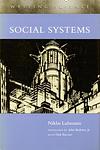
2. Social Systems
This book delves into the intricate architecture of social systems, offering a comprehensive framework for understanding how societies function and evolve. It explores the concept of autopoiesis, where systems are self-producing and maintain their boundaries through communication processes. The work challenges traditional views by emphasizing the importance of observing systems from within, rather than from an external perspective. By focusing on the dynamics of communication, it provides insights into the complex interplay between different societal subsystems, such as politics, law, and economy, and how they contribute to the stability and change within the broader social fabric.
Purchase from Bookshop.org -
3. The Reality Of The Mass Media
A Sociological Theory of Communication
This insightful work delves into the intricate relationship between society and the mass media, exploring how media shapes and constructs reality rather than merely reflecting it. The book argues that media operates as a self-referential system, influencing public perception and societal norms through selective reporting and framing. By examining the mechanisms of communication and the role of media in modern society, it highlights the complex interplay between information dissemination and social structures, ultimately questioning the objectivity and neutrality of media narratives.
Purchase from Bookshop.org -
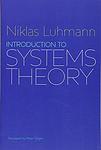
4. Introduction To Systems Theory
This book delves into the intricate world of systems theory, offering a comprehensive exploration of how complex systems function and interact within society. It presents a unique perspective on understanding social systems as self-referential entities that operate through communication, rather than mere collections of individuals or actions. The text challenges traditional views by emphasizing the autonomy and operational closure of systems, while also addressing how they adapt and evolve in response to environmental changes. Through a detailed analysis, it provides readers with a new lens to view the interconnectedness and dynamics of modern social structures.
Purchase from Bookshop.org -
5. Essays On Self Reference

A collection of essays that develops a systems-theoretical account of how social systems operate reflexively by observing and reproducing themselves through communication, linking autopoiesis, second-order observation, and constructivist epistemology to show how paradox and contingency are organized in modern society. Moving from conceptual foundations to examples in law, science, and organizations, it argues that meaning emerges from recursive operations that generate and stabilize structures through self-descriptions and functional differentiation despite inherent contradictions and complexity.
Purchase from Bookshop.org