René Girard
René Girard was a French historian, literary critic, and philosopher of social science whose work belongs to the tradition of anthropological philosophy. He is best known for his theory of mimetic desire, which suggests that human behavior is based on imitation, leading to rivalry and conflict. Girard's ideas have influenced a wide range of fields, including literary criticism, anthropology, theology, and psychology.
Books
This list of books are ONLY the books that have been ranked on the lists that are aggregated on this site. This is not a comprehensive list of all books by this author.
-
1. Je Vois Satan Tomber Comme L'éclair
La solution des énigmes du désir humain

This thought-provoking work delves into the intricate dynamics of human behavior, exploring the roots of violence and the mechanisms of scapegoating within societies. It presents a compelling analysis of how mimetic desire, the tendency to imitate others, leads to rivalry and conflict, ultimately resulting in the need for a scapegoat to restore harmony. The narrative draws on biblical texts and historical events to illustrate how these patterns have persisted throughout history, offering a profound critique of human nature and the potential for redemption through understanding and breaking free from these destructive cycles.
Purchase from Bookshop.org -
2. Des Choses Cachées Depuis La Fondation Du Monde
Recherches avec Jean-Michel Oughourlian et Guy Lefort
This profound work delves into the intricate mechanisms of human desire, violence, and culture through the lens of mimetic theory. It explores how imitation shapes human behavior, leading to rivalry and conflict, and examines the role of scapegoating in maintaining social order. The book offers a compelling analysis of religious texts and myths, revealing the hidden truths about human nature and the foundational structures of society. Through a synthesis of anthropology, psychology, and theology, it challenges readers to reconsider the origins of violence and the potential for peace.
Purchase from Bookshop.org -
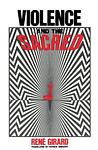
3. Violence And The Sacred
This book explores the intricate relationship between violence and the sacred, delving into the role of mimetic desire in human conflict and the mechanisms societies use to channel and contain violence. It examines how rituals and myths serve as societal tools to manage aggression, often through the scapegoating process, which temporarily restores harmony by projecting communal tensions onto a sacrificial victim. The work offers a profound analysis of how these dynamics have shaped cultural and religious practices throughout history, providing a lens to understand the persistent presence of violence in human societies.
Purchase from Bookshop.org -
4. Leonard Cohen
Leonard Norman Cohen (September 21, 1934 – November 7, 2016) was a Canadian songwriter, singer, poet, and novelist. Themes commonly explored throughout his work include faith and mortality, isolation and depression, betrayal and redemption, social and political conflict, and sexual and romantic love, desire, regret, and loss. He was inducted into the Canadian Music Hall of Fame, the Canadian Songwriters Hall of Fame, and the Rock and Roll Hall of Fame. He was invested as a Companion of the Order of Canada, the nation's highest civilian honour. In 2011, he received one of the Prince of Asturias Awards for literature and the ninth Glenn Gould Prize. In 2023, Rolling Stone named Cohen the 103rd-greatest singer. Cohen pursued a career as a poet and novelist during the 1950s and early 1960s, and did not begin a music career until 1966. His first album, Songs of Leonard Cohen (1967), was followed by three more albums of folk music: Songs from a Room (1969), Songs of Love and Hate (1971) and New Skin for the Old Ceremony (1974). His 1977 record Death of a Ladies' Man, co-written and produced by Phil Spector, was a move away from Cohen's previous minimalist sound. In 1979, Cohen returned with the more traditional Recent Songs, which blended his acoustic style with jazz, East Asian, and Mediterranean influences. Cohen's most famous song, "Hallelujah", was released on his seventh album, Various Positions (1984). I'm Your Man in 1988 marked Cohen's turn to synthesized productions. In 1992, Cohen released its follow-up, The Future, which had dark lyrics and references to political and social unrest. Cohen returned to music in 2001 with the release of Ten New Songs, a major hit in Canada and Europe. His eleventh album, Dear Heather, followed in 2004. In 2005, Cohen discovered that his manager had stolen most of his money and sold his publishing rights, prompting a return to touring to recoup his losses. Following a successful string of tours between 2008 and 2013, he released three albums in the final years of his life: Old Ideas (2012), Popular Problems (2014), and You Want It Darker (2016), the last of which was released three weeks before his death. His fifteenth studio album, Thanks for the Dance, was released in November 2019.
Purchase from Bookshop.org -
5. All Desire Is A Desire For Being
This book delves into the intricate dynamics of human desire, exploring how our wants and aspirations are often shaped by the desires of others. It posits that individuals are not driven by innate desires but rather by mimetic desires, where they imitate the desires of those around them. This imitation leads to rivalry and conflict, as people compete for the same objects or status. The work further examines the implications of this theory on human relationships, societal structures, and cultural phenomena, offering a profound insight into the nature of human behavior and the underlying forces that drive our actions.
Purchase from Bookshop.org -
6. Deceit, Desire And The Novel
Self and Other in Literary Structure
This seminal work explores the intricate dynamics of human desire through the lens of literature, proposing that our desires are not innate but rather imitated from others. By analyzing classic novels, the text unveils the concept of "mimetic desire," where individuals unconsciously emulate the desires of their models, leading to rivalry and conflict. This imitation creates a triangular relationship between the subject, the object, and the model, revealing the underlying patterns of human behavior and social interaction. The book delves into the psychological and philosophical implications of this theory, offering profound insights into the nature of desire and its impact on human relationships.
Purchase from Bookshop.org -
7. Syndabocken
This book delves into the intricate mechanisms of scapegoating and the role it plays in human societies. It explores the concept of mimetic desire, where individuals imitate the desires of others, leading to rivalry and conflict. To resolve these tensions, communities often resort to identifying a scapegoat, an innocent victim blamed for the collective discord. Through a blend of literary analysis, anthropology, and philosophy, the book examines historical and cultural examples to illustrate how scapegoating serves as a means of restoring social harmony, albeit temporarily, by channeling communal aggression onto a single target.
-
8. City Of Darkness
Set against the backdrop of a sprawling urban landscape, this gripping narrative delves into the lives of individuals caught in a web of societal decay and moral ambiguity. As the city teeters on the brink of chaos, the characters grapple with their own inner demons, navigating a world where power struggles and existential crises intertwine. Through a series of interconnected stories, the book explores themes of identity, redemption, and the human capacity for both destruction and hope, painting a vivid portrait of a metropolis on the edge.
-
9. White Out
Purchase from Bookshop.org -
10. A Theatre Of Envy
A close reading of Shakespearean drama through the lens of mimetic desire, arguing that human longing is fundamentally imitative so that shared desires generate rivalry which escalates into social crises and scapegoating; by examining comedies and tragedies alike, the book shows how theatre both stages and clarifies the mechanisms by which communities channel violence onto victims to restore order, offering a broader theory of how sacrifice, imitation, and collective violence underlie cultural cohesion.
Purchase from Bookshop.org