Paul Edward Gottfried
Paul Edward Gottfried is an American paleoconservative political philosopher, historian, and author known for his critiques of modern liberalism and his work on the intellectual history of conservatism. He has written extensively on topics related to political theory, culture, and history.
Books
This list of books are ONLY the books that have been ranked on the lists that are aggregated on this site. This is not a comprehensive list of all books by this author.
-
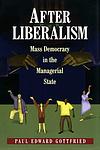
1. After Liberalism
Mass Democracy in the Managerial State
This thought-provoking work delves into the transformation of Western political landscapes, critiquing the decline of classical liberalism and the rise of managerial states. It examines how modern liberalism has shifted from its roots, evolving into a system that prioritizes bureaucratic control and social engineering over individual freedoms and traditional values. The narrative explores the implications of this shift on cultural identity, political discourse, and societal norms, offering a critical perspective on the consequences of abandoning foundational liberal principles in favor of expansive governmental oversight.
Purchase from Bookshop.org -
2. The Strange Death Of Marxism
The European Left in the New Millennium

A critical analysis of the contemporary European Left, arguing that classical class-based Marxism has largely faded while a post-Marxist, culturally focused politics—organized around antifascism, multiculturalism, gender, and identity—has risen to dominance in alliance with administrative elites and global capitalism. Surveying developments across several European countries and contrasts with the United States, it contends that the Right often misdiagnoses its opponent as economically socialist, missing that its real power lies in moral-cultural hegemony, memory politics, and managerial institutions rather than traditional Marxist economics.
Purchase from Bookshop.org -
3. Multiculturalism And The Politics Of Guilt
Toward a Secular Theocracy
This work argues that in late-modern Western democracies, a quasi-religious ethic of guilt and therapeutic politics elevates multiculturalism into a state ideology, empowering bureaucracies and courts to manage society through anti-discrimination regimes and speech controls. It contends that this moral framework delegitimizes historical majority cultures, rewards victimhood narratives, and narrows permissible debate by branding dissent as intolerance. The result is an expansive administrative state, a conformist public culture, and a redefined citizenship grounded more in managed identities than shared traditions.
Purchase from Bookshop.org