Paul Klee
Paul Klee was a Swiss-born painter and graphic artist whose work is associated with various movements, including Expressionism, Cubism, and Surrealism. He is known for his highly individual style, which was influenced by his explorations of color theory and his experiences in the Bauhaus school of art and architecture.
Books
This list of books are ONLY the books that have been ranked on the lists that are aggregated on this site. This is not a comprehensive list of all books by this author.
-
1. The Paul Klee Notebooks
The Thinking Eye

This comprehensive collection delves into the artistic theories and practices of a pioneering modernist painter, offering an insightful exploration of his creative process and philosophical musings. Through a series of essays, sketches, and diagrams, the work reveals the intricate relationship between form, color, and emotion, providing a profound understanding of the artist's innovative approach to visual expression. It serves as both a practical guide for aspiring artists and a theoretical framework for art enthusiasts, capturing the essence of a visionary mind that sought to transcend traditional boundaries and redefine the language of art.
-
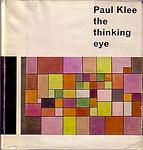
2. The Thinking Eye
The Notebooks of Paul Klee
This insightful work delves into the intricate relationship between art and perception, exploring how visual experiences shape our understanding of the world. Through a series of essays and reflections, the text offers a profound examination of the creative process, emphasizing the importance of seeing beyond the surface to uncover deeper meanings. It challenges readers to reconsider the way they perceive art, encouraging a more intuitive and emotional engagement with visual stimuli. The book serves as both a philosophical treatise and a practical guide for artists and art enthusiasts seeking to deepen their appreciation and comprehension of artistic expression.
Purchase from Bookshop.org -
3. On Modern Art
An insightful, concise exploration of the principles behind twentieth-century visual art that combines practical teaching with philosophical reflection. It emphasizes the importance of observing nature, the expressive potential of line, color, and form, and the balance between spontaneity and disciplined study. The work argues that modern art arises from rigorous attention to structure, rhythm, and the artist’s inner vision, offering examples and pedagogical guidance aimed at training perception and liberating creative imagination.