Slavoj Žižek
Slavoj Žižek is a Slovenian philosopher and cultural critic known for his work on psychoanalysis, Marxism, critical theory, and film criticism. He is a prolific author and a prominent public intellectual, often engaging with contemporary political and cultural issues.
Books
This list of books are ONLY the books that have been ranked on the lists that are aggregated on this site. This is not a comprehensive list of all books by this author.
-
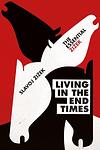
1. Living In The End Times
In this thought-provoking work, the author delves into the complexities of contemporary global crises, drawing parallels between the current socio-political landscape and the biblical notion of "end times." Through a critical examination of capitalism, environmental degradation, and ideological conflicts, the narrative explores how these elements contribute to a sense of impending doom. The author argues that society is trapped in a cycle of denial and false solutions, urging readers to confront the underlying issues with radical change and a reimagining of societal structures. The book challenges conventional wisdom and encourages a deeper understanding of the forces shaping our world.
Purchase from Bookshop.org -
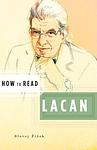
2. How To Read Lacan
Essential Thinkers
In this insightful exploration of psychoanalytic theory, the author delves into the complex ideas of Jacques Lacan, unraveling his intricate concepts with clarity and wit. The book serves as a guide to understanding Lacan's challenging theories on the unconscious, desire, and the symbolic order, making them accessible to both newcomers and seasoned readers of psychoanalysis. Through engaging examples and thought-provoking analysis, the author illuminates Lacan's relevance to contemporary culture, philosophy, and politics, offering a fresh perspective on how his ideas can be applied to understand the human psyche and societal structures.
Purchase from Bookshop.org -
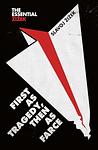
3. First As Tragedy, Then As Farce
The Double Death of Neoliberalism and the Idea of Communism
In this thought-provoking exploration of contemporary society, the author delves into the recurring patterns of history, examining how major global events often repeat themselves first as a tragedy and then as a farce. Through a critical lens, the book analyzes the failures of capitalism and the ideological constructs that perpetuate them, drawing parallels between past and present crises. By dissecting the cultural and political landscape, the author challenges readers to reconsider the narratives that shape our understanding of the world and to envision alternative futures beyond the constraints of prevailing systems.
Purchase from Bookshop.org -
4. The Sublime Object Of Ideology
This thought-provoking work delves into the intricate relationship between ideology and the unconscious, exploring how ideological structures shape our perceptions and desires. By drawing on psychoanalytic theory, particularly the ideas of Jacques Lacan, it examines the ways in which ideology operates as a "sublime object," something that is both elusive and omnipresent in our daily lives. The book challenges readers to reconsider the nature of ideology, suggesting that it is not merely a set of beliefs or doctrines, but a fundamental component of our social reality that influences our actions and thoughts in profound ways.
Purchase from Bookshop.org -
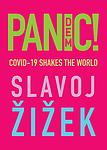
5. Pandemic! Covid 19 Shakes The World
In this thought-provoking exploration, the author delves into the multifaceted impacts of the COVID-19 pandemic on global society, examining how it has exposed and exacerbated existing socio-political and economic inequalities. Through a philosophical lens, the narrative critiques the responses of governments and institutions, while also contemplating the potential for transformative change in a post-pandemic world. The work challenges readers to reconsider notions of solidarity, community, and the role of technology in shaping our future, ultimately advocating for a more equitable and humane global order.
Purchase from Bookshop.org -
6. The Parallax View

This thought-provoking work delves into the complexities of human perception and ideology, exploring how the concept of parallax—an apparent shift in an object's position when viewed from different perspectives—can be applied to philosophical and cultural analysis. The author examines the interplay between reality and perception, arguing that our understanding of the world is shaped by the inherent contradictions and gaps within our viewpoints. Through a blend of psychoanalysis, critical theory, and cultural critique, the book challenges readers to reconsider the nature of truth and the role of ideology in shaping our understanding of the world.
Purchase from Bookshop.org -
7. Like A Thief In Broad Daylight
Power in the Era of Post-Humanity
This thought-provoking work delves into the complexities of our contemporary digital age, exploring how technology and capitalism intertwine to shape our social and political landscapes. It critically examines the paradoxes of modernity, where advancements in technology promise liberation yet often lead to new forms of control and surveillance. Through a series of insightful essays, the book challenges readers to question the ethical implications of technological progress and the societal shifts it engenders, urging a reevaluation of freedom, privacy, and the human condition in an era dominated by digital innovation.
Purchase from Bookshop.org -
8. Hegel In A Wired Brain
The Idea of a Post-Humanist Philosophy
This thought-provoking exploration delves into the intersection of Hegelian philosophy and contemporary neuroscience, examining how advancements in brain-computer interfaces challenge our understanding of consciousness, identity, and freedom. By juxtaposing Hegel's dialectical method with the implications of a "wired brain," the narrative questions the essence of human subjectivity in an era where technology increasingly mediates our mental processes. The book invites readers to reconsider the boundaries between mind and machine, suggesting that the integration of technology into our cognitive functions could redefine the very nature of human experience.
Purchase from Bookshop.org -
9. Enjoy Your Symptom!
Jacques Lacan in Hollywood and Out
This thought-provoking work delves into the intricate relationship between psychoanalysis, popular culture, and ideology, offering a unique perspective on how our unconscious desires shape our everyday experiences. Through a series of engaging essays, the author explores the intersection of Lacanian theory with various cultural phenomena, from cinema to literature, revealing the hidden structures that govern our perceptions and actions. By dissecting the symbolic and imaginary dimensions of our lives, the book challenges readers to confront the underlying fantasies that drive societal norms and personal identities, ultimately encouraging a deeper understanding of the self and the world.
Purchase from Bookshop.org -
Purchase from Bookshop.org
-
11. The Relevance Of The Communist Manifesto
In this insightful exploration, the author revisits the enduring significance of a seminal political text, arguing for its continued relevance in contemporary society. Through a critical lens, the work examines the manifesto's core ideas, highlighting their applicability to modern socio-economic challenges and the persistent inequalities of the capitalist system. By drawing parallels between historical contexts and today's global landscape, the narrative underscores the manifesto's potential to inspire transformative thought and action, urging readers to reconsider its implications in light of current political and economic dynamics.
Purchase from Bookshop.org -
12. Violence
Six Sideways Reflections
In this thought-provoking exploration, the author delves into the multifaceted nature of violence, challenging conventional perceptions by distinguishing between subjective, objective, and systemic forms. The narrative examines how violence is not merely an overt act but is deeply embedded in the structures of society, often manifesting through language, ideology, and economic systems. By dissecting the hidden mechanisms that perpetuate violence, the author urges readers to reconsider the underlying causes and implications, ultimately advocating for a more nuanced understanding of how violence shapes human interactions and societal norms.
Purchase from Bookshop.org -
13. The Plague Of Fantasies
Verso Radical Thinkers
This thought-provoking work delves into the intricate relationship between ideology and fantasy, exploring how fantasies shape our perceptions of reality and influence our social and political landscapes. Through a series of engaging analyses, it examines the ways in which fantasies serve as a buffer against the harsh truths of reality, allowing individuals to maintain a sense of coherence and meaning in their lives. The book challenges readers to confront the underlying fantasies that sustain ideological beliefs, encouraging a deeper understanding of the mechanisms that drive human behavior and societal structures.
-
14. Die Bösen Geister Des Himmlischen Bereichs
In this thought-provoking exploration, the author delves into the intricate dynamics of ideology and belief systems that shape our perception of reality. Through a critical lens, the narrative examines how these "evil spirits" of the celestial realm influence human behavior and societal structures, challenging readers to question the underlying assumptions that govern their worldviews. By weaving together philosophical insights and cultural critiques, the book invites readers to confront the often-unseen forces that manipulate consciousness and to consider the possibility of liberation through awareness and critical thinking.
-
15. ärger Im Paradies
From the End of History to the End of Capitalism
In this thought-provoking exploration, the author delves into the paradoxes and contradictions of contemporary capitalism, challenging the notion of a utopian society free from conflict and inequality. Through a critical lens, the narrative examines the underlying tensions and discontent that persist even in seemingly prosperous environments, questioning the sustainability of current socio-economic structures. By dissecting the illusions of paradise, the work invites readers to reconsider the foundations of modern society and the potential for genuine change.
-
16. Zizek Om Lacan
The Zizek Dictionary
This insightful work delves into the intricate relationship between psychoanalysis and philosophy, exploring the profound influence of Lacanian theory on contemporary thought. Through a series of engaging essays, the author examines the complexities of the human psyche, the nature of desire, and the symbolic structures that shape our reality. By weaving together Lacan's revolutionary ideas with a critical analysis of culture, politics, and ideology, the book offers a compelling narrative that challenges conventional perspectives and invites readers to reconsider the underpinnings of their own beliefs and behaviors.
-
17. Njutandets Förvandlingar
In this thought-provoking exploration, the author delves into the complexities of human enjoyment and its transformation in contemporary society. By examining the intricate interplay between desire, ideology, and the socio-political landscape, the narrative unveils how modern capitalism manipulates and commodifies pleasure, leading to a paradoxical state where true satisfaction becomes elusive. Through a blend of psychoanalytic theory and cultural critique, the book challenges readers to reconsider their understanding of happiness and fulfillment in an era dominated by consumerism and digital distractions.
-
18. Ideologins Sublima Objekt
This book delves into the intricate relationship between ideology and the unconscious, exploring how ideologies shape our perceptions and desires. It examines the concept of the "sublime object," which represents the unattainable ideal that drives human motivation and belief systems. Through a blend of psychoanalytic theory and philosophical discourse, the text unravels the ways in which ideology operates beneath the surface of everyday life, influencing our actions and thoughts in profound ways. The work challenges readers to question the underlying structures that govern societal norms and personal beliefs, offering a critical lens through which to view the world.
Purchase from Bookshop.org -
19. Heaven In Disorder
Living in the End Times
In this thought-provoking exploration, the author delves into the chaotic interplay between ideology, politics, and culture in contemporary society. Through a series of essays, the narrative examines how global crises, from pandemics to political upheavals, reveal the underlying disorder within the structures we often perceive as stable. By dissecting the contradictions and paradoxes inherent in modern life, the work challenges readers to reconsider their understanding of freedom, democracy, and the potential for change in a world teetering on the edge of transformation.
Purchase from Bookshop.org -
20. žižek's Jokes
Did you hear the one about Hegel and negation?
A compact collection of political, ethnic, and bawdy jokes is curated and annotated to reveal the hidden mechanics of ideology and desire; each gag is unpacked through psychoanalytic and dialectical lenses to show how humor exposes uncomfortable truths about power, belief, sexuality, and everyday life, with special attention to the post-socialist Balkans. Part joke book and part philosophical primer, it argues that laughter offers a privileged route to truth and a subversive critique of common sense.
Purchase from Bookshop.org -
21. Tarkovski
A provocative reading that uses Lacanian psychoanalysis and Hegelian-Marxist critique to trace how a major filmmaker’s work confronts time, memory, and spiritual longing; the book analyzes key films to show how their dreamlike temporality, ethical dilemmas, and sacramental aesthetics expose and problematize ideological fantasies, revealing cinema’s capacity to both sustain and disrupt social reality.
-
22. Freedom
A provocative interrogation of what freedom means today, arguing that the apparent liberties of liberal democracy, consumer choice, and digital networks often mask new forms of constraint and ideological fantasy; using psychoanalytic and Marxist tools, the book shows how true emancipation requires confronting underlying antagonisms, collective responsibility, and the paradoxical necessity of limits and political struggle rather than accepting comfort, neutral tolerance, or mere market options.
Purchase from Bookshop.org -
23. Against Progress
Purchase from Bookshop.org -
24. Iraq
A sharp, provocative critique of the invasion as a symptom of Western ideological fantasies rather than a straightforward liberation, arguing that both imperial motives and simplistic leftist responses miss the conflict’s deeper dynamics. The book examines how the rhetoric of liberation conceals strategic interests, how toppling Saddam without a real democratic project risks empowering reactionary forces, and how the left must avoid romanticizing resistance or falling into moralistic anti-Americanism. Drawing on psychoanalytic, philosophical, and political analysis, it urges a rethinking of solidarity and the need for a genuinely emancipatory political strategy that confronts imperial violence, local sectarianism, and global power structures.
Purchase from Bookshop.org -
25. God In Pain
Inversions of Apocalypse
Combining psychoanalytic, Hegelian and Marxist critique, the book argues that true ethical and political engagement requires confronting the idea of a suffering deity rather than consoling transcendence: divine impotence revealed in the crucifix exposes ideological fantasies that mask human violence and exclusion, and prompts a radical solidarity with the truly oppressed. Through readings of Christian theology, liturgy and apocalyptic motifs the author contends that acknowledging divine vulnerability overturns both comforting theology and reductive secularism, opening a space for a materialist theology that rethinks sacrifice, community and political responsibility.
-
26. The Puppet And The Dwarf
The Perverse Core of Christianity
A provocative meditation that reads Christianity through Lacanian psychoanalysis and philosophical critique to argue that its radical core contains resources for political ethics: it challenges liberal multiculturalism and passive tolerance, exposes how ideological fantasies sustain social order, and insists on a universal emancipatory demand that cannot be accommodated by mere cultural relativism. Through close readings of theology, Hegelian dialectics, and contemporary politics, the work reframes faith as an act that ruptures complacent symbolic structures and confronts the necessity of sacrifice, responsibility, and truth in the pursuit of genuine collective transformation.
Purchase from Bookshop.org -
27. Looking Awry
An Introduction to Jacques Lacan through Popular Culture
A lively, provocative introduction to Lacanian psychoanalytic theory through readings of popular culture and film, arguing that everyday ideology is structured like a symptom: misrecognition, fantasy, and the split subject shape how we perceive reality. Using analyses of cinema, literature and political spectacle, it shows how desire, the unconscious and symbolic structures produce social meanings and sustain ideological fantasies, exposing how 'normal' cultural forms conceal underlying antagonisms and contradictions.
Purchase from Bookshop.org -
28. In Defense Of Lost Causes
Through readings of history, film and pop culture, the book defends the value of “lost causes” — radical emancipatory projects written off as impossible — arguing they are necessary critical tools for confronting the ideological dead ends of global capitalism and political cynicism. Drawing on Hegelian dialectics and Lacanian psychoanalysis, it diagnoses how liberalism neutralizes transformative change, critiques contemporary left strategies of compromise and managerialism, and urges a renewed commitment to universalist political emancipation rather than mere pragmatic reform. Provocative examples and cultural analysis are used to show how the residues of failed utopias can illuminate paths to genuine collective transformation.
Purchase from Bookshop.org -
29. Event
A provocative exploration of the philosophical notion of the event as a disruptive occurrence that ruptures the existing symbolic order and inaugurates new truths, subjectivities, and political possibilities. Drawing on Hegelian, Lacanian and contemporary continental thought, the book distinguishes genuine transformative events from mere occurrences, analyzes how fidelity to an event rewrites the past and reconfigures communal bonds, and probes examples from politics, theology, art and everyday life to show how an event produces a change in structure rather than just in content.
-
30. Geweld
Six Sideways Reflections
A provocative collection of essays that reconceptualizes violence beyond individual acts to include systemic and symbolic forms, arguing that mainstream discourse fixates on visible perpetrators while obscuring the structural violence embedded in political, economic and ideological systems. Drawing on philosophy, psychoanalysis and contemporary events, it exposes ideological blind spots, critiques Western responses to terrorism and war, and urges a radical rethinking of how societies diagnose and respond to violence.
-
31. The Art Of The Ridiculous Sublime
On David Lynch's Lost Highway
A provocative, compact analysis uses Lacanian psychoanalysis and cultural theory to read David Lynch’s film as a site where identity, desire, and guilt are fractured, showing how surreal narrative disruptions, doubling, and violence expose underlying ideological fantasies; the book argues that the film’s oscillation between the ridiculous and the sublime reveals cinema’s capacity to confront the Real while masking social contradictions through aesthetic enjoyment.
-
32. Pandemic! 2
Chronicles of a Time Lost
A brisk, provocative meditation on how the COVID-19 crisis exposes the blind spots of contemporary politics, economy, and everyday life, arguing that the pandemic shatters familiar ideological fantasies and forces us to confront the contradictions of global capitalism, rising authoritarianism, and ecological neglect; blending cultural critique, philosophical reflection, and polemical examples, the book warns against both panic-driven scapegoating and naïve calls to "return to normal," while urging collective solidarity, a rethinking of public health and social safety nets, and imaginative political experimentation to prevent deeper social fragmentation after the emergency.
Purchase from Bookshop.org -
33. Absolute Recoil
Towards a New Foundation of Dialectical Materialism
This provocative work reads contemporary political violence and liberal responses through Hegelian and Lacanian frames, arguing that attempts to avoid antagonism via multicultural tolerance and guilt often reproduce the very antagonisms they seek to dissolve; it develops a theory of emancipatory negativity—a paradoxical act that undoes itself—to distinguish genuine revolutionary rupture from reactionary violence, and uses readings of recent events and cultural symptoms to show how ideology conceals the conditions for true universal emancipation.
Purchase from Bookshop.org -
34. The Monstrosity Of Christ
Paradox or Dialectic?
A provocative theological-philosophical study that recasts Christ as a monstrous paradox whose incarnation, suffering, and resurrection rupture conventional categories of ethics and politics. Drawing on Hegelian dialectics and Lacanian psychoanalysis, the book reads Christian doctrine—especially Pauline universality and the kenotic motif—as an intervention that exposes the limits of liberal tolerance, challenges fixed identities and national loyalties, and forces confrontation with the excess, violence, and exception entailed by any claim to universality. It insists on a radical, unsettling form of Christian universality and responsibility that troubles both believers and secular critics.
-
35. Everything You Always Wanted To Know About Lacan
But Were Afraid to Ask
A brisk, witty introduction that makes Lacanian psychoanalysis accessible by reading its key notions—the Real, the Symbolic and Imaginary orders, objet petit a, and jouissance—through film, literature and everyday examples; it links Lacan to Hegelian and Marxist trajectories to show how desire, fantasy and ideology shape subjective experience and social life, using pop-cultural case studies to both demystify technical concepts and argue that psychoanalysis offers a powerful lens for cultural and political critique.
-
36. The Fragile Absolute
Or, Why Is the Christian Legacy Worth Fighting For?
A provocative theological-philosophical meditation that defends the radical, paradoxical core of Christianity as a resource for political and ethical commitment, arguing that the true absolute is fragile because it depends on contingent acts of love and sacrifice rather than metaphysical certainty. Drawing on Hegelian dialectics and Lacanian psychoanalysis, it critiques both secular liberal tolerance and religious fundamentalism and contends that Christianity’s universalism—the demand of self-emptying love and the sanctity of singular ethical acts—offers tools for rethinking justice, violence, and resistance to capitalist ideology.
Purchase from Bookshop.org -
37. On Belief
A provocative, theory-driven inquiry into the nature and social function of belief, arguing that belief is not simply acceptance of propositions but a subjective structure that both conceals and produces desire; through readings of religion, ideology and popular culture using Lacanian psychoanalysis and Hegelian-Marxist critique, the book shows how rituals, fantasies and cynical distance alike sustain communal ties and political attachments, while also isolating an emancipatory kernel in certain religious gestures that confront the void at the heart of subjectivity.
Purchase from Bookshop.org -
38. Opera's Second Death
A provocative collection of essays that reads opera through psychoanalysis and cultural theory to argue that its supposed demise masks a rebirth in altered form; by analyzing canonical works and their adaptations the book shows how opera stages desire, fantasy and collective ideological conflicts, revealing shifting modes of spectatorship, commodification, and political meaning in modern visual culture.