Giorgio Agamben
Giorgio Agamben is an Italian philosopher known for his work on political theory, aesthetics, and literature. He is particularly recognized for his concepts of 'homo sacer' and the 'state of exception,' which explore the intersections of law, power, and human life.
Books
This list of books are ONLY the books that have been ranked on the lists that are aggregated on this site. This is not a comprehensive list of all books by this author.
-
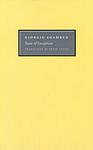
1. State Of Exception
Homo Sacer II, 1
In this thought-provoking exploration, the author delves into the concept of the "state of exception," a situation where governments suspend normal laws and rights in response to crises, effectively blurring the lines between law and political power. Drawing on historical and contemporary examples, the work examines how such states of exception have been used to justify extraordinary measures, often leading to the erosion of civil liberties and the expansion of executive power. The analysis challenges readers to reconsider the balance between security and freedom, urging a critical reflection on the implications of unchecked governmental authority in times of emergency.
The 17171st Greatest Book of All TimePurchase from Bookshop.org or Amazon -
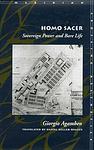
2. Homo Sacer
Il potere sovrano e la nuda vita
This philosophical work delves into the concept of sovereignty and its relationship with the notion of "bare life," exploring how individuals can be reduced to a state of existence devoid of political rights. It examines the historical and theoretical underpinnings of the sovereign's power to decide who can be excluded from the political community, drawing on examples from ancient Roman law to modern political systems. The text challenges traditional understandings of law, politics, and human rights, offering a profound critique of the mechanisms through which power is exercised and life is regulated in contemporary society.
The 17171st Greatest Book of All TimePurchase from Bookshop.org or Amazon -
3. Language And Death
The Place of Negativity

This philosophical exploration delves into the intricate relationship between language and mortality, examining how the act of speaking inherently carries the weight of death. The text investigates the paradoxical nature of language as both a means of communication and a reminder of human finitude, drawing on historical and philosophical contexts to illuminate the ways in which language shapes our understanding of existence. Through a critical analysis of metaphysical traditions, the work challenges readers to reconsider the fundamental connections between speech, silence, and the inevitable cessation of life.
Purchase from Bookshop.org -
4. First Philosophy Last Philosophy
This philosophical exploration delves into the intricate relationship between the origins and conclusions of philosophical thought, examining how foundational concepts shape and are reshaped by the ultimate questions of existence. Through a series of reflective essays, the work navigates the tension between beginning and end, offering a profound meditation on the cyclical nature of philosophical inquiry and the perpetual quest for understanding in the face of life's complexities.
Purchase from Bookshop.org -
5. The Man Without Content
This philosophical exploration delves into the intricate relationship between art and the artist, examining how modern society has transformed the role of the artist from a creator of beauty to a mere producer of content. It questions the commodification of art and the loss of genuine aesthetic experience, urging readers to reconsider the essence of artistic creation and its impact on human consciousness. Through a critical lens, the text challenges the reader to reflect on the cultural and existential implications of art's evolution in contemporary times.
Purchase from Bookshop.org -
6. Remnants Of Auschwitz
The Witness and the Archive
This profound exploration delves into the harrowing experiences of Holocaust survivors, focusing on the concept of the "Muselmann," a term used to describe those who reached the brink of human existence in concentration camps. Through philosophical inquiry, it examines the limits of human dignity, the nature of testimony, and the challenges of representing the inexpressible suffering endured by these individuals. By intertwining historical accounts with philosophical reflections, the work seeks to understand the ethical implications of witnessing and remembering such extreme human conditions, ultimately questioning the boundaries between life and death, humanity and inhumanity.
Purchase from Bookshop.org -
7. Barndom Och Historia
This philosophical exploration delves into the intricate relationship between childhood and history, examining how these concepts intersect and influence one another. Through a series of thought-provoking essays, the text challenges conventional understandings of time and identity, proposing that childhood is not merely a stage of life but a fundamental aspect of human experience that shapes historical consciousness. The work invites readers to reconsider the boundaries of historical narrative and the role of memory, suggesting that the innocence and potential of childhood offer a unique lens through which to view the unfolding of history.
-
8. Epidemie Als Politiek
A critical examination arguing that responses to the COVID-19 pandemic were used to institute a lasting state of exception that expands sovereign power and reduces citizens to ‘bare life.’ It claims that emergency public-health measures and the rhetoric of crisis normalized unprecedented restrictions on movement, assembly and ritual, subordinating political existence to biological survival and eroding legal and democratic norms. The work questions the unquestioned authority of scientific and political experts and warns of the long-term consequences for freedom, community and civic life.
Purchase from Bookshop.org