Francis Fukuyama
Francis Fukuyama is an American political scientist, political economist, and author, best known for his book 'The End of History and the Last Man,' which argued that the spread of liberal democracies might signal the endpoint of humanity's sociocultural evolution.
Books
This list of books are ONLY the books that have been ranked on the lists that are aggregated on this site. This is not a comprehensive list of all books by this author.
-
1. The End of History and the Last Man
This book presents a provocative exploration of the evolution of political systems and the role of liberal democracy in the global landscape. The author argues that the progression of history, as defined by the development of political and economic systems, has culminated in liberal democracy and free-market capitalism. This, he suggests, may represent the endpoint of mankind's ideological evolution and the 'end of history'. The book also discusses the concept of 'the last man' as a potential consequence of this endpoint, exploring the existential threat of a society of 'last men' devoid of ideological struggle and dominated by materialistic gratification.
The 3953rd Greatest Book of All TimePurchase from Bookshop.org or Amazon -
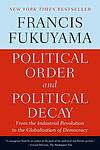
2. Political Order And Political Decay
From the Industrial Revolution to the Globalization of Democracy
The book explores the development and deterioration of political systems from the late 18th century to the present day, examining how states achieve and maintain political order. It delves into the complex interplay between institutions, political culture, and economic factors, highlighting the challenges of corruption, patronage, and the rule of law. Through comparative analysis of different countries and historical periods, the book provides insights into why some nations succeed in building stable, effective governments while others falter, emphasizing the importance of strong institutions and inclusive political systems for sustainable development.
The 9513th Greatest Book of All TimePurchase from Bookshop.org or Amazon -
3. Identity
The Demand for Dignity and the Politics of Resentment
In "Identity," the author delves into the complex and increasingly relevant issue of how the demand for recognition of one's identity has become a pivotal force in global politics. The book explores the concept of identity politics, tracing its origins from the philosophical ideas of the Enlightenment to its contemporary manifestations, which are often marked by divisive and polarizing debates. The author argues that the modern world's emphasis on individual rights and the recognition of diverse identities can both enrich societies and lead to conflicts. Through a detailed examination of historical and current events, the book offers insights into how identity politics impacts democracy and global stability, suggesting ways to acknowledge diverse identities while fostering unity and cooperation.
The 14834th Greatest Book of All TimePurchase from Amazon -
4. Our Posthuman Future
Consequences of the Biotechnology Revolution
"Our Posthuman Future" explores the potential social, political, and ethical implications of biotechnological advancements that could alter human nature itself. The book delves into the consequences of such technologies that may enable us to manipulate human traits and capabilities, raising critical questions about the essence of being human. It discusses the regulatory frameworks needed to govern these technologies, warning that without proper controls, we might face a future where genetic engineering and artificial enhancements create unprecedented inequalities and challenges to our fundamental human rights and concepts of democracy.
The 17175th Greatest Book of All TimePurchase from Amazon -
5. Liberalism And Its Discontents
In this insightful exploration, the author delves into the challenges and criticisms faced by liberal democracies in the modern era, examining the ideological and practical discontent that has emerged globally. The narrative dissects the roots of liberalism, tracing its evolution and the promises it holds, while also addressing the growing skepticism and backlash from both the left and right political spectrums. Through a balanced analysis, the book offers a nuanced understanding of the tensions between individual freedoms and collective responsibilities, ultimately advocating for a renewed commitment to the core principles of liberalism to navigate the complexities of contemporary society.
Purchase from Bookshop.org -
6. The Origins Of Political Order
From Prehuman Times to the French Revolution

This comprehensive exploration delves into the evolution of political systems from pre-human times to the French Revolution, examining how societies have developed complex structures of governance. It investigates the emergence of political institutions, the rule of law, and accountable government, while highlighting the interplay between warfare, religion, and economic factors in shaping political order. By analyzing historical patterns and drawing comparisons across different cultures, the narrative provides insights into the factors that contribute to the stability and adaptability of political systems, offering a nuanced understanding of the foundations of modern governance.
Purchase from Bookshop.org -
7. Japan Travel Guide
The book offers an insightful exploration into the vibrant culture, rich history, and stunning landscapes of Japan, providing travelers with a comprehensive guide to navigating the country's diverse regions. It delves into the unique blend of traditional and modern elements that define Japanese society, from the bustling streets of Tokyo to the serene temples of Kyoto. With practical tips on local customs, cuisine, and transportation, the guide equips readers with the knowledge needed to fully immerse themselves in the Japanese experience, ensuring a memorable and enriching journey.
-
8. Trust
The Social Virtues and the Creation of Prosperity
This work argues that social capital—especially trust—is a decisive foundation for economic prosperity and the ability to build large, efficient organizations. Comparing high-trust societies with low-trust ones, it shows how cultural norms shape corporate structures, entrepreneurial networks, and the extent of state involvement. Through case studies spanning the United States, Germany, Japan, China, Italy, and France, it explains why some economies more easily scale beyond family firms. It also warns that excessive individualism and eroding community norms can undermine prosperity, advocating policies that nurture civic virtues to sustain dynamic capitalism.
Purchase from Bookshop.org -
9. Sejarah Telah Berakhir
and the Last Man
Penulis berargumen bahwa dengan runtuhnya komunisme ideologi besar abad ke-20, demokrasi liberal berbasis pasar muncul sebagai titik akhir evolusi sistem politik, sehingga konflik ideologis besar telah mereda; namun ini bukan akhir peristiwa sejarah—dikemukakan pula bahaya kebosanan politik, kebutuhan manusia akan pengakuan, serta potensi kebangkitan nasionalisme, militerisme, atau ketidakadilan ekonomi yang dapat menggerogoti demokrasi, sehingga dibutuhkan institusi dan nilai yang kuat untuk menjaga dan memperbaiki tatanan liberal tersebut.
-
10. Das Ende Des Menschen
Argues that with the Cold War’s end the global spread of liberal democracy and market capitalism appears to mark the endpoint of humanity’s ideological evolution, yet this “end” is mixed: political liberalism may be the final form of government while deep human yearnings for recognition, status, and meaning persist. Drawing on Hegel and Nietzsche, the book warns that these unmet desires can produce nihilism, resentment, nationalism, or a complacent, pleasure-seeking “last man,” and that technological and social changes could create new threats even absent rival ideologies. Its central claim is that maintaining liberal democracy will require moral, civic, and institutional renewal to address inequalities and spiritual malaise that material prosperity alone cannot resolve.
Purchase from Bookshop.org -
11. La Fine Della Storia E L'ultimo Uomo
La tesi centrale sostiene che la vittoria del liberalismo democratico e del capitalismo di mercato dopo la Guerra Fredda rappresenti l'ultimo stadio dell'evoluzione ideologica, ponendo fine alle grandi alternative storiche come il comunismo; tuttavia l'autore avverte che questa supremazia non elimina le tensioni umane fondamentali—in particolare il desiderio di riconoscimento sociale—e che la pace politica potrebbe portare a stagnazione morale e conflitti di status, perciò la democrazia liberale deve confrontarsi con sfide interne (crisi identitarie, risentimenti economici) e rimanere vigile per evitare decadimento e nuovi autoritarismi.
Purchase from Bookshop.org