Ludwig von Mises
Ludwig von Mises was a prominent Austrian economist and a leading figure in the Austrian School of economic thought. He made significant contributions to economic theory, particularly in the areas of praxeology and the critique of socialism.
Books
This list of books are ONLY the books that have been ranked on the lists that are aggregated on this site. This is not a comprehensive list of all books by this author.
-
1. Bureaucracy
The Classic Analysis of the Nature, Causes, and Effects of Governmental Bureaucracy
"Bureaucracy" is a critical examination of the structure and function of bureaucracies in both the public and private sectors. The author argues that bureaucratic management, with its focus on rules and regulations, is not only inefficient but also stifles innovation and individual initiative. He further contends that these problems are inherent in the nature of bureaucracy itself and are not simply due to poor management or corruption. The book also explores the impact of bureaucracy on economics, politics, and society as a whole.
The 3517th Greatest Book of All TimePurchase from Bookshop.org or Amazon -
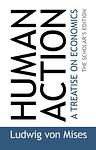
2. Human Action
A Treatise on Economics
The book is a comprehensive treatise on economics, presenting the case for a free-market economy based on the principles of praxeology, the study of human action. It argues that individual choices and actions, driven by subjective values and preferences, are the fundamental building blocks of economic phenomena. The author critiques central planning and socialism, asserting that only a system of voluntary exchanges in a free market can efficiently allocate resources and foster human prosperity. The work emphasizes the importance of understanding economic laws and the unintended consequences of government intervention.
The 4870th Greatest Book of All TimePurchase from Bookshop.org or Amazon -
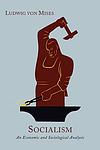
3. Socialism
An Economic and Sociological Analysis
This seminal work critically examines the economic and philosophical foundations of socialism, arguing that it is inherently flawed due to its inability to efficiently allocate resources and incentivize innovation. The text delves into the consequences of central planning, highlighting the challenges of calculating prices and managing production without a free market. It also explores the social and moral implications of collectivist ideologies, asserting that they undermine individual freedom and responsibility. Through a rigorous analysis, the book presents a compelling case for the superiority of capitalism in fostering prosperity and human progress.
Purchase from Bookshop.org -
4. Planned Chaos

A sharp critique of centralized economic planning and bureaucratic intervention, arguing that government controls, price manipulation, and collectivist policies produce shortages, inflation, misallocation of resources, and erosion of individual liberty, ultimately destabilizing society and paving the way to authoritarianism; the work defends free markets, private property, and individual freedom as the only reliable foundations for prosperity and social order.
Purchase from Bookshop.org -
5. Liberalismus
In the Classical Tradition
A concise defense of classical liberal principles arguing that individual liberty, private property, free markets, and limited government best secure prosperity and social order; it critiques socialism and interventionism as both morally problematic and economically unworkable—emphasizing the impossibility of rational economic calculation under central planning—and champions the rule of law, free trade, and voluntary cooperation as foundations for human flourishing.
Purchase from Bookshop.org