Karl Marx
Karl Marx was a German philosopher, economist, historian, sociologist, political theorist, journalist, and socialist revolutionary. He is best known for his works 'The Communist Manifesto' and 'Das Kapital', which laid the foundation for modern socialism and communism.
Books
This list of books are ONLY the books that have been ranked on the lists that are aggregated on this site. This is not a comprehensive list of all books by this author.
-
1. Communist Manifesto
A Spectre is Haunting Europe
This influential political pamphlet advocates for the abolition of private property, the rights of the proletariat, and the eventual establishment of a classless society. The authors argue that all of history is a record of class struggle, culminating in the conflict between the bourgeoisie, who control the means of production, and the proletariat, who provide the labor. They predict that this struggle will result in a revolution, leading to a society where property and wealth are communally controlled.
The 324th Greatest Book of All TimePurchase from Bookshop.org or Amazon -
2. Das Kapital
Critique of Political Economy
This influential work is a comprehensive critique of political economy, exploring the complex nature of capitalism, its production processes, and its societal impact. The book delves into the intricacies of commodities, labor theory of value, surplus value, and exploitation, arguing that capitalism is inherently unstable and prone to periodic crises. It also posits that the capitalist system ultimately leads to the concentration of wealth in fewer hands, causing social inequality and paving the way for its own demise. The book is widely regarded as a foundational text in the development of socialist and communist ideologies.
The 328th Greatest Book of All TimePurchase from Bookshop.org or Amazon -
3. The 18th Brumaire of Louis Bonaparte
This historical work provides a detailed analysis of the coup d'etat that brought Louis Bonaparte to power in France in 1851. The author examines the social and political dynamics that allowed Bonaparte to seize control, including the role of the bourgeoisie and the proletariat. He presents a critique of the event itself and its implications for the class struggle, suggesting that history repeats itself, first as tragedy, then as farce.
The 5319th Greatest Book of All TimePurchase from Bookshop.org or Amazon -
4. Grundrisse
Foundations of the Critique of Political Economy
This book is a thorough critique of capitalism as an economic system, providing a comprehensive analysis of its structure and consequences. The author delves into the nature of commodities, labor, money, and capital, and explores the complex relationships between these elements. The book also offers a critical examination of the capitalist mode of production, the division of labor, and the exploitation of the working class, arguing that these aspects of capitalism lead to social inequality and economic instability. The author advocates for a socialist system as a more equitable and sustainable alternative to capitalism.
The 15916th Greatest Book of All TimePurchase from Amazon -
5. Selected Writings
Selected Writings in Sociology and Social Philosophy
This collection offers a comprehensive insight into the revolutionary ideas and philosophical musings of one of the most influential thinkers in modern history. It encompasses a range of writings that delve into the intricacies of capitalism, class struggle, and the dynamics of societal change. Through a critical lens, the texts explore the economic and political structures that underpin society, advocating for a transformative approach to achieving social justice and equality. The compilation serves as a foundational guide to understanding the principles of historical materialism and the critique of political economy, providing readers with a profound understanding of the forces that shape human history and social relations.
The 16730th Greatest Book of All TimePurchase from Amazon -
6. Status And Culture

null
The 17166th Greatest Book of All Time -
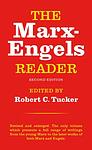
7. The Marx Engels Reader
This comprehensive anthology offers a profound exploration of the foundational ideas and theories that underpin Marxist thought, presenting a curated selection of writings that span the intellectual journey of its authors. It delves into the intricacies of historical materialism, class struggle, and the critique of political economy, providing readers with a nuanced understanding of the socio-economic forces that shape human societies. Through a blend of philosophical discourse and practical analysis, the collection illuminates the transformative potential of revolutionary change, challenging readers to reconsider the dynamics of power, labor, and capital in the pursuit of a more equitable world.
-
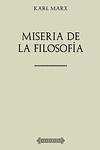
8. Miseria De La Filosofía
Respuesta a la Filosofía de la Miseria de Proudhon
This work serves as a critical response to the ideas presented by Pierre-Joseph Proudhon in his book "The Philosophy of Poverty." It delves into the intricacies of economic theories and critiques the inconsistencies and contradictions in Proudhon's arguments. The text emphasizes the importance of historical materialism and the role of class struggle in shaping societal structures. Through a detailed analysis, it underscores the limitations of idealistic philosophies in addressing the complexities of economic realities, advocating for a more scientific approach to understanding social and economic change.
-
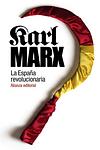
9. La España Revolucionaria
null
-
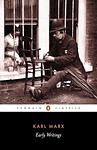
10. Karl Marx Early Writings
This collection of writings offers a glimpse into the formative thoughts and ideas that would later shape the author's influential theories on society, economics, and politics. It delves into the philosophical underpinnings of his critique of capitalism, exploring themes such as alienation, human nature, and the role of labor in shaping human experience. Through essays, letters, and reflections, the text reveals the intellectual journey of a young thinker grappling with the complexities of modern industrial society and laying the groundwork for his later, more comprehensive works.
Purchase from Bookshop.org -
11. Ametora
-
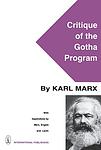
12. Critique Of The Gotha Program
This work is a critical analysis of a draft program for the United Workers' Party of Germany, offering a profound critique of its theoretical foundations and practical proposals. It scrutinizes the program's approach to labor, value, and the distribution of wealth, emphasizing the necessity for a scientific understanding of socialism. The text underscores the importance of a classless society where the means of production are communally owned, and it challenges the program's ambiguous stance on the state and its role in the transition to communism. Through this critique, it seeks to clarify the principles of a truly revolutionary socialist movement, advocating for a clear distinction between reformist and revolutionary objectives.
Purchase from Bookshop.org -
13. Wage Labor And Capital
This seminal work delves into the intricate relationship between labor and capital within the capitalist system, exploring how labor is commodified and exploited. It examines the dynamics of wage labor, highlighting the inherent inequalities and power imbalances between workers and capitalists. The text articulates how capitalists derive profit from the surplus value generated by workers, emphasizing the cyclical nature of exploitation that perpetuates economic disparities. Through a critical analysis, it underscores the systemic issues within capitalism that lead to the alienation of workers from the fruits of their labor.
Purchase from Bookshop.org -
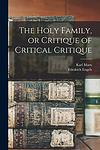
14. The Holy Family
Critique of Critical Criticism
This philosophical work critiques the Young Hegelians and their idealist interpretations of Hegelian philosophy, arguing that they fail to address the material conditions of society. It emphasizes the importance of understanding the real-world implications of philosophical ideas, advocating for a materialist approach that considers the socio-economic structures influencing human consciousness. Through a detailed analysis, it challenges the notion that abstract ideas alone can drive societal change, urging a focus on tangible, historical realities to achieve true social transformation.
-
15. The German Ideology / Theses On Feuerbach / Introduction To The Critique Of Political Economy
This seminal work delves into the philosophical underpinnings of historical materialism, critiquing the prevailing ideologies of the time and emphasizing the material conditions of life as the foundation for understanding societal development. It challenges the abstract idealism of previous thinkers, advocating for a focus on tangible, real-world conditions and the role of human activity in shaping history. The text also introduces the concept of economic structures as the base influencing the superstructure of society, laying the groundwork for a comprehensive critique of political economy and the dynamics of class struggle.
-
16. Critique Of Hegels Philosophy Of Right
In this incisive critique, the author delves into the philosophical underpinnings of the state and civil society as conceptualized by a prominent German philosopher. The work challenges the notion that the state is the ultimate realization of ethical life, arguing instead that it serves to perpetuate the interests of the ruling class. By dissecting the relationship between the state and individual freedom, the critique exposes the contradictions inherent in the existing political structures and calls for a revolutionary transformation towards a society where true freedom and equality can flourish.
Purchase from Bookshop.org -
17. Pre Capitalist Economic Formations
This insightful work delves into the economic structures and social relations that existed before the rise of capitalism, examining various modes of production such as tribal, ancient, and feudal systems. It explores how these pre-capitalist formations were characterized by communal ownership, kinship ties, and hierarchical social orders, contrasting them with the individualistic and competitive nature of capitalist economies. Through a historical and materialist lens, the text analyzes the evolution of economic systems and the inherent contradictions that eventually led to the emergence of capitalism, providing a foundational understanding of socio-economic development.
-
18. Texter I Urval
This collection offers a curated selection of writings that delve into the foundational ideas of a revolutionary thinker, exploring themes of class struggle, economic systems, and societal transformation. Through a series of essays and excerpts, the work provides insight into the critique of capitalism and the vision for a classless society, emphasizing the importance of historical materialism and the dynamics of power and labor. The compilation serves as an accessible entry point into the complex theories that have influenced political thought and social movements worldwide.
-
20. Economic & Philosophic Manuscripts Of 1844
This seminal work delves into the intricate relationship between labor, capital, and human nature, exploring the alienation experienced by workers in a capitalist society. It critiques the dehumanizing effects of industrialization and the commodification of labor, arguing that such systems strip individuals of their essence and creativity. Through a philosophical lens, it examines the economic structures that perpetuate inequality and proposes a vision for a more equitable and fulfilling human existence, emphasizing the importance of overcoming alienation to achieve true freedom and self-realization.
Purchase from Bookshop.org -
-
22. Las Crisis Del Capitalismo
In this insightful exploration of economic systems, the author delves into the inherent instabilities and contradictions within capitalist structures. The narrative examines how these crises are not anomalies but rather inevitable outcomes of the capitalist mode of production. Through a detailed analysis, the book highlights the cyclical nature of economic downturns, driven by overproduction, underconsumption, and the relentless pursuit of profit. It argues that these crises expose the unsustainable nature of capitalism, ultimately leading to social and economic upheaval, and suggests that understanding these dynamics is crucial for envisioning alternative economic futures.
-
23. Sobre La Cuestion Judía
This work critically examines the relationship between political emancipation and human emancipation, using the Jewish question as a lens to explore broader societal issues. It argues that political rights, such as those granted in a secular state, do not necessarily lead to true human freedom, as they often leave underlying social and economic inequalities unaddressed. The text delves into the nature of civil society and the limitations of political emancipation, suggesting that true liberation requires a transformation of the socio-economic structures that perpetuate alienation and inequality.
-
24. The Civil War In France
A concise political analysis of the 1871 Paris uprising that situates it as a revolutionary expression of the working class, explains its social and economic causes, defends the Commune’s measures and institutions as experiments in popular self-government, criticizes the conservative Versailles regime and bourgeois rule for suppressing it, and draws lessons and a call for international solidarity for future proletarian struggle.
Purchase from Bookshop.org -
25. Value, Price And Profit
The work explains that the value of commodities is determined by socially necessary labor time, while market prices fluctuate around that value; profit is not a mysterious product of exchange but the portion of surplus labor extracted from workers when labor-power is bought at its value and labor produces more value than is paid in wages. It distinguishes value from price, shows how wages, profit and rent are shares of the social product, and argues that the struggle over distribution between workers and capitalists is political and requires organization and collective action to change.
Purchase from Bookshop.org -
26. A Contribution To The Critique Of Political Economy
An early, concise statement of historical materialism and a systematic critique of capitalist political economy that argues material production and class relations shape social institutions and ideas. It analyzes fundamental economic categories—use-value and exchange-value, labor and capital—and explains how commodity production produces social forms and exploitation, laying out the theoretical method later developed in a fuller critique of capitalism.
Purchase from Bookshop.org -
27. Eleven Theses On Feuerbach
A concise critique of contemplative materialism and abstract philosophy that argues human nature is produced through concrete social practice and transformed by collective activity. It rejects treating humans as isolated, ahistorical individuals and emphasizes that philosophy must be linked to practical, revolutionary praxis aimed at changing material and social conditions. The central injunction is that theory should not merely interpret the world but actively help to change it.
Purchase from Bookshop.org -
28. Critique Of Hegel's Philosophy Of Right
Introduction
A forceful philosophical critique arguing that Hegel reverses reality by treating the abstract state as the true substance while neglecting the concrete conditions of civil society and individual alienation; it exposes religion as an expression and consolation for social estrangement and accuses Hegelian idealism of justifying the existing Prussian order instead of addressing material and moral emancipation, insisting that human freedom requires practical social change rather than purely speculative reconciliation.
Purchase from Bookshop.org -
29. The Difference Between The Democritean And Epicurean Philosophy Of Nature
This short essay contrasts two ancient atomist approaches to nature: the strict, necessitarian Democritean view that explains all phenomena as the motion of atoms under immutable laws, and the Epicurean modification that introduces occasional chance (the clinamen) to secure human freedom and ethical purpose. It traces how these differing accounts shape attitudes toward determinism, morality and science, arguing that Epicurus humanizes natural philosophy by making room for contingency and subjective experience, while Democritus presents a colder, mechanically necessitated universe. The piece situates the debate in broader philosophical and political terms, assessing the implications of each view for human agency and the development of materialist thought.