Douglas Hofstadter
Douglas Richard Hofstadter is an American scholar of cognitive science, best known for his book 'Gödel, Escher, Bach: An Eternal Golden Braid', which won the Pulitzer Prize for General Non-Fiction in 1980. His research interests include consciousness, analogy-making, artistic creation, literary translation, and discovery in mathematics and physics.
Books
This list of books are ONLY the books that have been ranked on the lists that are aggregated on this site. This is not a comprehensive list of all books by this author.
-
1. Gödel, Escher, Bach
An Eternal Golden Braid
The book explores concepts of formal systems, recursion, self-reference, and infinity through the interdisciplinary lens of mathematics, art, and music. The narrative intertwines biographical sketches of the titular figures - a mathematician, an artist, and a composer - with dialogues and discussions to illustrate complex ideas. The author uses these figures as metaphors to delve into the nature of human cognition and consciousness, suggesting that our minds are essentially self-referential systems akin to the works of Gödel, Escher, and Bach.
The 1387th Greatest Book of All TimePurchase from Bookshop.org or Amazon -
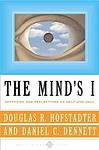
2. The Mind's I
Fantasies and Reflections on Self and Soul
This thought-provoking collection of essays and stories delves into the nature of consciousness, self, and identity, exploring the intricate relationship between the mind and the self. Through a blend of philosophical inquiry and imaginative narratives, the book invites readers to ponder the mysteries of human cognition, the concept of the "I," and the boundaries of self-awareness. It challenges conventional perceptions of what it means to be conscious, encouraging a deeper understanding of the mind's complexities and the essence of personal identity.
The 12496th Greatest Book of All TimePurchase from Amazon -
3. Metamagical Themas
Questing for the Essence of Mind and Pattern
The book is a collection of essays that explore a wide range of topics, including mathematics, philosophy, language, and the nature of thought. It delves into complex ideas such as self-reference, artificial intelligence, and the concept of consciousness, often using puzzles and thought experiments to illustrate these themes. The author engages readers with his playful yet profound examination of how patterns and structures shape our understanding of reality, encouraging a deeper reflection on the interconnectedness of various disciplines and the human experience.
The 17161st Greatest Book of All TimePurchase from Amazon -
4. Surfaces And Essences
Analogy as the Fuel and Fire of Thinking
This thought-provoking exploration delves into the intricate world of analogies, positing them as the core mechanism of human cognition. By examining how we perceive and categorize the world around us, the book argues that analogies are not mere linguistic tools but fundamental to the way we think, learn, and communicate. Through a series of engaging examples and discussions, it reveals how analogies shape our understanding, influence creativity, and drive the evolution of ideas, ultimately suggesting that they are the essence of thought itself.
The 17161st Greatest Book of All TimePurchase from Bookshop.org or Amazon -
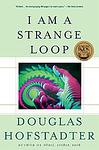
5. I Am A Strange Loop
The Self-Referential Nature of Consciousness and the Paradox of Self
This thought-provoking exploration delves into the nature of consciousness and self-awareness, proposing that our sense of "I" is a complex, self-referential loop created by the brain's intricate processes. Through a blend of philosophy, cognitive science, and personal anecdotes, the narrative examines how symbols and patterns in the mind give rise to the phenomenon of self-perception. The book challenges readers to reconsider the essence of identity, suggesting that the "I" is not a singular entity but a dynamic, ever-evolving construct shaped by the interplay of thoughts and experiences.
-
6. Philosophies Of Art And Beauty

This book delves into the intricate relationship between art and beauty, exploring how various philosophical perspectives have shaped our understanding of these concepts throughout history. It examines the evolution of aesthetic theories, from classical to contemporary, and how they influence the creation and appreciation of art. The text offers a comprehensive analysis of the subjective and objective elements that contribute to the perception of beauty, while also addressing the cultural and societal factors that impact artistic expression. Through a blend of philosophical discourse and artistic critique, the book provides readers with a deeper insight into the enduring quest to define and appreciate beauty in art.
-
7. Fluid Concepts And Creative Analogies
Computer Models of the Fundamental Mechanisms of Thought
This book delves into the intricate world of artificial intelligence, exploring how computers can mimic human thought processes through the use of fluid concepts and creative analogies. It presents a collection of essays and research findings that illustrate the challenges and breakthroughs in developing AI systems capable of understanding and generating analogies, a cornerstone of human cognition. The work emphasizes the importance of flexibility and creativity in problem-solving, offering insights into the nature of intelligence and the potential for machines to replicate the nuanced thinking patterns of the human mind.
Purchase from Bookshop.org -
8. Le Ton Beau De Marot
In Praise of the Music of Language
A playful yet probing exploration of translation as an art of carrying meaning, music, and culture across languages, anchored by dozens of creative reworkings of a small Renaissance French poem. Blending linguistics, cognitive science, and personal memoir, it examines fidelity, form, wordplay, and tone while reflecting on love, loss, and the human mind. Along the way it critiques literalism and machine translation and celebrates creativity under constraint, inviting readers to hear how languages think and feel.
Purchase from Bookshop.org -
9. L'io Della Mente
A curated collection of essays, thought experiments and literary pieces that probe what it means to be a self, using examples from logic, computer science and philosophy to show how consciousness and personal identity can emerge from self‑referential patterns and information processing, challenging intuitions about a singular soul, free will and continuity of the “I” while exploring implications for artificial intelligence and cognition.
Purchase from Bookshop.org