Theodor Adorno
Theodor Adorno was a German philosopher, sociologist, psychologist, musicologist, and composer known for his critical theory of society. He was a leading member of the Frankfurt School and made significant contributions to the study of culture, mass media, and aesthetics.
Books
This list of books are ONLY the books that have been ranked on the lists that are aggregated on this site. This is not a comprehensive list of all books by this author.
-
1. Dialectic Of Enlightenment
Philosophical Fragments
"Dialectic of Enlightenment" is a seminal philosophical work that explores the nature of enlightenment and its paradoxical relationship with the concept of reason. The authors argue that the Enlightenment's quest for knowledge, freedom, and autonomy has inadvertently led to the opposite: a form of domination and control through instrumental reason. They examine how the Enlightenment's rationality, once aimed at liberating individuals from myth and superstition, has devolved into a tool of oppression, giving rise to totalitarian systems and a culture industry that manipulates mass society. The book delves into various cultural artifacts, including literature, film, and popular culture, to illustrate how enlightenment has become self-destructive, ultimately questioning the possibility of true emancipation in a society governed by the very rationality that was supposed to set it free.
The 1147th Greatest Book of All TimePurchase from Bookshop.org or Amazon -
2. Minima Moralia
Reflections from Damaged Life
"Minima Moralia" is a collection of aphoristic essays that delve into the intricacies of modern life under capitalism and the pervasive influence of the culture industry. Written during the author's exile in the mid-20th century, the work reflects on the erosion of individuality and the subtle tyrannies of conformity and ideological manipulation. The essays blend philosophy, sociology, and cultural critique, offering profound insights into the human condition and the social dynamics of contemporary society. Through its critical examination of everyday phenomena, the book challenges readers to reconsider their perceptions of normality and ethics in a rapidly changing world.
The 1447th Greatest Book of All TimePurchase from Bookshop.org or Amazon -
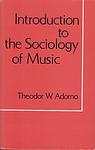
3. Introduction To The Sociology Of Music
This seminal work delves into the intricate relationship between music and society, exploring how music both influences and is influenced by the social structures within which it exists. The text examines the role of music as a cultural artifact, reflecting the complexities of social dynamics, power relations, and historical contexts. Through a critical lens, it challenges conventional perceptions of music as mere entertainment, instead proposing that music is a profound medium of social expression and critique. The analysis extends to the commodification of music and its implications for both the creator and the listener, offering a thought-provoking discourse on the interplay between art and society.
The 4228th Greatest Book of All TimePurchase from Bookshop.org or Amazon -
4. Essays On Music
Theodor W. Adorno, Richard Leppert, Susan H. Gillespie
This collection is a comprehensive anthology of critical essays on the subject of music, written by one of the 20th century's most influential philosophers and social critics. The work delves into the complexities of musical composition, performance, and reception, offering a profound exploration of the social, political, and cultural dimensions of the musical experience. The author critiques the commodification of music in capitalist societies and the way this impacts artistic authenticity and the listener's experience. Through a series of essays, the author examines various genres and eras, from classical to jazz to popular music, applying a rigorous theoretical framework that draws from Marxist thought, sociology, and psychoanalysis to dissect the role of music in modern life.
The 10402nd Greatest Book of All TimePurchase from Bookshop.org or Amazon -
5. Philosophy of Modern Music
This book offers a comprehensive analysis and critique of modern music, focusing on the works of two prominent 20th-century composers. The author explores the relationship between society and music, arguing that the evolution of music reflects changing social and political landscapes. The text suggests that the dissonance and atonality in modern music reflects the alienation and disillusionment of modern society. The book is a seminal work in the field of music philosophy and is renowned for its in-depth exploration of the societal implications of musical developments.
The 15923rd Greatest Book of All TimePurchase from Bookshop.org or Amazon -
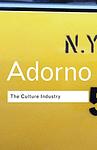
6. The Culture Industry
Enlightenment as Mass Deception
The book critically examines the mass production of culture in capitalist societies, arguing that the culture industry manipulates and commodifies cultural goods to maintain social control and perpetuate consumerism. It suggests that this industrialization of culture leads to a homogenization of cultural products, stifling individuality and creativity while promoting passive consumption. The work highlights how the culture industry serves the interests of the ruling class by distracting the masses and reinforcing existing power structures, ultimately diminishing the potential for genuine artistic expression and critical thought.
-
7. Aesthetics And Politics
This seminal work delves into the intricate relationship between art and society, exploring how aesthetic experiences are intertwined with political ideologies. It examines the role of art in both reflecting and challenging societal norms, highlighting the tension between artistic autonomy and social influence. Through critical analysis, the text interrogates the potential of art to resist commodification and its capacity to provoke critical thought, ultimately questioning whether true artistic freedom can exist within a capitalist framework.
-
8. Prisms
Cultural Criticism and Society

This collection of essays delves into the complexities of modern culture, philosophy, and society, offering a critical examination of various intellectual and artistic movements. The author navigates through topics such as existentialism, literature, and music, providing a nuanced critique of contemporary thought and its implications. Through a dialectical approach, the work challenges conventional perspectives, encouraging readers to question and reflect on the underlying structures that shape human experience and understanding.
Purchase from Bookshop.org -
9. Negative Dialectics
None
This philosophical work challenges traditional notions of dialectics by proposing a method that emphasizes the importance of negation and contradiction in understanding reality. It critiques the tendency of thought systems to impose rigid structures on the fluid and complex nature of existence, advocating for a more flexible and open-ended approach to thinking. Through a meticulous examination of concepts, it seeks to reveal the limitations of identity thinking and the dangers of reducing the richness of experience to simplistic categories, ultimately aiming to illuminate the potential for critical reflection and transformation in a world marked by suffering and injustice.
Purchase from Bookshop.org -
10. The Authoritarian Personality
Studies in Prejudice
This seminal work delves into the psychological underpinnings of authoritarianism, exploring how certain personality traits predispose individuals to adopt fascist and anti-democratic ideologies. Through a comprehensive study combining psychoanalytic theory and empirical research, the authors identify a constellation of characteristics, such as rigidity, conformity, and aggression, that contribute to a susceptibility to authoritarian beliefs. The book examines the social and familial influences that shape these traits, offering insights into the broader societal implications of authoritarian tendencies and the potential threats they pose to democratic institutions.
-
11. Aspects Of The New Right Wing Extremism
A Translated Lecture from 1967
This insightful work delves into the psychological and sociopolitical factors that contribute to the rise of right-wing extremism in post-war society. It examines the underlying ideologies and social conditions that foster such movements, emphasizing the role of authoritarianism, prejudice, and economic instability in shaping extremist views. The text also highlights the dangers of ignoring these trends and the importance of critical thinking and democratic engagement in countering the spread of extremist ideologies.
Purchase from Bookshop.org -
12. Against Epistemology
Metacritique on Epistemology
This philosophical work challenges the traditional notions of epistemology by critiquing the idea that knowledge can be fully objective or detached from the socio-historical context in which it is produced. It argues that the pursuit of pure, unmediated knowledge is a flawed endeavor, as all understanding is inherently shaped by cultural and historical influences. The text emphasizes the importance of dialectical thinking, suggesting that contradictions and tensions within knowledge systems can lead to deeper insights. By questioning the foundations of epistemology, it seeks to reveal the limitations of conventional approaches to understanding reality.
Purchase from Bookshop.org -
13. The Complete Correspondence, 1928–1940
This collection offers a profound glimpse into the intellectual exchange between two towering figures of the Frankfurt School, capturing their discussions on philosophy, culture, and society during a tumultuous period in history. Through their letters, readers gain insight into their evolving thoughts on critical theory, the rise of fascism, and the role of art and music in society. The correspondence reveals not only their shared ideas and disagreements but also the deep personal bond that sustained their collaboration and friendship over the years.
-
14. The Stars Down To Earth And Other Essays On The Irrational In Culture
And Other Essays On The Irrational In Culture
This collection of essays delves into the pervasive influence of irrationality within modern culture, examining how societal structures and media perpetuate superstitions, myths, and pseudo-scientific beliefs. Through a critical lens, the author explores the psychological and sociological mechanisms that underpin these phenomena, revealing the subtle ways in which they shape public consciousness and behavior. The essays serve as a profound critique of contemporary society, challenging readers to question the seemingly rational systems that govern their lives and to recognize the underlying forces of irrationality that persist in shaping cultural narratives.
Purchase from Bookshop.org -
15. An Introduction To Dialectics
This series of lectures reconstructs dialectical thinking as a living method of critique, engaging Hegel while rejecting system-building and facile synthesis. It foregrounds contradiction, mediation, and the non-identity of concept and object, insisting on historical specificity and closeness to the object. Through immanent critique of positivism and identity thinking, it presents dialectics as a dynamic practice of philosophy and social analysis in late modernity. The result is a disciplined, anti-dogmatic approach that preserves tension rather than prematurely resolving it, exposing ideology and opening possibilities for critical thought.
Purchase from Bookshop.org