David Hume
David Hume was a Scottish Enlightenment philosopher, historian, economist, and essayist, known especially for his philosophical empiricism and skepticism.
Books
This list of books are ONLY the books that have been ranked on the lists that are aggregated on this site. This is not a comprehensive list of all books by this author.
-
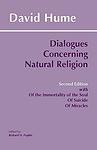
1. Dialogues Concerning Natural Religion
This philosophical work is a series of discussions between three characters who explore the nature of God's existence through the lens of empirical evidence and reason. The dialogues delve into arguments for and against the existence of a divine creator, touching on the problem of evil, the argument from design, and the limits of human understanding. Through these conversations, the text critically examines the rational basis for religious belief, questioning the traditional arguments for God's existence and highlighting the complexities and contradictions inherent in theological explanations of the universe. The work is a seminal contribution to the philosophy of religion, showcasing the author's skepticism towards religious dogma and his commitment to empirical inquiry.
The 1746th Greatest Book of All TimePurchase from Bookshop.org or Amazon -
2. An Enquiry Concerning Human Understanding
A Treatise of Human Nature
This philosophical work explores the nature of human knowledge, arguing that all of our understanding comes from experience rather than innate ideas. The author challenges the idea of causality, suggesting that our belief in cause and effect is based on habit rather than logical reasoning. The book also discusses the limitations of human understanding, including the inability to fully comprehend the concept of God or the soul, and the impossibility of certain knowledge. The author's skepticism about traditional philosophical concepts has had a significant influence on later philosophers and the field of epistemology.
The 1997th Greatest Book of All TimePurchase from Bookshop.org or Amazon -
3. A Treatise of Human Nature
Being an Attempt to Introduce the Experimental Method of Reasoning into Moral Subjects
This philosophical work delves into the understanding of human nature, focusing on the mind, emotions, and morality. The author argues that all of our thoughts and ideas are derived from our senses and experiences, rejecting the idea of innate ideas. He also debates the nature of causality, the existence of the self, and the basis of moral judgments. The work is a comprehensive exploration of empiricism, skepticism, and naturalism.
The 2240th Greatest Book of All TimePurchase from Bookshop.org or Amazon -
4. History Of England
From the Invasion of Julius Caesar to the Revolution in 1688
This book provides a comprehensive narrative of England's history, beginning with the ancient kingdoms through to the end of the Tudor dynasty. It explores the political, religious, and social changes that shaped the nation, offering detailed accounts of key events and figures such as the Norman Conquest, the Magna Carta, and the Reformation. The author's philosophical insights and critique of historical documentation add depth to the discussion, presenting a critical examination of how England's past has been recorded and interpreted over the centuries.
The 10632nd Greatest Book of All TimePurchase from Amazon -
5. Essays, Moral, Political, And Literary
This collection of essays by the philosopher explores a range of topics across ethics, politics, and aesthetics. Written in a clear, conversational style, the essays examine human nature, the workings of government, economic theories, and the merits of refined taste, among other subjects. The author employs a skeptical approach to question traditional doctrines and suggests that politics and morals should be grounded in empirical observations of the world. The work reflects the Enlightenment spirit of rational inquiry and has been influential in the development of modern political philosophy and economic thought.
The 13362nd Greatest Book of All TimePurchase from Amazon -
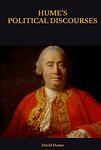
6. Political Discourses
Containing Several Essays and Discourses on the Most Important Subjects in Politics
The book is a collection of essays that explore various aspects of political economy and philosophy. It delves into topics such as commerce, trade, money, and the balance of power, offering insights into the economic and political dynamics of the 18th century. Through a pragmatic and empirical approach, the author examines the impact of economic policies on society and the importance of industry and trade in fostering prosperity. The essays also reflect on the nature of government and the role of institutions in maintaining social order and promoting economic growth.
The 15869th Greatest Book of All TimePurchase from Amazon -
7. My Own Life
An Autobiography

In this introspective and candid autobiography, the author reflects on his life's journey, offering insights into his personal experiences, intellectual pursuits, and philosophical contributions. The narrative delves into his early years, academic endeavors, and the challenges he faced in gaining recognition for his work. With a tone of humility and self-awareness, he shares his thoughts on the nature of human understanding, the pursuit of knowledge, and the legacy he hopes to leave behind. This reflective piece serves as both a personal testament and a philosophical exploration of a life dedicated to the pursuit of truth and reason.
Purchase from Bookshop.org -
8. On Suicide
A Discourse on the Nature of Suicide and the Moral Implications
This philosophical essay delves into the complex and often taboo subject of self-inflicted death, challenging prevailing moral and religious arguments against it. The author presents a rational perspective, arguing that individuals possess the right to make decisions about their own lives, including the choice to end it, without being bound by societal or divine constraints. Through a series of logical arguments, the text questions the notion of suicide as a sin or crime, advocating for a more compassionate and understanding approach to those contemplating such a decision.
Purchase from Bookshop.org -
9. The Essential Philosophical Works
This comprehensive collection delves into the profound philosophical inquiries of a prominent Enlightenment thinker, exploring the nature of human understanding, emotions, and morality. Through a series of essays and treatises, the work challenges traditional notions of causality, perception, and the self, advocating for a skeptical approach to knowledge and emphasizing the limitations of human reason. The text is a cornerstone in the study of empiricism, offering insights into the interplay between experience and belief, and laying the groundwork for modern philosophical discourse.
Purchase from Bookshop.org -
10. Four Dissertations
A set of philosophical essays that analyze human emotion, aesthetics, and religion from a skeptical, empirical perspective: one essay traces religion to natural fears and hopes and critiques arguments for divine design and miracles; another treats the passions as motivating sentiments shaped by sympathy and habit; a third explains the paradox of tragic pleasure as a refined mingling of pity and terror; and a final piece develops a theory of taste, arguing that aesthetic judgment depends on cultivated sensibility, experience, and common human nature rather than fixed rules.
Purchase from Bookshop.org -
11. A Kind Of History Of My Life
An intimate autobiographical sketch recounting the narrator's upbringing in Edinburgh, his intellectual formation and travels in France and London, the composition and reception of his major philosophical and historical works, his friendships and professional struggles, and his reflections on character, skepticism, and the modesty with which he faced public opinion in later life.
-
12. A Treatise On Human Nature, Volume 1
Being an Attempt to Introduce the Experimental Method of Reasoning into Moral Subjects.
An empiricist examination of human cognition and psychology arguing that all ideas originate from sensory impressions; it analyzes how perceptions and memories combine through association to form beliefs, treats causal relations as habitual expectations rather than observable necessities, and presents the self as merely a bundle of changing perceptions, while explaining how passions, custom, and experience govern reasoning and moral judgments.
Purchase from Bookshop.org -
13. An Enquiry Concerning The Principles Of Morals
The work argues that moral judgments arise from human sentiments rather than from reason, grounding approbation and blame in sympathy or fellow-feeling; virtues are those qualities that produce pleasure, utility, or agreeableness to others, and practices like justice emerge as socially useful conventions shaped by experience and custom. It treats morality as an empirical psychology of feeling—showing how benevolence, prudence, and public utility command approval—and explains moral distinctions by the operations of sentiment, sympathy, and the benefits they confer on social life.
Purchase from Bookshop.org