Karl Barth
Karl Barth was a Swiss Reformed theologian who is often regarded as one of the greatest Protestant theologians of the twentieth century. He is best known for his landmark work, 'Church Dogmatics.'
Books
This list of books are ONLY the books that have been ranked on the lists that are aggregated on this site. This is not a comprehensive list of all books by this author.
-
1. The Epistle To The Romans
This theological work offers a profound and complex interpretation of the biblical Epistle to the Romans, emphasizing the transcendence and sovereignty of God. It challenges traditional Christian doctrines by focusing on the radical nature of God's grace and the existential crisis of humanity in the face of divine judgment. The book underscores the idea that human efforts are insufficient for salvation, which can only be achieved through faith in God's grace. Barth's commentary is known for its dense and philosophical style, which seeks to reorient Christian theology around the centrality of God's revelation in Christ.
The 1032nd Greatest Book of All TimePurchase from Bookshop.org or Amazon -
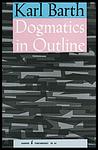
2. Dogmatics In Outline
"Dogmatics in Outline" presents a concise exploration of Christian doctrine, framed by the Apostles' Creed and derived from lectures delivered in the aftermath of World War II. The text distills the essence of Christian faith, emphasizing the centrality of Jesus Christ in theology and the importance of the Church's teaching tradition. The author argues for a dynamic and living engagement with the Christian message, rejecting both rigid orthodoxy and vague liberalism, and advocating for a theology that is both faithful to the historical teachings of the Church and responsive to contemporary human experience.
The 8365th Greatest Book of All TimePurchase from Bookshop.org or Amazon -
3. The Word of God and the Word of Man
This book presents a series of sermons that challenge the traditional religious understanding of the time. The author argues that the word of God should not be confined to the Bible alone, but should also include the divine revelation through Jesus Christ. He emphasizes the importance of faith and the need for a personal relationship with God, while criticizing the church for its institutionalization and its focus on rituals and dogma. The book is considered a cornerstone in the development of neo-orthodox theology.
The 15922nd Greatest Book of All TimePurchase from Amazon