Steven Pinker
Steven Arthur Pinker is a Canadian-American cognitive psychologist, linguist, and popular science author. He is known for his advocacy of evolutionary psychology and the computational theory of mind. Pinker has written several books on language, mind, and human nature, and is a professor at Harvard University.
Books
This list of books are ONLY the books that have been ranked on the lists that are aggregated on this site. This is not a comprehensive list of all books by this author.
-
1. The Better Angels Of Our Nature
Why Violence Has Declined
This book presents a comprehensive analysis of violence throughout human history, arguing that, contrary to popular belief, we are living in the most peaceful era ever. The author uses a wealth of data to demonstrate how the rates of violence, from homicide to war, have decreased over centuries due to various social, cultural, and political developments. By examining the forces he believes have led to this decline, such as the spread of government, trade, and the influence of enlightenment thinking, the book offers an optimistic view of humanity's ability to reduce violence through reason and empathy, suggesting that our better angels are indeed winning the battle against our inner demons.
The 2936th Greatest Book of All TimePurchase from Bookshop.org or Amazon -
2. The Language Instinct
How the Mind Creates Language
The book explores the idea that humans are born with an innate capacity for language. It argues that the ability to learn language is a natural instinct, hard-wired into our brains by evolution. Drawing from research in various fields including linguistics, psychology, and anthropology, the book examines how children learn language, how languages develop and change over time, and how the mind constructs and understands language. The author challenges the notion that language is a cultural artifact and instead presents it as a biological adaptation that is essential for human survival and communication.
The 3064th Greatest Book of All TimePurchase from Bookshop.org or Amazon -
3. The Blank Slate
The Modern Denial of Human Nature
"The Blank Slate" challenges the conventional belief that human behavior is largely shaped by the environment and experience, arguing instead that genetics play a significant role. The book delves into the controversies surrounding this concept, exploring the implications it has on politics, violence, child-rearing, and the arts. It also argues that acknowledging our innate traits can lead to a more humane society, as it would allow for a better understanding of our strengths, weaknesses, and individual differences.
The 3283rd Greatest Book of All TimePurchase from Bookshop.org or Amazon -
4. Enlightenment Now
The Case for Reason, Science, Humanism, and Progress
The book presents a comprehensive case for optimism in the modern era, arguing that humanity has made significant progress in various aspects such as health, prosperity, safety, peace, knowledge, and happiness, largely due to the values of the Enlightenment—reason, science, humanism, and progress. The author challenges the pervasive sense of pessimism in contemporary discourse and defends the scientific mindset and rational thinking as the driving forces behind improvements in human well-being. By analyzing a wealth of data and trends, the book encourages readers to appreciate the progress achieved and to continue embracing the Enlightenment principles to address current challenges and further advance the human condition.
The 5644th Greatest Book of All TimePurchase from Bookshop.org or Amazon -
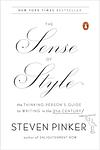
5. The Sense Of Style
The Thinking Person's Guide to Writing in the 21st Century
The book offers a modern guide to writing with clarity and style, blending insights from linguistics and cognitive science. It emphasizes the importance of understanding the reader's perspective and the role of language in shaping thought. Through examples and analysis, it critiques traditional grammar rules and encourages writers to embrace a more flexible approach that prioritizes clarity and engagement. The book also explores the evolution of language and the balance between linguistic innovation and convention, aiming to empower writers to communicate effectively in a rapidly changing world.
-
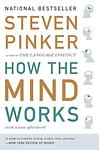
6. How The Mind Works
What Our Brains Do and Why
The book explores the intricacies of human cognition, delving into how the mind processes information, perceives the world, and generates emotions and thoughts. It combines insights from evolutionary psychology, neuroscience, and cognitive science to explain the mental faculties that have evolved to solve problems faced by our ancestors. The author discusses topics such as vision, language, reasoning, and social relationships, offering a comprehensive view of the mind as a complex system shaped by natural selection. Through engaging examples and thought-provoking theories, the book provides a deep understanding of the mechanisms underlying human behavior and intelligence.
-
7. The Stuff Of Thought
Language as a Window into Human Nature
This insightful exploration delves into the intricate relationship between language and human thought, examining how our words shape our perceptions, emotions, and social interactions. Through a blend of cognitive science, linguistics, and psychology, the narrative unravels the complexities of how language reflects our mental processes and influences our understanding of reality. By analyzing metaphors, naming conventions, and the structure of language, it reveals the profound ways in which our linguistic choices impact our worldview and interpersonal dynamics.
-
8. Rationality
What It Is, Why It Seems Scarce, Why It Matters
In this insightful exploration of human cognition, the author delves into the concept of rationality, examining how it shapes our decisions, beliefs, and actions. By weaving together insights from psychology, philosophy, and history, the book challenges the notion that humans are inherently irrational, instead highlighting the cognitive tools and strategies that enable us to make sound judgments. Through engaging examples and thought-provoking analysis, it underscores the importance of fostering rational thinking in an increasingly complex world, while also acknowledging the biases and pitfalls that can lead us astray.
Purchase from Bookshop.org -
9. Words And Rules
The Ingredients of Language

This insightful exploration delves into the intricate relationship between language and the human mind, examining how people use words and grammatical rules to communicate. Through a blend of cognitive science, linguistics, and psychology, the book investigates the dual mechanisms of word memorization and rule application that underpin language acquisition and usage. It offers a compelling analysis of how these processes manifest in everyday speech, language development in children, and even in the quirks of irregular verbs, providing a fascinating glimpse into the cognitive underpinnings of language.
Purchase from Bookshop.org -
10. The Village Effect
How Face-to-Face Contact Can Make Us Healthier, Happier, and Smarter
Exploring the profound impact of social connections on human health and happiness, this insightful work delves into the science behind why face-to-face interactions are crucial for our well-being. It examines how communities, friendships, and even casual encounters can significantly enhance our lives, offering compelling evidence that our social networks are as vital as diet and exercise. Through engaging stories and research, the book highlights the importance of nurturing relationships in an increasingly digital world, emphasizing that the strength of our social ties can influence everything from longevity to cognitive function.
-
11. La Tabla Rasa
The Modern Denial of Human Nature
This thought-provoking work challenges the notion that humans are born as blank slates, devoid of innate traits or predispositions. It delves into the interplay between nature and nurture, arguing that genetics and biology significantly influence human behavior, personality, and culture. Through a blend of scientific research, historical analysis, and philosophical discourse, the book dismantles the myth of the blank slate, advocating for a more nuanced understanding of human nature that acknowledges the complex interdependencies between our biological makeup and environmental influences.
-
12. Do Humankind’s Best Days Lie Ahead?
An energetic exchange wrestles with whether the human future will be better or worse, contrasting data-driven optimism about declining violence and expanding health, wealth, and knowledge with warnings about inequality, environmental strain, and technological risk. Through arguments and rebuttals, the participants probe how far reason, science, and open institutions can sustain progress amid uncertainty. The debate leaves readers with a nuanced framework for weighing hope against caution about what lies ahead.
-
13. Hotheads
A wide-ranging, evidence-based exploration of anger that explains how this evolved emotion arises from cognitive biases, perceived insults, status threats and social amplification, why it often backfires, and what individuals and societies can do to prevent escalation; drawing on psychology, neuroscience and real-world examples, it lays out practical interventions—cognitive reappraisal, perspective-taking, cooling-off procedures, apology and repair mechanisms, and institutional changes to incentives and norms—to transform destructive outrage into constructive responses and reduce needless conflict.