Niall Ferguson
Niall Ferguson is a British historian and author known for his works on economic and financial history, as well as his commentary on contemporary politics and global affairs. He has written several influential books and is a professor at various prestigious institutions.
Books
This list of books are ONLY the books that have been ranked on the lists that are aggregated on this site. This is not a comprehensive list of all books by this author.
-
1. The Ascent of Money
A Financial History of the World
This book provides a comprehensive history of money, credit, and banking, tracing their evolution from ancient times to the present. It explores how financial systems have shaped human history, from the rise and fall of empires to the development of modern economies. The book delves into the origins of the stock market, the true nature of insurance, the perils of inflation, the importance of property rights, and the role of financial innovation in economic growth. It also examines the causes and consequences of financial crises, offering valuable insights into the complex relationship between finance and society.
The 14232nd Greatest Book of All TimePurchase from Amazon -
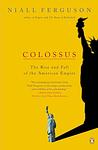
2. Colossus
The Rise and Fall of the American Empire
This insightful exploration delves into the complexities of American imperialism, examining the nation's rise to global dominance and the implications of its power on international relations. The narrative weaves historical analysis with contemporary observations, shedding light on the economic, political, and cultural factors that have shaped the United States' role on the world stage. Through a critical lens, it questions the sustainability of American influence and the challenges it faces in maintaining its position as a global leader.
The 17162nd Greatest Book of All TimePurchase from Bookshop.org or Amazon -
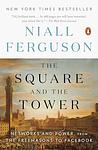
3. The Square And The Tower
Networks and Power, from the Freemasons to Facebook
In this insightful exploration of history, the author delves into the intricate dynamics between hierarchical institutions and decentralized networks, illustrating how these two structures have shaped the course of human events. By examining pivotal moments from the Renaissance to the digital age, the narrative reveals how networks have often disrupted established power structures, leading to significant societal transformations. Through a blend of historical analysis and contemporary relevance, the book offers a compelling perspective on the ongoing tension between centralized authority and the power of interconnected individuals.
-
4. The Great Degeneration
How Institutions Decay and Economies Die
In this insightful exploration, the author delves into the decline of Western institutions, arguing that the erosion of the rule of law, the breakdown of representative government, the weakening of civil society, and the stagnation of economic growth are leading to a societal degeneration. By examining historical patterns and drawing parallels with contemporary issues, the narrative highlights the urgent need for reform and revitalization to prevent further decline and ensure a prosperous future. The work serves as both a warning and a call to action, urging readers to recognize and address the systemic challenges facing modern society.
-
5. The House Of Rothschild, Vol 1
Money's Prophets, 1798-1848

This meticulously researched volume delves into the rise of the Rothschild family from the late 18th century to the mid-19th century, chronicling their transformation from humble beginnings in Frankfurt to becoming one of the most influential banking dynasties in Europe. Through a blend of economic history and personal narrative, the book explores how the Rothschilds leveraged their financial acumen, strategic marriages, and political connections to amass unprecedented wealth and power, shaping the financial landscape of Europe and playing pivotal roles in major historical events, including the Napoleonic Wars and the Congress of Vienna.
Purchase from Bookshop.org -
6. Civilization
The West and the Rest
This book delves into the rise of Western civilization over the past 500 years, exploring the key factors that contributed to its global dominance. It identifies six "killer apps" or innovative concepts that propelled the West ahead of other civilizations: competition, science, property rights, medicine, consumerism, and work ethic. Through a comparative analysis, the narrative examines how these elements fostered economic growth, technological advancement, and cultural influence, ultimately shaping the modern world. The book also reflects on the challenges and potential decline of Western supremacy in the face of emerging global powers.
Purchase from Bookshop.org -
7. The House Of Rothschild, Vol 2
The World's Banker: 1849-1999
This volume delves into the intricate web of influence and power wielded by the Rothschild family from 1849 to 1999, exploring their pivotal role in shaping the financial and political landscapes of Europe and beyond. Through meticulous research, it unveils the family's adept navigation of global events, including wars, economic upheavals, and political shifts, while maintaining their vast banking empire. The narrative highlights the Rothschilds' strategic alliances, philanthropic endeavors, and the challenges they faced in a rapidly changing world, offering a comprehensive insight into their enduring legacy and the complexities of wealth and influence.
Purchase from Bookshop.org -
8. The Cash Nexus
Money and Power in the Modern World, 1700-2000
A sweeping history of how the flow of money—through taxation, public debt, wars, and financial markets—has shaped modern states and international power from the eighteenth century to the present. It argues that fiscal capacity and financial innovation, more than ideology, drive political decisions, the rise and fall of empires, and the evolution of democracy. Drawing on case studies and data, it traces the fiscal-military state, the influence of bond markets and central banks, and the ways financial constraints steer conflict, welfare, and reform.
Purchase from Bookshop.org -
9. The Pity Of War
Explaining World War I
A revisionist analysis of World War I that argues the conflict was not inevitable and that British intervention needlessly transformed a continental struggle into a prolonged global catastrophe. Drawing on economic data, counterfactuals, and cultural sources, it challenges myths about popular enthusiasm, military incompetence, and uniquely German aggression, reassesses soldiers’ morale and the efficiency of mobilization, and shows how finance, propaganda, and miscalculation shaped strategy and outcomes, culminating in imperial decline and the rise of new great powers.
Purchase from Bookshop.org -
10. Empire
How Britain Made the Modern World
An ambitious revisionist history arguing that the British imperial project profoundly shaped the modern world by spreading legal, financial and administrative institutions, global trade networks, and technological and cultural links while also relying on military force, coercion and exploitation. Using case studies and economic analysis, it traces how these dynamics produced rapid expansion and eventual decline, weighing the empire’s contributions to economic growth and globalization against its moral and human costs.
Purchase from Bookshop.org -
11. Doom
The Politics of Catastrophe
A brisk, provocative analysis of catastrophic events that argues disasters are shaped less by fate than by politics, institutions and human error; using historical case studies from pandemics to financial crises, the book traces recurring patterns of denial, bad incentives, and poor planning in modern societies and offers lessons and reforms to improve preparedness, accountability and resilience in an increasingly interconnected world.
Purchase from Bookshop.org