Thomas Aquinas
Thomas Aquinas was an Italian Dominican friar, philosopher, Catholic priest, and Doctor of the Church. He is known for his influential works in theology and philosophy, particularly the Summa Theologica.
Books
This list of books are ONLY the books that have been ranked on the lists that are aggregated on this site. This is not a comprehensive list of all books by this author.
-
1. Summa Theologica
This comprehensive text is a seminal work in the field of theology, written by a prominent medieval philosopher and theologian. The book is structured in a question-and-answer format, tackling complex philosophical and theological issues such as the existence of God, the nature of man, the purpose of life, and the intricacies of morality and ethics. It is one of the most influential works in Western thought, particularly in Christian theology and philosophy, and continues to be a vital reference in these fields.
The 653rd Greatest Book of All TimePurchase from Bookshop.org or Amazon -
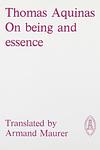
2. On Being And Essence
A Translation and Interpretation
"On Being and Essence" is a philosophical treatise that delves into the complex concepts of essence and existence, primarily focusing on the distinctions and relations between the two within the context of Scholastic metaphysics. The work systematically explores how substances are composed of essence and existence, how these components relate to each other, and how they contribute to an entity's being. The treatise also examines the attributes of different beings, particularly distinguishing between material and immaterial substances, and discusses the implications of these distinctions for understanding the nature of reality and the existence of God. Through rigorous analysis, the text seeks to provide a foundational understanding of metaphysical structures, which underpin the scholastic theological and philosophical tradition.
The 3291st Greatest Book of All TimePurchase from Bookshop.org or Amazon -
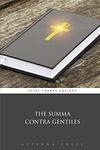
3. Summa Contra Gentiles
On the Truth of the Catholic Faith
This philosophical and theological work serves as a comprehensive guide for defending the Christian faith against non-believers, particularly those of different religious backgrounds. It systematically explores the existence and nature of God, the creation of the world, and the purpose of human life, employing reason and logic to articulate and justify Christian doctrines. The text is structured to address and refute potential objections to Christian teachings, aiming to bridge the gap between faith and reason while promoting a deeper understanding of divine truths.
The 17162nd Greatest Book of All Time -
4. Treatise On Law
Summa Theologica
This philosophical work delves into the nature and purpose of law, exploring its role in guiding human behavior towards the common good. It distinguishes between different types of law, including eternal, natural, human, and divine law, and examines how they interrelate to form a cohesive framework for moral and ethical governance. The text argues that laws should be rooted in reason and aligned with the ultimate purpose of human life, which is to achieve happiness and fulfillment through virtuous living. It also discusses the importance of justice and the role of law in maintaining order and harmony within society.
-
5. The Treatise On Happiness • The Treatise On Human Acts

A systematic exploration of what constitutes the ultimate good for human beings and how moral actions contribute to or hinder that end, arguing that true happiness is the soul’s perfect fulfillment found ultimately in union with the divine and that temporal goods can only imperfectly satisfy it. The work analyzes the nature of human acts—voluntary and involuntary actions, the roles of intention, will, intellect, passions, and circumstances—and sets out how virtues, prudence, and the proper ordering of goods govern moral responsibility. It also examines moral principles, the formation of conscience, and the distinction between natural and supernatural ends, offering a comprehensive framework for understanding moral choice and the pursuit of the highest human good.
Purchase from Bookshop.org -
6. A Summa Of The Summa
A compact, systematic distillation of medieval scholastic theology that presents the central arguments for God's existence and attributes, the doctrine of the Trinity, the ordering of creation (including angels and the human soul), and a moral philosophy rooted in natural law; it outlines human action, virtue and vice, the problem of sin and the need for grace, and the role of the sacraments, all arranged to show how reason and revealed faith cohere within a teleological view of reality.