Rene Descartes
René Descartes was a French philosopher, mathematician, and scientist who is often referred to as the father of modern philosophy. He is best known for his statement 'Cogito, ergo sum' ('I think, therefore I am'). His work laid the foundation for 17th-century continental rationalism and influenced later developments in philosophy and science.
Books
This list of books are ONLY the books that have been ranked on the lists that are aggregated on this site. This is not a comprehensive list of all books by this author.
-
1. Discourse on Method
And Meditations on First Philosophy
The book is a philosophical and autobiographical treatise that introduces a new form of scientific and philosophical method, which emphasizes on doubt and systematic questioning as the primary means to achieve knowledge. The author argues that by doubting everything, one can then rebuild knowledge, piece by piece, on a more solid foundation. This method is applied to a wide range of topics, including God's existence, the nature of the human mind and body, and the acquisition of knowledge.
The 543rd Greatest Book of All TimePurchase from Bookshop.org or Amazon -
2. Meditations on First Philosophy
In which the existence of God and the immortality of the soul are demonstrated
"Meditations on First Philosophy" is a philosophical treatise that introduces the concept of radical doubt as a foundational element of knowledge. The book is known for the famous philosophical statement, "I think, therefore I am," which the author uses to establish the existence of the self as a necessary truth. The author also presents arguments for the existence of a benevolent God and the immortality of the soul, while examining the differences between the mind and the body, the nature of reality, and the limits of human understanding.
The 1030th Greatest Book of All TimePurchase from Bookshop.org or Amazon -
3. The Geometry
"La Géométrie" introduces a revolutionary approach to mathematics by merging algebra and geometry into a single discipline. The work outlines the method of using equations to describe geometric shapes and using algebraic formulas to solve geometric problems, thereby laying the groundwork for what is now known as analytic geometry. This treatise fundamentally changed the course of mathematics by providing a systematic framework that allowed for the graphical representation of algebraic equations, and vice versa, thus enabling the precise analysis of geometric spaces using algebra.
The 15923rd Greatest Book of All TimePurchase from Amazon -
4. Descartes
Meditations on First Philosophy
The book explores the philosophical and scientific contributions of a prominent thinker who is often regarded as the father of modern philosophy. It delves into his method of doubt, which serves as a foundational approach to acquiring knowledge, and his famous assertion "Cogito, ergo sum" ("I think, therefore I am"). The work also examines his dualistic view of the mind and body as distinct entities and his influence on the development of modern scientific methods. Through a blend of personal reflections and systematic reasoning, the book highlights his enduring impact on philosophy, mathematics, and the natural sciences.
-
5. Principles Of Philosophy
The Principles of Human Knowledge
This foundational text in Western philosophy explores the nature of reality, knowledge, and existence through a methodical approach that emphasizes doubt and reason. It introduces the concept of "cogito, ergo sum" ("I think, therefore I am") as a fundamental truth, establishing the certainty of the self's existence as a thinking entity. The work delves into the relationship between mind and body, the existence of God, and the principles governing the physical world, laying the groundwork for modern scientific inquiry and philosophical thought.
Purchase from Bookshop.org -
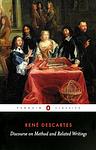
6. Discourse On Method And Related Writings
Discourse on the Method of Rightly Conducting One's Reason and of Seeking Truth in the Sciences
This seminal work presents a groundbreaking approach to philosophical inquiry, emphasizing the importance of doubt and systematic reasoning in the pursuit of truth. Through a narrative of personal intellectual evolution, the author outlines a method for achieving certainty by deconstructing preconceived notions and rebuilding knowledge on a foundation of clear and distinct ideas. The text explores themes of skepticism, the nature of existence, and the relationship between mind and body, ultimately advocating for a rationalist perspective that has profoundly influenced modern philosophy and scientific thought.
Purchase from Bookshop.org -
7. A Discourse On The Method
For conducting one's reason well and for seeking truth in the sciences

This philosophical treatise outlines a new method of reasoning and scientific inquiry, emphasizing the importance of doubt and systematic skepticism as a means to achieve certainty. It introduces the famous dictum "I think, therefore I am," establishing the act of thinking as the foundation of knowledge. The work is divided into six parts, detailing the author's intellectual journey, the principles of his method, and its application to various fields, including mathematics and the natural sciences. It advocates for the use of reason and logic over traditional scholasticism, aiming to build a new framework for understanding the world.
Purchase from Bookshop.org -
8. Rinktiniai Raštai
This collection of writings delves into the profound philosophical inquiries that have shaped modern thought, exploring themes of existence, knowledge, and the nature of reality. Through a series of essays and meditations, the author presents a methodical approach to doubt and certainty, emphasizing the importance of reason as a tool for understanding the world. The work challenges readers to question preconceived notions and to seek clarity through logical analysis, ultimately laying the groundwork for the development of scientific and philosophical methodologies that continue to influence contemporary discourse.
-
9. Valda Skrifter
This collection of writings delves into the profound philosophical inquiries that have shaped modern thought, exploring themes of existence, knowledge, and the nature of reality. Through a series of meditations and essays, the author meticulously examines the process of doubt and the quest for certainty, ultimately arriving at the foundational principle of "Cogito, ergo sum" ("I think, therefore I am"). The work is a cornerstone in the development of rationalism, emphasizing the importance of reason and the mind's capacity to discern truth, while also addressing the relationship between the mind and body, and the existence of God.
-
11. Meditations On First Philosophy, With Selections From The Objections And Replies
in which the existence of God and the distinction of the soul from the body are demonstrated
A foundational philosophical treatise that begins with methodical doubt—suspending belief in all uncertain knowledge to discover an indubitable starting point in the thinking self—then develops arguments for the existence and perfection of a benevolent God to secure the reliability of clear and distinct ideas, articulates a sharp distinction between mind (thinking substance) and body (extended substance), and defends the possibility of certain knowledge about the external world; the work is followed by selections of contemporary objections and the author’s replies that probe issues such as divine deception, the nature of sensation and perception, and the relation between thought and extension.
Purchase from Bookshop.org -
12. Meditations And Other Metaphysical Writings
in which the existence of God and the immortality of the soul are demonstrated
A sustained philosophical inquiry that subjects all beliefs to radical doubt in order to find indubitable foundations for knowledge, beginning with the certainty of the thinking self and using the criterion of clear and distinct perception to rebuild a reliable body of knowledge; it develops arguments for the existence of a benevolent God who guarantees truth, defends a sharp mind–body distinction (dualism), and contrasts the fallibility of the senses with the primacy of reason while examining the nature of material extension and consciousness.
Purchase from Bookshop.org -
13. Metodin Esitys
pour bien conduire sa raison, et chercher la vérité dans les sciences
Kirjoituksessa esitetään rationaalinen menetelmä varman tiedon saavuttamiseksi: epäillä kaikkea, jakaa ongelmat osiin, edetä yksinkertaisista monimutkaisiin ja tehdä kattavia tarkistuksia; lisäksi pohditaan tiedon ja luonnontieteellisen menetelmän perusteita, muun muassa ajattelevan minän varmuutta, ja sovelletaan menetelmää sekä filosofisiin että tieteellisiin kysymyksiin.
Purchase from Bookshop.org