Thor Heyerdahl
Thor Heyerdahl was a Norwegian adventurer and ethnographer with a background in zoology, botany, and geography. He is best known for his Kon-Tiki expedition in 1947, where he sailed 8,000 kilometers across the Pacific Ocean in a hand-built raft from South America to the Tuamotu Islands to demonstrate the possibility of ancient sea migrations.
Books
This list of books are ONLY the books that have been ranked on the lists that are aggregated on this site. This is not a comprehensive list of all books by this author.
-
1. The Kon-Tiki Expedition
By Raft Across the South Seas
The book is a thrilling account of a daring and adventurous expedition across the Pacific Ocean on a balsa wood raft named Kon-Tiki. The journey, led by a Norwegian explorer, is an attempt to prove that South Americans could have settled Polynesia in pre-Columbian times. The narrative is filled with descriptions of dangerous encounters with marine life, harsh weather conditions, and the challenges of surviving on the open sea. The expedition's success provides compelling evidence in support of the author's theory.
The 1075th Greatest Book of All TimePurchase from Bookshop.org or Amazon -
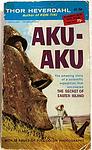
2. Aku Aku
The Secret of Easter Island
In this captivating exploration of Easter Island, the narrative delves into the mysteries surrounding the island's iconic stone statues and the ancient civilization that crafted them. Through a blend of adventure and anthropology, the story follows an expedition that seeks to uncover the secrets of the island's past, revealing insights into the cultural practices, beliefs, and ingenuity of its inhabitants. The journey is marked by thrilling discoveries, unexpected challenges, and a profound respect for the resilience and creativity of the people who once thrived in this remote corner of the world.
-
3. The Ra Expeditions

An engaging firsthand account of building and sailing reed boats modeled on ancient papyrus craft to test whether early African and Mediterranean sailors could have reached the Americas; the narrative follows two daring expeditions—one that ended in failure and a second that achieved a transatlantic crossing—detailing the construction techniques, navigation by sun and stars, storms, shortages, and the camaraderie and conflicts among the multinational crew. Combining travel journal, technical experiment in experimental archaeology, and reflections on cultural diffusion, the book argues that prehistoric sea crossings were technologically and practically possible and explores the implications of such contacts for our understanding of human history.