Rabindranath Tagore
Rabindranath Tagore was a Bengali polymath who reshaped Bengali literature and music, as well as Indian art with Contextual Modernism in the late 19th and early 20th centuries. Author of Gitanjali and its 'profoundly sensitive, fresh and beautiful verse', he became the first non-European to win the Nobel Prize in Literature in 1913.
Books
This list of books are ONLY the books that have been ranked on the lists that are aggregated on this site. This is not a comprehensive list of all books by this author.
-
1. Home and the World
This novel is a political and philosophical exploration set in early 20th century India during the country's struggle for independence. It revolves around three main characters: a nobleman, his wife, and his friend, a fervent nationalist. The story unfolds as the wife, initially confined to the inner quarters of their home, begins to question her societal boundaries and the idea of nationalism after meeting her husband's friend. The narrative delves into the complexities of love, freedom, and the concept of home and world, set against the backdrop of the Swadeshi movement, a part of the Indian independence movement against British rule.
The 1087th Greatest Book of All TimePurchase from Bookshop.org or Amazon -
2. Gitanjali
This collection of poems delves into the profound spiritual journey of the human soul, exploring themes of divine love, devotion, and the eternal bond between the individual and the infinite. Through lyrical verses, the poet expresses a deep yearning for communion with the divine, celebrating the beauty of nature and the simplicity of life as reflections of a higher power. The poems convey a sense of humility and reverence, inviting readers to contemplate the sacred in everyday experiences and to seek a deeper connection with the divine presence that permeates all existence.
The 1349th Greatest Book of All TimePurchase from Bookshop.org or Amazon -
3. Nationalism
In this insightful work, the author critiques the concept of nationalism, arguing that it often leads to divisiveness and conflict rather than unity and progress. He emphasizes the importance of a more universal humanism that transcends national boundaries, advocating for a world where individuals prioritize their shared humanity over nationalistic fervor. Through a blend of philosophical reflection and cultural analysis, the author calls for a reevaluation of how societies understand and practice nationalism, urging a move towards a more inclusive and compassionate global community.
The 9861st Greatest Book of All TimePurchase from Bookshop.org or Amazon -
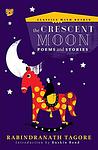
4. The Crescent Moon
"The Crescent Moon" is a collection of poems and songs that delve into the innocence and wonder of childhood through the eyes of a child. The work beautifully captures the simple joys, sorrows, and profound insights experienced during the early years of life, reflecting on themes of nature, motherhood, play, and spirituality. The poet uses vivid imagery and emotive language to evoke the purity and freshness of a child's perspective, creating a tender and nostalgic exploration of youth and the intimate bond between children and the world around them.
The 15916th Greatest Book of All TimePurchase from Amazon -
5. Stray Birds
"Stray Birds" is a collection of poetic aphorisms that capture the philosophical and spiritual insights of life in brief, lyrical expressions. Each entry is a reflection on life's profound, subtle, and often overlooked aspects, ranging from love and consciousness to nature and the universe. The work is marked by its deep humanism, simplicity, and the author's profound connection to the natural world, offering readers moments of contemplation that celebrate the beauty of everyday experiences and the interconnectedness of all things.
The 15916th Greatest Book of All TimePurchase from Amazon