Livy
Titus Livius, known as Livy in English, was a Roman historian who wrote a monumental history of Rome and the Roman people, covering the period from the earliest legends of Rome before the traditional foundation in 753 BC through the reign of Augustus in Livy's own time.
Books
This list of books are ONLY the books that have been ranked on the lists that are aggregated on this site. This is not a comprehensive list of all books by this author.
-
1. The History of Rome
This historical work offers a comprehensive narrative of the history of Rome, from its mythical origins to the reign of the Roman Emperor Augustus. The author chronicles the major political, military, and social events of the Roman Republic, including the founding of the city, the establishment of the Republic, the Punic Wars, and the rise of Julius Caesar. The book is a significant source of information about the early history of Rome and is often considered one of the most important works of Roman history.
The 6100th Greatest Book of All TimePurchase from Amazon -
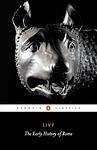
2. The Early History Of Rome
Books I-V of The History of Rome from Its Foundation
The book provides a detailed account of Rome's legendary origins and early history, chronicling its foundation, the establishment of its institutions, and the significant events and figures that shaped its development. It covers the period from the city's mythical founding by Romulus and Remus through the reign of the early kings, highlighting the transition from monarchy to republic. The narrative explores themes of power, governance, and civic duty, illustrating how Rome's early struggles and triumphs laid the groundwork for its eventual rise as a dominant power in the ancient world.
-
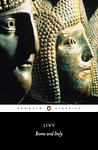
3. Rome And Italy
Books VI-X of The History of Rome from its Foundation
The book provides a detailed historical account of Rome's expansion and consolidation of power in Italy during the early Republic period. It covers significant events, military campaigns, and political developments that shaped Rome's dominance over neighboring regions. The narrative highlights the struggles and strategies of Roman leaders, the conflicts with rival states, and the internal challenges faced by the Republic. Through vivid storytelling, it captures the complexities of Roman society and the pivotal moments that contributed to Rome's rise as a formidable power in the ancient world.
-
4. By Titus Livy The War With Hannibal
Books XXI-XXX of The History of Rome from its Foundation
The book provides a detailed historical account of the Second Punic War, focusing on the epic struggle between Rome and Carthage, led by the formidable general Hannibal. It chronicles Hannibal's daring crossing of the Alps, his series of victories in Italy, and the eventual Roman resurgence under leaders like Scipio Africanus. Through vivid descriptions and insightful analysis, the narrative captures the strategic maneuvers, political dynamics, and the resilience of both civilizations during this pivotal conflict that ultimately shaped the course of Western history.
-
5. Livy
The History of Rome
The book is a comprehensive historical account of Rome's rise from its legendary origins through its expansion into a formidable empire. It chronicles the city's founding myths, the establishment of the Republic, and the significant events and figures that shaped Roman society and politics. Through detailed narratives, the work explores themes of morality, leadership, and the virtues and vices that influenced Rome's trajectory. The text serves as both a historical record and a moral commentary, reflecting on the lessons that can be drawn from Rome's past.
-
6. The History Of Rome, Books 1 5

The narrative chronicles the legendary origins and early history of Rome, beginning with its mythical founding by Romulus and Remus and extending through the establishment of the Republic. It details the city's growth, political evolution, and the challenges it faced, including internal strife and external threats. The text explores the moral and civic virtues that shaped Rome's identity, highlighting key figures and events that contributed to its rise as a dominant power in the ancient world. Through a blend of myth and historical accounts, it offers insights into the values and traditions that underpinned Roman society.
Purchase from Bookshop.org -
7. Livy I
This historical work delves into the early history of Rome, tracing its legendary origins and the foundation of the city through a series of captivating narratives. It explores the tales of Romulus and Remus, the rise of the Roman monarchy, and the subsequent transition to a republic. The narrative is rich with accounts of wars, political intrigue, and the moral virtues and vices of Rome's early leaders, offering a blend of myth and historical fact that seeks to capture the essence of Rome's formative years and the values that shaped its destiny.
Purchase from Bookshop.org -
8. The History Of Rome, Volume V
In this volume, the narrative continues to explore the intricate political and military developments of Rome as it expands its influence across the Italian peninsula and beyond. The text delves into the complex interplay of alliances, betrayals, and strategic maneuvers that define Rome's ascent to power. It highlights the pivotal battles and key figures who shaped the Republic's destiny, offering insights into the societal and cultural shifts that accompanied Rome's transformation from a regional power to a burgeoning empire. Through detailed accounts, the work captures the essence of Roman resilience and ambition during a period of significant historical change.
Purchase from Bookshop.org -
9. The History Of Rome, Volume Iv
This volume delves into the intricate political and military developments of Rome during the late Republic, capturing the tumultuous events and influential figures that shaped the era. It chronicles the internal strife, power struggles, and the relentless expansion of Roman influence, offering a detailed account of the societal and governmental transformations that occurred. Through vivid narratives and keen insights, it provides a comprehensive understanding of the challenges and triumphs faced by Rome as it navigated through a period of significant change and laid the groundwork for the emergence of the Roman Empire.
Purchase from Bookshop.org -
10. The History Of Rome, Volume 3
This volume continues the grand narrative of Rome's ascent, chronicling the city's expansion and the challenges it faced during the tumultuous period of the early Republic. It delves into the intricate political maneuvers, military campaigns, and social upheavals that shaped Rome's destiny, highlighting the resilience and adaptability of its people. The narrative captures the essence of Roman virtues and vices, illustrating how internal strife and external threats were navigated to forge a burgeoning empire. Through detailed accounts of key figures and events, the text offers a vivid portrayal of a civilization in the throes of transformation, laying the groundwork for its future dominance.
Purchase from Bookshop.org -
11. The History Of Rome, Books 21 30
These books chronicle the Second Punic War, from the siege of Saguntum and Hannibal’s Alpine crossing through devastating Roman defeats at Trebia, Trasimene, and Cannae. They trace Rome’s resilience under Fabius’s delaying tactics, the revitalization of its forces, and Scipio’s campaigns in Spain, culminating in the invasion of Africa, an alliance with Numidian cavalry, and the decisive victory at Zama that ends the war and secures Mediterranean dominance.
Purchase from Bookshop.org -
12. The History Of Rome, Books 6 10
A sweeping account of Rome’s recovery and consolidation in the early Republic: the narrative follows the city’s rebuilding after disaster, the social and political struggle between patricians and plebeians as they press for rights and legal reforms, and a sequence of wars, campaigns, and shifting alliances with neighboring Italian peoples (Latins, Volsci, Aequi, Samnites) that extend Roman influence across central Italy; woven through are portraits of leaders, episodes of civic virtue and corruption, and recurring themes of military discipline, political compromise, and the foundations of Roman institutions.
Purchase from Bookshop.org -
13. Livy Xiv
Purchase from Bookshop.org -
14. Livy Xiii
Purchase from Bookshop.org -
15. History Of Rome, Volume Xii
This volume continues the narrative of Rome’s early Republic, recounting campaigns against neighboring peoples, the strains of internecine political conflict, notable acts of leadership and bravery, and diplomatic and institutional responses to military and civic crises that together illustrate how Rome consolidated power and navigated threats both external and internal.
Purchase from Bookshop.org -
16. Livy Xi
Purchase from Bookshop.org -
17. Livy X
A continuous narrative of the early Roman Republic’s political and military struggles, this book recounts a series of campaigns, sieges, and diplomatic maneuvers against neighboring Italian peoples, interwoven with episodes of civic strife, consular rivalries, and moral exempla that illustrate Roman virtues and failings; through detailed battle accounts, negotiations, and domestic events it shows how military success, leadership, and internal politics together shaped Rome’s consolidation of power in Italy.
-
18. Livy Ix
Purchase from Bookshop.org -
19. Livy Viii
A narrative that continues the early Republic’s chronicle, detailing a series of military campaigns against neighboring Italian peoples, the conduct and rivalry of consuls and generals, key battles and sieges, and the diplomatic maneuvers and political decisions that shaped Rome’s dominance; the episodes are used to contrast civic virtues and failings and to show how military successes and institutional responses consolidated Roman power in Italy.
Purchase from Bookshop.org -
20. Livy Vii
A narrative of Rome’s recovery and response in the years after the Gallic sack, describing how the Republic reorganizes its defenses, rebuilds the city, and conducts military campaigns and diplomacy with neighboring Italian peoples; the account emphasizes the actions of consuls and commanders, internal political challenges, and the resilience and consolidation of Roman power in central Italy.
Purchase from Bookshop.org -
21. Livy Vi
A narrative of Rome’s early republican struggles, centered on campaigns against neighboring Italian peoples and the political tensions between magistrates and the popular assemblies; it recounts military engagements, sieges, treaties and colonization efforts while supplying moralizing anecdotes about civic virtue and corruption. Through accounts of generals’ conduct, the exercise of authority by consuls and tribunes, and episodes of public discipline and unrest, the work shows how military pressure and internal conflict test and reshape Rome’s institutions and character in this formative period.
Purchase from Bookshop.org -
22. Livy V
A narrative of Rome’s mid-Republic struggles that blends military history and political drama: it recounts campaigns against neighboring peoples such as the Volsci and Veientes, the protracted siege and eventual capture of Veii under the leadership of prominent Roman commanders, and ongoing social conflicts between patricians and plebeians over debt, rights, and magistracies. The book emphasizes examples of civic virtue and failure, episodes of intrigue and legal reform, and culminates in the catastrophic Gallic invasion and sack of the city after a disastrous defeat, an event that starkly exposes Roman vulnerabilities while foreshadowing efforts at recovery and reform.
Purchase from Bookshop.org -
23. Livy Iv
A narrative of Rome’s early republican years that interweaves accounts of military campaigns against neighboring peoples with intense internal political struggle, portraying the consuls, magistrates and popular leaders as they contend with foreign threats, social tensions between patricians and plebeians, and the development of institutions and laws; the book emphasizes individual character and civic virtue through episode-driven histories of battles, diplomacy, and controversy, offering moralized reflections on leadership, duty, and the precarious foundations of Roman order.
Purchase from Bookshop.org -
24. Livy Iii
A narrative of Rome’s early republican years that follows its struggle to consolidate power through wars with neighboring Latin and Italic peoples, shifting alliances and diplomacy, and recurring internal conflicts between patrician authority and plebeian demands; the book mixes campaign reports with moralizing anecdotes about leading figures, showing how military success, political negotiation, and personal virtue and vice together shaped the city’s growing dominance in Italy.
Purchase from Bookshop.org -
25. Livy Ii
A narrative of Rome’s early regal era that contrasts the peaceful, religious reforms of a law‑giving king with the martial energy of his successor and the pragmatic consolidation under a later ruler; it recounts legendary episodes such as the duel of the Horatii and Curiatii and the absorption of neighbouring Alba Longa, describes the growth of Roman institutions, rites, and civic organization, and traces how military victories and diplomatic moves extended Rome’s influence among the Latin communities.
Purchase from Bookshop.org