Ryunosuke Akutagawa
Ryunosuke Akutagawa was a renowned Japanese writer, often considered the 'father of the Japanese short story.' He is best known for his short stories such as 'Rashomon' and 'In a Grove,' which were later adapted into the famous film 'Rashomon' by Akira Kurosawa. Akutagawa's works are characterized by their rich narrative style and deep psychological insight.
Books
This list of books are ONLY the books that have been ranked on the lists that are aggregated on this site. This is not a comprehensive list of all books by this author.
-
1. Rashomon and Seventeen Other Stories
"Rashomon and Seventeen Other Stories" is a collection of narratives that delve into the depths of human nature, exploring themes such as morality, truth, and the complexities of the human psyche. The stories, set in various periods of Japanese history, range from tales of ancient samurai to accounts of disturbing personal experiences, offering a rich and diverse exploration of Japanese culture and society. The title story, "Rashomon," is a psychological examination of a servant's moral dilemma during a time of civil unrest.
The 1236th Greatest Book of All TimePurchase from Bookshop.org or Amazon -
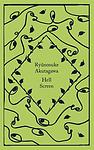
2. Hell Screen
The story revolves around the renowned but arrogant artist Yoshihide, who is commissioned by a powerful lord to create a screen depicting scenes of hell. Obsessed with realism, Yoshihide demands to witness actual suffering to inspire his work, leading to increasingly disturbing events. His fixation reaches a climax when he requests to see a woman burning alive, resulting in a tragic and horrifying revelation involving his own daughter. The tale explores themes of artistic obsession, the nature of cruelty, and the blurred lines between creation and destruction.
The 17158th Greatest Book of All Time -
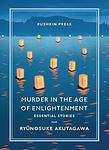
3. Murder In The Age Of Enlightenment
Essential Stories
This collection of short stories delves into the complexities of human nature and morality, set against the backdrop of historical and cultural shifts. Through a series of narratives, the author explores themes of existentialism, the clash between tradition and modernity, and the darker aspects of human psychology. Each story presents a unique perspective on the human condition, often highlighting the tension between rational thought and primal instincts, ultimately questioning the true nature of enlightenment and progress.
-
5. 藪の中 [Yabu No Naka]
![Cover of '藪の中 [Yabu No Naka]' by Ryunosuke Akutagawa](/assets/no-image-2-53f97c4c24e62c1ca6e8d6527b289aaa69820881bc07bcc7af0f6e698f174ad2.gif)
The story unfolds through a series of conflicting testimonies about a violent incident involving a samurai, his wife, and a notorious bandit. Each character provides their own version of the events, leading to a complex web of subjective truths and unreliable narratives. As the accounts diverge, the story explores themes of perception, truth, and the elusive nature of reality, leaving the reader to ponder the ambiguity of human experience and the difficulty of discerning objective truth.
-
6. Kappa
The book is a satirical novella that explores the absurdities of human society through the eyes of a man who finds himself in a fantastical land inhabited by kappa, mythical creatures from Japanese folklore. As the protagonist navigates this strange world, he encounters various kappa whose behaviors and societal norms mirror and exaggerate the follies and contradictions of human civilization. Through these encounters, the novella delves into themes of existentialism, the nature of happiness, and the often arbitrary constructs of societal values, ultimately offering a critique of modern life and human nature.
-
7. 蜜柑 [Mikan]
The story follows a young man on a train journey from Tokyo, who initially feels disdainful and indifferent towards his fellow passengers. His perspective shifts when he observes a young girl carrying a basket of tangerines, who is traveling to visit her family. As he watches her throw the tangerines out the window to her siblings waiting at a station, he experiences a moment of unexpected empathy and warmth. This simple act of familial love and connection profoundly impacts him, prompting a reflection on human kindness and the shared experiences that bind people together.
-
8. 魔術 [Majutsu] レベル別日本語多読ライブラリー レベル3 Vol 2・8
蜘蛛の糸・杜子春
This book is a collection of short stories that delve into themes of human nature, morality, and the supernatural. Through a series of engaging narratives, the stories explore the complexities of human emotions and the often blurred line between reality and illusion. Each tale is crafted to provoke thought and reflection, offering readers a glimpse into the intricacies of Japanese culture and the timeless questions that define the human experience.
-
9. 大導寺信輔の半生 —或精神的風景画 [Daidoji Shinsuke No Hansei Aru Seishinteki Fukeiga]
或精神的風景画
The book delves into the introspective journey of Daidoji Shinsuke, exploring his life and the intricate landscape of his mind. Through a series of reflective episodes, it examines themes of identity, memory, and the passage of time, painting a vivid portrait of Shinsuke's internal struggles and philosophical contemplations. The narrative weaves together moments from his past and present, offering a profound exploration of the human psyche and the complexities of self-perception.
-
10. 歯車 [Haguruma]
The story follows a man who is plagued by hallucinations and an overwhelming sense of dread as he navigates through his daily life. As he becomes increasingly consumed by his mental turmoil, he perceives the world around him as a series of mechanical gears, symbolizing his loss of control and the mechanistic nature of existence. His struggle with these haunting visions and his inability to escape the oppressive feeling of inevitability lead him to question his own sanity and the meaning of life itself. The narrative delves into themes of existential despair and the fragile boundary between reality and illusion.
-
11. 或阿呆の一生・侏儒の言葉 [Aru Ahō No Isshō | Shuju No Kotoba]
This book is a collection of two works by Ryunosuke Akutagawa, offering a profound exploration of human nature and existential themes. The first part, "Aru Ahō No Isshō," delves into the life of a seemingly foolish man, examining his interactions and the societal perceptions that define him. The second part, "Shuju No Kotoba," presents a series of aphorisms and reflections that provide insight into Akutagawa's philosophical musings on life, morality, and the human condition. Together, these works showcase Akutagawa's keen observational skills and his ability to weave complex ideas into compelling narratives.
-
12. Kugghjul
The story delves into the psychological unraveling of a writer who becomes increasingly consumed by paranoia and hallucinations. As he struggles with his mental health, the protagonist experiences vivid and disturbing visions that blur the line between reality and imagination. The narrative explores themes of isolation, the pressures of creativity, and the descent into madness, offering a haunting portrayal of a mind in turmoil. Through its introspective and unsettling depiction, the story captures the fragility of the human psyche.
-
13. The Life Of A Stupid Man
This introspective work delves into the fragmented memories and reflections of a man grappling with his own perceived inadequacies and existential musings. Through a series of vignettes, the narrative explores themes of identity, self-doubt, and the search for meaning in a world that often feels indifferent. The protagonist's journey is marked by moments of poignant realization and haunting introspection, painting a vivid picture of a life caught between the mundane and the profound, ultimately offering a raw and honest portrayal of the human condition.
-
14. Mandarins
Set against the backdrop of a train journey, the narrative explores the fleeting yet profound connection between a weary, disillusioned man and a young woman selling mandarins. As the train moves through the countryside, the man's initial indifference and cynicism are gradually transformed by the simple act of the woman peeling and sharing the vibrant fruit. This seemingly mundane encounter becomes a poignant reflection on the beauty of human connection, the innocence of youth, and the unexpected moments that can reignite one's appreciation for life.
Purchase from Bookshop.org -
15. Ворота Расёмон
A destitute servant shelters from a storm beneath a crumbling city gate in medieval Kyoto and wrestles with whether to abandon morality to survive. In the attic he finds an old woman plucking hair from corpses to sell, who defends her actions as necessary in desperate times. Confronted with decay, hunger, and hypocrisy, he embraces theft and brutality, disappearing into the night.
Purchase from Bookshop.org -
16. Three Japanese Short Stories
A compact collection of darkly ironic and psychologically incisive tales set against historical Japan, exploring human selfishness, moral ambiguity, and the elusiveness of truth. Through vivid scenes, unreliable narrators, and framed narratives, the stories expose how perception, pride, and desperation warp reality and drive people to cruel or desperate acts. Combining sharp social critique with lyrical detail, the collection probes conscience, artistic obsession, and the fragile line between appearance and reality.