Yuval Noah Harari
Yuval Noah Harari is an Israeli public intellectual, historian, and a professor in the Department of History at the Hebrew University of Jerusalem. He is known for his popular science books 'Sapiens: A Brief History of Humankind', 'Homo Deus: A Brief History of Tomorrow', and '21 Lessons for the 21st Century'.
Books
This list of books are ONLY the books that have been ranked on the lists that are aggregated on this site. This is not a comprehensive list of all books by this author.
-
1. Sapiens
A Brief History of Humankind
This book provides a comprehensive exploration of the history of the human species, tracing back from the earliest forms of Homo Sapiens to the modern day. It delves into evolutionary biology, the development of cultures and societies, and the rise of major ideologies and technologies. The book also discusses the future of the species, posing thought-provoking questions about our roles and responsibilities in a rapidly changing world.
The 1252nd Greatest Book of All TimePurchase from Bookshop.org or Amazon -
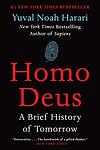
2. Homo Deus
A Brief History of Tomorrow
This book explores the future of humankind, building upon the foundation laid by its exploration of our past. It delves into the potential paths humanity might take as technological advancements and artificial intelligence begin to challenge the very essence of what it means to be human. The narrative posits that as we conquer famine, war, and plague, our focus shifts towards achieving happiness, immortality, and divinity, raising profound questions about our future roles and values in a world where machines and algorithms might outperform us in thinking, making decisions, and understanding the universe. Through a blend of philosophy, history, and future-gazing, the book invites readers to consider the implications of such a future, both exhilarating and daunting.
The 3211th Greatest Book of All TimePurchase from Bookshop.org or Amazon -
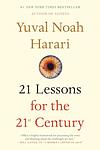
3. 21 Lessons For The 21st Century
21 Lessons for the 21st Century
This book navigates through the complexities and challenges of the 21st century, offering insightful analysis and thought-provoking lessons on various pressing issues such as technology, politics, religion, and education. The author delves into the impact of artificial intelligence and biotechnology, exploring how they are reshaping the world and questioning the future of humanity in this rapidly changing landscape. Through a series of compelling essays, the book encourages readers to reflect on the values, meaning, and personal engagement in a world full of noise and uncertainty, aiming to equip society with the understanding and wisdom to navigate the unknown future.
The 14834th Greatest Book of All TimePurchase from Amazon -
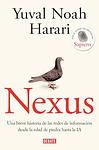
4. Nexus: A Brief History of Information Networks from the Stone Age to AI
The book explores the evolution of information networks throughout human history, tracing their development from primitive communication methods in the Stone Age to the sophisticated artificial intelligence systems of today. It examines how these networks have shaped societies, economies, and cultures, highlighting key innovations and turning points that have transformed the way humans share and process information. By analyzing the impact of these networks on human progress, the book provides insights into the interconnectedness of past and present technologies, offering a comprehensive understanding of the role information networks play in shaping our world.
The 17162nd Greatest Book of All TimePurchase from Amazon -
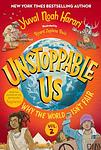
5. Unstoppable Us, Vol. 2
The Adventures of Humans from Stone Age to Space Age
The book explores the fascinating journey of human history, focusing on the development of societies and the pivotal moments that have shaped our world. It delves into the evolution of human culture, the rise of civilizations, and the impact of technological advancements on our lives. Through engaging narratives and insightful analysis, the book highlights the resilience and adaptability of humans, emphasizing how our collective actions and innovations have continually transformed our societies. It encourages readers to reflect on the past to better understand the present and envision the future.
-
6. Unstoppable Us, Volume 1
How Humans Took Over the World
The book explores the remarkable journey of humankind from the Stone Age to the present, highlighting the unique cognitive abilities that have allowed humans to dominate the planet. It delves into the development of language, culture, and societal structures, emphasizing how storytelling and shared beliefs have enabled large-scale cooperation among humans. Through engaging narratives and illustrations, the book aims to make complex historical and scientific concepts accessible to younger audiences, encouraging them to reflect on humanity's past and its impact on the world today.
-
7. Road To Unfreedom

In this compelling exploration of modern geopolitics, the author delves into the complex interplay of historical narratives, authoritarianism, and the erosion of democratic ideals in the 21st century. Through a meticulous analysis of recent events, the book examines how the manipulation of truth and the resurgence of nationalism have paved the way for a new era of political instability. By drawing parallels between past and present, the narrative offers a sobering reflection on the fragility of freedom and the urgent need for vigilance in safeguarding democratic values.
-
8. Money
The book explores the evolution of money from its origins as a simple barter system to its current complex forms in the digital age. It delves into the role money has played in shaping human societies, economies, and cultures, highlighting its power to unify diverse groups through shared belief systems. The narrative examines how money has influenced global trade, political structures, and technological advancements, while also addressing the ethical and philosophical questions surrounding wealth and inequality. Through a historical lens, the book offers insights into the future of money in an increasingly interconnected world.