Samir Amin
Samir Amin was an Egyptian-French Marxian economist known for his work on the political economy of development and his critique of global capitalism. He was a leading figure in the field of dependency theory and world-systems analysis.
Books
This list of books are ONLY the books that have been ranked on the lists that are aggregated on this site. This is not a comprehensive list of all books by this author.
-
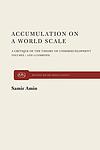
1. Accumulation On A World Scale
A Critique of the Theory of Underdevelopment
"Accumulation On A World Scale" by Samir Amin is a thought-provoking analysis of the global capitalist system and the dynamics of accumulation. Amin explores the historical development of capitalism, its inherent contradictions, and the ways in which it perpetuates inequality and exploitation on a global scale. He argues that the capitalist system is fundamentally flawed and unsustainable, offering alternative perspectives on economic development and proposing radical changes to create a more equitable and just world.
The 5266th Greatest Book of All TimePurchase from Bookshop.org or Amazon -
2. Eurocentrism
Modernity, Religion, and Democracy

This insightful work critically examines the pervasive influence of Eurocentric thought in shaping global history, culture, and politics. It challenges the dominant narratives that prioritize European experiences and perspectives, often at the expense of other cultures and civilizations. By dissecting the historical roots and ideological underpinnings of Eurocentrism, the book advocates for a more inclusive and balanced understanding of world history that recognizes the contributions and significance of non-European societies. Through a blend of historical analysis and theoretical critique, it calls for a reevaluation of the global order and a move towards a more equitable and diverse representation of cultures.
Purchase from Bookshop.org -
3. The Liberal Virus
Permanent War and the Americanization of the World
A trenchant critique of global neoliberalism that likens the spread of market-oriented, American-style liberal economic and political models to a destructive contagion, arguing they promote permanent military intervention, economic dependency, social dislocation and the dismantling of national development strategies in the Global South. The book traces how policies of privatization, deregulation, debt and free trade serve transnational capital, erode local sovereignty and livelihoods, and produce cycles of underdevelopment and conflict rather than prosperity. It calls for resisting this hegemonic order through alternative development paths, regional cooperation and a multipolar world that prioritizes social justice and autonomy over market fundamentalism.
Purchase from Bookshop.org -
4. Unequal Development
An Essay on the Social Formations of Peripheral Capitalism
A sweeping Marxist critique of global capitalism that explains persistent poverty and inequality as the product of an integrated world-system in which wealthy 'center' economies structurally exploit and underdevelop 'peripheral' countries through unequal exchange, dependent development, and the international division of labor; it rejects modernization theory, analyzes how national bourgeoisies, imperialism, and international institutions perpetuate distortionary industrialization and agrarian crises, and argues that genuine emancipation requires structural transformation, regional cooperation or strategic delinking, and socialist-oriented policies to overcome chronic dependency and achieve autonomous, equitable development.