Anthony Appiah
Kwame Anthony Appiah is a British-Ghanaian philosopher, cultural theorist, and novelist whose interests include political and moral theory, the philosophy of language and mind, and African intellectual history. He is known for his work on identity, cosmopolitanism, and the ethics of globalization.
Books
This list of books are ONLY the books that have been ranked on the lists that are aggregated on this site. This is not a comprehensive list of all books by this author.
-
1. In My Father's House
Africa in the Philosophy of Culture
"In My Father's House" by Anthony Appiah is a thought-provoking exploration of the complexities of African identity and the concept of cultural authenticity in a globalized world. Through personal anecdotes, historical analysis, and philosophical reflections, the author challenges essentialist notions of African culture, arguing for a more fluid understanding that embraces the diverse influences and hybridity of modern African societies. Appiah's nuanced perspective sheds light on the intricate interplay between tradition and modernity, and invites readers to question and redefine their own cultural identities.
The 7796th Greatest Book of All TimePurchase from Bookshop.org or Amazon -
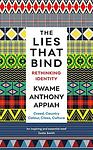
2. The Lies That Bind
Rethinking Identity
In this thought-provoking exploration of identity, the author delves into the complex web of social constructs that define who we are, challenging the conventional wisdom surrounding race, religion, nationality, and culture. By dissecting the narratives we often take for granted, the book encourages readers to question the boundaries that bind us and to embrace a more fluid understanding of identity. Through a blend of historical analysis, philosophical inquiry, and personal anecdotes, the author invites us to reconsider the categories that shape our lives and to recognize the shared humanity that transcends these artificial divisions.
Purchase from Bookshop.org -
3. Thinking It Through
An Introduction to Contemporary Philosophy

This philosophical exploration delves into the intricate process of reasoning, offering readers a comprehensive guide to understanding and evaluating arguments across various domains. It emphasizes the importance of critical thinking and logical analysis, providing tools and frameworks to navigate complex ideas and ethical dilemmas. Through a series of thought-provoking examples and exercises, it encourages readers to refine their cognitive skills, fostering a deeper appreciation for the nuances of rational discourse and the pursuit of truth.
Purchase from Bookshop.org -
4. Cosmopolitanism
Ethics in a World of Strangers
In this thought-provoking exploration of global ethics, the author delves into the concept of cosmopolitanism, advocating for a world where individuals embrace both their local identities and their responsibilities as global citizens. The book challenges readers to transcend cultural boundaries and prejudices, promoting a dialogue that respects diversity while seeking common ground. Through a blend of philosophical insights and real-world examples, it encourages an understanding of how interconnected our lives are, urging a balance between universal values and cultural particularities to foster a more harmonious global community.
Purchase from Bookshop.org -
5. The Honor Code
How Moral Revolutions Happen
This insightful work explores how moral revolutions occur, focusing on the role of honor in shaping societal norms and behaviors. Through historical case studies, it examines how practices once deemed acceptable, such as dueling, foot-binding, and the Atlantic slave trade, were overturned by shifts in the collective sense of honor. The narrative delves into the complex interplay between ethical reasoning and the social pressures of honor, illustrating how these forces can drive significant cultural and moral change.
Purchase from Bookshop.org -
6. Experiments In Ethics
Making Philosophy Count
In this thought-provoking exploration, the author delves into the intersection of ethics and empirical research, challenging traditional philosophical approaches by incorporating insights from psychology, neuroscience, and anthropology. The narrative examines how experimental methods can illuminate moral intuitions and ethical principles, questioning whether our moral judgments are as rational as we believe. By bridging the gap between theory and practice, the text invites readers to reconsider the foundations of moral philosophy and the role of scientific inquiry in understanding human values.
Purchase from Bookshop.org