Daniel Dennett
Daniel Clement Dennett III is an American philosopher, writer, and cognitive scientist whose research centers on the philosophy of mind, philosophy of science, and philosophy of biology, particularly as those fields relate to evolutionary biology and cognitive science.
Books
This list of books are ONLY the books that have been ranked on the lists that are aggregated on this site. This is not a comprehensive list of all books by this author.
-
1. Consciousness Explained
The book in question offers a comprehensive theory of consciousness, challenging traditional views and proposing a scientific understanding of the mind. The author argues against the Cartesian model of consciousness as a central, unified entity and instead presents the "Multiple Drafts" model, which posits that consciousness arises from various cognitive processes occurring in parallel. The work delves into the nature of perception, memory, and language, employing insights from psychology, neuroscience, and artificial intelligence to explain how complex phenomena such as self-awareness and intentionality can emerge from the interactions of non-conscious brain functions. The book is both a critique of outdated philosophical ideas about the mind and an attempt to clarify how consciousness can be studied and understood through empirical means.
The 2293rd Greatest Book of All TimePurchase from Bookshop.org or Amazon -
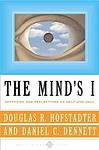
2. The Mind's I
Fantasies and Reflections on Self and Soul
This thought-provoking collection of essays and stories delves into the nature of consciousness, self, and identity, exploring the intricate relationship between the mind and the self. Through a blend of philosophical inquiry and imaginative narratives, the book invites readers to ponder the mysteries of human cognition, the concept of the "I," and the boundaries of self-awareness. It challenges conventional perceptions of what it means to be conscious, encouraging a deeper understanding of the mind's complexities and the essence of personal identity.
The 12496th Greatest Book of All TimePurchase from Amazon -
3. I've Been Thinking
The book explores the intricacies of human consciousness, thought, and the mind, delving into philosophical and scientific perspectives. It examines how we perceive the world, make decisions, and develop beliefs, while also addressing the nature of free will and the role of evolution in shaping our cognitive processes. Through a series of essays, the author encourages readers to question their assumptions and consider the complexities of human cognition, ultimately fostering a deeper understanding of what it means to think and be conscious.
-
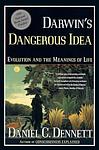
4. Darwin's Dangerous Idea
Evolution and the Meanings of Life
The book explores the profound implications of Charles Darwin's theory of evolution by natural selection, arguing that it is a universal acid that affects a wide range of disciplines beyond biology, including philosophy, psychology, and ethics. The author examines how Darwin's idea challenges traditional views on the nature of life, the mind, and the universe, proposing that natural selection is a mindless, algorithmic process that can explain the complexity and diversity of life. Through a detailed analysis, the book defends the scientific validity and transformative power of Darwinian thinking, while addressing and countering criticisms from various quarters, including those who see it as a threat to human uniqueness and moral values.
-
5. Intuition Pumps And Other Tools For Thinking
The book offers a collection of cognitive tools and thought experiments designed to enhance critical thinking and problem-solving skills. It explores various philosophical concepts and encourages readers to examine their own thinking processes. Through engaging narratives and practical examples, the book aims to sharpen the reader's ability to analyze complex ideas, question assumptions, and approach problems with a more nuanced perspective. It serves as a guide to refining one's intellectual toolkit, fostering a deeper understanding of both philosophical and everyday challenges.
-
6. From Bacteria To Bach And Back
The Evolution of Minds

This thought-provoking exploration delves into the evolution of consciousness, tracing the journey from simple biological organisms to complex human minds capable of creating culture and art. It examines the role of natural selection and cultural evolution in shaping our cognitive abilities, proposing that human consciousness is not a singular phenomenon but a result of gradual developments over time. The narrative challenges traditional views on the mind, offering a fresh perspective on how ideas and memes evolve similarly to biological entities, ultimately influencing our understanding of intelligence and creativity.
Purchase from Bookshop.org -
7. Freedom Evolves
In this thought-provoking exploration of free will and determinism, the author delves into the intricate relationship between evolution, consciousness, and human freedom. By examining the mechanisms of natural selection and the development of complex cognitive processes, the narrative argues that free will is not an illusion but a natural product of evolutionary processes. The book challenges traditional notions of determinism, suggesting that freedom is a dynamic and emergent property of living systems, shaped by the interplay of biology, culture, and individual agency. Through a blend of philosophy, science, and insightful analysis, the work offers a compelling perspective on how freedom can coexist with a deterministic universe.
Purchase from Bookshop.org -
8. The Intentional Stance
MIT Press
This philosophical work explores the concept of attributing beliefs, desires, and intentions to entities to predict and explain their behavior. It introduces the idea of the "intentional stance," a strategy for interpreting the actions of both humans and non-human entities by assuming they are rational agents with goals. The book delves into the implications of this approach for understanding consciousness, artificial intelligence, and the nature of mind, challenging readers to reconsider how they perceive agency and intentionality in the world around them.
Purchase from Bookshop.org -
9. Breaking The Spell
Religion as a Natural Phenomenon
This thought-provoking book delves into the nature and origins of religious belief, examining it through the lens of evolutionary biology and cognitive science. It challenges readers to consider religion as a natural phenomenon, exploring how it has evolved and adapted over time to serve various social and psychological functions. By dissecting the mechanisms that sustain religious faith, the book encourages a scientific inquiry into the reasons behind humanity's widespread devotion to spiritual practices, urging a deeper understanding of how these beliefs shape human behavior and society.
Purchase from Bookshop.org -
10. Caught In The Pulpit
Leaving Belief Behind
This thought-provoking exploration delves into the lives of clergy members who, despite losing their faith, continue to serve in their religious roles. Through a series of interviews and personal accounts, the narrative unveils the internal struggles and ethical dilemmas faced by these individuals as they grapple with the dichotomy between their public duties and private beliefs. The book sheds light on the broader implications of religious institutions and the complex nature of faith, offering a unique perspective on the intersection of personal conviction and professional obligation.
-
11. Just Deserts
Debating Free Will
In this thought-provoking exploration of free will, two philosophers engage in a lively debate about the nature of human agency and moral responsibility. Through a series of dialogues, they delve into the complexities of determinism, the concept of "just deserts," and the implications of scientific advancements on our understanding of free will. The book challenges readers to reconsider their assumptions about autonomy and accountability, offering a nuanced perspective on whether individuals truly deserve praise or blame for their actions.
Purchase from Bookshop.org -
12. Kinds Of Minds
Towards an Understanding of Consciousness
This insightful exploration delves into the nature of consciousness and the varying degrees of mental complexity across different species. It examines how minds evolve, function, and interact with the world, proposing that understanding the minds of other creatures can illuminate the workings of our own. Through a blend of philosophy, cognitive science, and evolutionary biology, the narrative challenges readers to reconsider what it means to have a mind and the implications of these findings on our perception of intelligence and consciousness.
Purchase from Bookshop.org -
13. Where Am I?
In this thought-provoking philosophical essay, the narrative explores the intriguing concept of consciousness and identity through a fictional scenario involving a brain transplant. The protagonist embarks on a journey to understand the relationship between the mind and the body after his brain is separated from his body and placed in a vat, while his body is controlled remotely. This imaginative tale delves into questions about the nature of self, the essence of personal identity, and the intricate connection between physical existence and mental awareness, inviting readers to ponder the complexities of human consciousness.
Purchase from Bookshop.org -
14. Elbow Room
The Varieties of Free Will Worth Wanting
This book argues that the kinds of free will worth wanting are compatible with a scientifically lawful universe: human beings need not rely on metaphysical indeterminacy or mystical agency to be morally responsible agents. It explains how capacities for reasoning, planning, and avoiding foreseeable outcomes—what the author calls evitability and reasons-responsiveness—ground praise, blame, and personal autonomy, while showing that mere randomness would neither secure nor enhance freedom. Through thought experiments and appeals to cognitive science and philosophy, the work dismantles common intuitions about a mysterious, contra-causal freedom and replaces them with a naturalistic account of human choice and moral responsibility.
Purchase from Bookshop.org