The Greatest Books of All Time on Bias
Click to learn how this list is calculated.
This list represents a comprehensive and trusted collection of the greatest books. Developed through a specialized algorithm, it brings together 759 'best of' book lists to form a definitive guide to the world's most acclaimed books. For those interested in how these books are chosen, additional details can be found on the rankings page.
What should I read next?
Get personalized book recommendations based on your reading history and preferences. Our algorithm analyzes your favorite books and reading patterns to suggest your next great read.
Get RecommendationsGenres
Countries
Date Range
Filter books by their publication year. Enter the earliest year (Start) and latest year (End) to find books published within that period. Leave either field empty to search from the beginning of time or up to the present day.
Reading Statistics
Click the button below to see how many of these books you've read!
Download
If you're interested in downloading this list as a CSV file for use in a spreadsheet application, you can easily do so by clicking the button below. Please note that to ensure a manageable file size and faster download, the CSV will include details for only the first 500 books.
DownloadTo download this list as a CSV file, please log in to your account. Once logged in, you'll be able to download the data for use in spreadsheet applications.
Login to Download-
1. Thinking, Fast and Slow by Daniel Kahneman
The book delves into the two systems that drive the way we think—System 1, which is fast and intuitive, and System 2, which is slow and deliberate. The author, a Nobel laureate, explores how these systems shape our judgments and decision-making. He presents several groundbreaking experiments that have shaped our understanding of human thought, revealing where we can trust our intuitions and how we can tap into the benefits of slow thinking. The book also discusses how our cognitive biases often lead to errors in judgment and affect our decision-making processes.
The 2077th Greatest Book of All TimePurchase from Bookshop.org or Amazon -
2. The Mismeasure of Man by Stephen Jay Gould
The definitive refutation to the argument of biological determinism
The book is a critical analysis of the history of scientific racism and biological determinism, the belief that social and economic differences among human races, sexes, and classes are inheritable, inevitable, and natural. It challenges the idea that intelligence can be measured accurately and placed in a single, linear scale. The author refutes the arguments of those who support these theories, arguing that they are based on flawed methodologies, biased data, and unverifiable assumptions. Instead, he proposes that intelligence is multifaceted and cannot be quantified simplistically.
The 2666th Greatest Book of All TimePurchase from Bookshop.org or Amazon -
3. Biased by Jennifer Eberhardt
Uncovering the Hidden Prejudice That Shapes What We See, Think, and Do
The book explores the pervasive and often unconscious nature of racial bias, examining how it infiltrates various aspects of society, including law enforcement, education, and everyday interactions. Through a combination of personal anecdotes, scientific research, and real-world examples, the author illustrates how deeply ingrained biases shape perceptions and behaviors, often with devastating consequences. The work calls for greater awareness and proactive measures to address and mitigate the impact of these biases, emphasizing the need for systemic change and individual responsibility in creating a more equitable society.
The 10240th Greatest Book of All TimePurchase from Amazon -
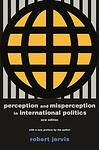
4. Perception And Misperception In International Politics by Robert Jervis
The Nature of Belief Systems and Decision-Making in International Relations
This book delves into the complexities of international relations by examining how states perceive and often misinterpret each other's actions due to psychological biases and informational constraints. The author argues that these misperceptions can lead to conflicts and misunderstandings, significantly impacting global politics. By integrating insights from psychology with detailed case studies, the work provides a comprehensive framework for understanding the role of perception in international relations, offering strategies for reducing misperceptions and fostering more effective communication between states. Through its exploration of the cognitive processes influencing political decision-making, the book highlights the importance of perception management in diplomacy and international strategy.
The 13524th Greatest Book of All TimePurchase from Bookshop.org or Amazon -
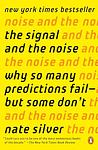
5. The Signal And The Noise by Nate Silver
Why So Many Predictions Fail—but Some Don't
This book explores the world of prediction, delving into how we can distinguish a true signal from a universe of noisy data. Through a series of engaging case studies—from baseball, to weather forecasting, to the stock market—the author demonstrates the art and science of predictive analytics. He argues that while our predictive capabilities are far from perfect, by understanding the inherent uncertainties and applying statistical models wisely, we can improve our ability to forecast future events. The book emphasizes the importance of thinking probabilistically and recognizing the limitations of our predictions in an increasingly complex world.
The 14599th Greatest Book of All TimePurchase from Amazon -
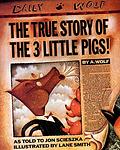
6. The True Story Of The 3 Little Pigs by Jon Scieszka
By A. Wolf
In this humorous retelling of a classic tale, the story is presented from the perspective of the misunderstood wolf, who insists that he was merely trying to borrow a cup of sugar from his pig neighbors. The wolf explains that his infamous huffing and puffing was actually a result of a terrible cold, which led to a series of unfortunate events that were blown out of proportion by the media. Through witty narration and clever illustrations, readers are invited to reconsider the traditional narrative and question the reliability of the stories they've always been told.
The 14985th Greatest Book of All TimePurchase from Bookshop.org or Amazon -
7. What Is History? by E. H. Carr
The George Macaulay Trevelyan Lectures Delivered in the University of Cambridge January-March 1961
The book explores the nature of historical knowledge, examining the role of the historian in shaping history through the selection and interpretation of facts. It challenges the objective stance of historians, arguing that history is an ongoing dialogue between the past and present, influenced by the societal, political, and personal biases of its narrators. The work delves into the impact of societal structures and the individual agency, advocating for a more nuanced understanding of historical processes and the subjective elements that inevitably enter into the recording of history.
The 15916th Greatest Book of All TimePurchase from Amazon -
8. Race After Technology by Ruha Benjamin
Abolitionist Tools for the New Jim Code
This book critically examines the intersection of technology and race, revealing how digital tools and platforms often perpetuate existing racial biases and inequalities. It delves into the concept of the "New Jim Code," where discriminatory designs are embedded in the architecture of various technologies, from automated decision-making systems to predictive policing algorithms. The author challenges the notion that technology is neutral, arguing that it often reinforces systemic discrimination, and calls for a more inclusive and equitable approach to tech development that actively confronts and dismantles these embedded prejudices.
The 17162nd Greatest Book of All TimePurchase from Amazon -
9. Predictably Irrational by Dan Ariely
The Hidden Forces That Shape Our Decisions
The book explores the hidden forces that shape our decisions, revealing that human behavior is often irrational in predictable ways. Through a series of experiments and anecdotes, it demonstrates how factors such as emotions, social norms, and expectations can lead us to make illogical choices. The author challenges the notion of humans as rational beings, illustrating how our cognitive biases and irrational tendencies influence everything from shopping habits to personal relationships. By understanding these patterns, the book suggests we can make better decisions and improve various aspects of our lives.
The 17162nd Greatest Book of All TimePurchase from Amazon




Reading Statistics
Click the button below to see how many of these books you've read!
Download
If you're interested in downloading this list as a CSV file for use in a spreadsheet application, you can easily do so by clicking the button below. Please note that to ensure a manageable file size and faster download, the CSV will include details for only the first 500 books.
DownloadTo download this list as a CSV file, please log in to your account. Once logged in, you'll be able to download the data for use in spreadsheet applications.
Login to Download