The Greatest Books of All Time on Cognition
Click to learn how this list is calculated.
This list represents a comprehensive and trusted collection of the greatest books. Developed through a specialized algorithm, it brings together 759 'best of' book lists to form a definitive guide to the world's most acclaimed books. For those interested in how these books are chosen, additional details can be found on the rankings page.
What should I read next?
Get personalized book recommendations based on your reading history and preferences. Our algorithm analyzes your favorite books and reading patterns to suggest your next great read.
Get RecommendationsGenres
Countries
Date Range
Filter books by their publication year. Enter the earliest year (Start) and latest year (End) to find books published within that period. Leave either field empty to search from the beginning of time or up to the present day.
Reading Statistics
Click the button below to see how many of these books you've read!
Download
If you're interested in downloading this list as a CSV file for use in a spreadsheet application, you can easily do so by clicking the button below. Please note that to ensure a manageable file size and faster download, the CSV will include details for only the first 500 books.
DownloadTo download this list as a CSV file, please log in to your account. Once logged in, you'll be able to download the data for use in spreadsheet applications.
Login to Download-
1. Gödel, Escher, Bach by Douglas Hofstadter
An Eternal Golden Braid
The book explores concepts of formal systems, recursion, self-reference, and infinity through the interdisciplinary lens of mathematics, art, and music. The narrative intertwines biographical sketches of the titular figures - a mathematician, an artist, and a composer - with dialogues and discussions to illustrate complex ideas. The author uses these figures as metaphors to delve into the nature of human cognition and consciousness, suggesting that our minds are essentially self-referential systems akin to the works of Gödel, Escher, and Bach.
The 1387th Greatest Book of All TimePurchase from Bookshop.org or Amazon -
2. The Man Who Mistook His Wife for a Hat by Oliver Sacks
And Other Clinical Tales
The book is a collection of clinical tales about patients suffering from a variety of neurological disorders. The author, a neurologist, shares his experiences with these patients, whose conditions range from common ailments like amnesia and aphasia, to rare disorders like visual agnosia and Tourette's Syndrome. The stories are both compassionate and insightful, revealing the complexities of the human brain and the resilience of the human spirit, even in the face of debilitating illness.
The 1987th Greatest Book of All TimePurchase from Bookshop.org or Amazon -
3. Thinking, Fast and Slow by Daniel Kahneman
The book delves into the two systems that drive the way we think—System 1, which is fast and intuitive, and System 2, which is slow and deliberate. The author, a Nobel laureate, explores how these systems shape our judgments and decision-making. He presents several groundbreaking experiments that have shaped our understanding of human thought, revealing where we can trust our intuitions and how we can tap into the benefits of slow thinking. The book also discusses how our cognitive biases often lead to errors in judgment and affect our decision-making processes.
The 2077th Greatest Book of All TimePurchase from Bookshop.org or Amazon -
4. The Language Instinct by Steven Pinker
How the Mind Creates Language
The book explores the idea that humans are born with an innate capacity for language. It argues that the ability to learn language is a natural instinct, hard-wired into our brains by evolution. Drawing from research in various fields including linguistics, psychology, and anthropology, the book examines how children learn language, how languages develop and change over time, and how the mind constructs and understands language. The author challenges the notion that language is a cultural artifact and instead presents it as a biological adaptation that is essential for human survival and communication.
The 3064th Greatest Book of All TimePurchase from Bookshop.org or Amazon -
5. Insight by Bernard Lonergan
A Study of Human Understanding
The book is a comprehensive exploration of human understanding and cognition from a philosophical perspective. It delves into the nature of knowledge, the process of knowing, and the dynamics of inquiry and learning. The author presents a detailed analysis of the human intellect and its operations, investigating the role of insight in decision-making, problem-solving, and discovery. The book also discusses the relationship between understanding and other cognitive faculties such as perception, memory, and imagination, while examining the impact of cultural, social, and historical factors on human understanding.
The 3561st Greatest Book of All TimePurchase from Bookshop.org or Amazon -
6. The Righteous Mind by Jonathan Haidt
Why Good People Are Divided by Politics and Religion
The book explores the psychological underpinnings of morality, arguing that human moral reasoning is primarily driven by intuitive processes rather than rational deliberation. It delves into the evolutionary origins of moral behavior, suggesting that moral intuitions evolved to enhance group cohesion and cooperation. The author presents a framework of six moral foundations—care, fairness, loyalty, authority, sanctity, and liberty—that vary in emphasis across different cultures and political ideologies. By examining these foundations, the book seeks to explain why people with differing moral perspectives often find it difficult to understand each other, ultimately advocating for greater empathy and open-mindedness in moral and political discourse.
The 5613th Greatest Book of All TimePurchase from Bookshop.org or Amazon -
7. Metaphors We Live by George Lakoff, Mark Johnson
The book explores the pervasive role of metaphors in shaping human thought and language, arguing that metaphors are not just linguistic expressions but fundamental to our conceptual system. It demonstrates how everyday language is filled with metaphorical concepts that influence how we perceive, understand, and interact with the world. By examining various examples, the authors reveal that our cognitive processes are deeply rooted in metaphorical thinking, which affects everything from our emotions to our social and political beliefs. The work challenges traditional views of language and cognition, suggesting that understanding metaphors is crucial to understanding human experience.
The 6202nd Greatest Book of All TimePurchase from Bookshop.org or Amazon -
8. The Shallows by Nicolas Carr
What the Internet Is Doing to Our Brains

The book explores how the internet is reshaping our brains and altering the way we think, read, and remember. It delves into the cognitive and cultural consequences of our increasing reliance on digital media, arguing that the constant distractions and interruptions of online life are eroding our capacity for deep, reflective thought. Through a blend of historical analysis, scientific research, and personal reflection, the author examines the profound implications of this shift for our intellectual lives and society as a whole.
The 6354th Greatest Book of All TimePurchase from Bookshop.org -
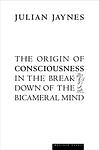
9. The Origin Of Consciousness In The Breakdown Of The Bicameral Mind by Julian Jaynes
The book explores a theory that human consciousness, as understood today, did not develop until about 3,000 years ago. Prior to this, according to the author, human behavior was governed by mental processes he describes as "bicameral," where the brain's two hemispheres had distinct roles, with one side responding to the other with auditory hallucinations that the individual obeyed as commands from gods. These hallucinations ceased as changes in society, language, and writing increased complexity in human interactions, leading to the development of introspective consciousness.
The 6716th Greatest Book of All TimePurchase from Bookshop.org or Amazon -
10. Models Of Man, Social And Rational by Herbert Simon
Mathematical Essays on Rational Human Behavior in a Social Setting
"Models of Man, Social and Rational" is a seminal work in the field of behavioral economics and decision-making theory that challenges the traditional notion of humans as perfectly rational agents. Instead, the book proposes a more realistic view of human behavior, acknowledging the limitations of our cognitive abilities and the influence of social and emotional factors on our decisions. The author introduces the concept of bounded rationality, suggesting that individuals make satisficing choices rather than optimizing ones due to the complexity of the world and the constraints on our mental processing. This groundbreaking perspective has profound implications for economics, psychology, and artificial intelligence, offering a more nuanced understanding of human behavior in various contexts.
The 6796th Greatest Book of All TimePurchase from Amazon -
11. Everything Bad Is Good For You by Steven Johnson
How Today's Popular Culture is Actually Making Us Smarter
The book challenges the conventional wisdom that popular culture is dumbing down society by arguing that modern media, including video games, television, and the internet, are actually making us smarter. It suggests that these forms of entertainment are becoming increasingly complex and intellectually demanding, requiring audiences to engage in sophisticated problem-solving, critical thinking, and social interaction. By examining the cognitive benefits of these media, the book posits that they are fostering a more intelligent and adaptable generation, capable of navigating the complexities of the modern world.
The 7617th Greatest Book of All TimePurchase from Bookshop.org or Amazon -
12. Language, Thought, And Reality by Benjamin Lee Whorf
Selected Writings of Benjamin Lee Whorf
This seminal work explores the intricate relationship between language, cognition, and perception, proposing that the structure of a language influences its speakers' worldview and cognitive processes. Through a series of essays and studies, it delves into the concept of linguistic relativity, suggesting that different languages shape distinct ways of thinking and understanding reality. The book challenges the notion of a universal cognitive framework, highlighting the diversity of human thought as shaped by linguistic differences, and invites readers to reconsider the profound impact language has on our perception of the world.
The 7862nd Greatest Book of All TimePurchase from Bookshop.org or Amazon -
13. Being Wrong by Kathryn Schulz
Adventures in the Margin of Error
This insightful exploration delves into the human experience of error, examining why we are so often wrong and how our mistakes shape our understanding of the world. It challenges the stigma associated with being incorrect, proposing that errors are not only inevitable but also essential to personal growth and innovation. Through a blend of scientific research, philosophical inquiry, and personal anecdotes, the narrative encourages readers to embrace their fallibility, fostering a more open-minded and resilient approach to life's uncertainties.
The 8468th Greatest Book of All TimePurchase from Bookshop.org or Amazon -
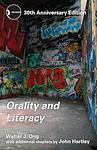
14. Orality And Literacy by Walter J. Ong
The Technologizing of the Word
The book explores the profound impact of the transition from oral to written culture on human consciousness and society. It examines how the development of writing systems transformed communication, thought processes, and cultural practices. The author delves into the characteristics of oral cultures, highlighting their reliance on memory and communal knowledge, and contrasts these with literate societies, which emphasize individualism and analytical thinking. The work also discusses the implications of literacy on education, technology, and the evolution of language, offering insights into how these shifts continue to influence modern communication and cognition.
The 8648th Greatest Book of All TimePurchase from Bookshop.org or Amazon -
15. Through the Language Glass by Guy Deutscher
Why the World Looks Different in Other Languages
This book explores the link between language and perception, challenging the conventional belief that languages are only tools for describing reality and do not influence the way we perceive the world. The author delves into how different languages can shape the way their speakers understand and interact with their surroundings, arguing that linguistic differences can significantly impact cognition and perception. The book combines linguistic analysis, cultural history, and cognitive science to provide a fascinating examination of how our mother tongue can affect our cognitive processes, including color perception and spatial orientation.
The 9134th Greatest Book of All TimePurchase from Amazon -
16. Language And Mind by Noam Chomsky
The book explores the intricate relationship between language and human cognition, delving into the nature of linguistic structures and their role in shaping thought processes. It introduces the concept of a universal grammar, suggesting that the ability to acquire language is innate to humans and rooted in our biological makeup. The work also examines the implications of linguistic theory for understanding the mind, arguing that language is a window into the cognitive capabilities that distinguish humans from other species. Through a series of essays, it challenges traditional views and offers a groundbreaking perspective on the interplay between language, thought, and human nature.
The 9150th Greatest Book of All TimePurchase from Bookshop.org or Amazon -
17. Shadows Of The Mind by Roger Penrose
A Search for the Missing Science of Consciousness
In "Shadows of the Mind," the author delves into the complex relationship between the physical brain and the conscious mind, arguing against the prevailing computational theory of mind. The book presents a hypothesis that human consciousness transcends algorithmic computation, suggesting that quantum mechanics plays an integral role in the emergence of consciousness. The author critiques the limitations of artificial intelligence in replicating human thought and proposes that understanding consciousness may require new physics that bridges the gap between the known scientific principles and the phenomenological experience of awareness.
The 10511th Greatest Book of All TimePurchase from Amazon -
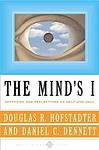
18. The Mind's I by Douglas Hofstadter, Daniel Dennett
Fantasies and Reflections on Self and Soul
This thought-provoking collection of essays and stories delves into the nature of consciousness, self, and identity, exploring the intricate relationship between the mind and the self. Through a blend of philosophical inquiry and imaginative narratives, the book invites readers to ponder the mysteries of human cognition, the concept of the "I," and the boundaries of self-awareness. It challenges conventional perceptions of what it means to be conscious, encouraging a deeper understanding of the mind's complexities and the essence of personal identity.
The 12497th Greatest Book of All TimePurchase from Amazon -
19. Super Agers by Eric Topol M.D.
The 13180th Greatest Book of All TimePurchase from Bookshop.org -
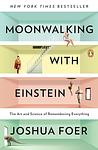
20. Moonwalking With Einstein by Joshua Foer
The Art and Science of Remembering Everything
This book delves into the fascinating world of memory and the techniques that enable people to enhance it to extraordinary levels. Through a narrative that combines personal journey with scientific exploration, the author embarks on a quest to improve his own memory. Along the way, he encounters 'mental athletes' who compete in memory championships and learns ancient techniques that have been almost forgotten in today's digital age. The story culminates in the author's own participation in the U.S. Memory Championship, showcasing not only the potential of the human mind but also questioning our understanding of intelligence and memory. Through engaging storytelling, the book provides insights into the mechanisms of memory and suggests that with practice and the right techniques, anyone can improve their memory skills.
The 13962nd Greatest Book of All TimePurchase from Amazon -
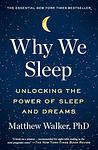
21. Why We Sleep by Matthew Walker
Unlocking the Power of Sleep and Dreams
This book delves into the critical importance of sleep, exploring its profound impact on our health, brain function, and overall well-being. The author, a renowned sleep scientist, combines decades of research and clinical practice to debunk common myths about sleep and highlight how modern life disrupts our natural sleep patterns. Through a blend of scientific insights and practical advice, the book emphasizes the role of sleep in enhancing memory, mood, and energy levels, while also detailing the dire consequences of sleep deprivation on our physical and mental health. It serves as a comprehensive guide on how to improve sleep quality and, by extension, live a healthier, more fulfilling life.
The 14122nd Greatest Book of All TimePurchase from Amazon -
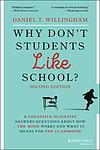
22. Why Don't Students Like School? by Daniel T. Willingham
A Cognitive Scientist Answers Questions About How the Mind Works and What It Means for the Classroom
This book delves into the cognitive science behind how students learn and why they often find school unengaging. It challenges educators to reconsider traditional teaching methods by presenting evidence-based insights into how the human brain works, learns, and retains information. The author, a cognitive scientist, uses accessible language to explain complex concepts and offers practical strategies for teachers to make learning more enjoyable and effective. By addressing common misconceptions about education and providing a deeper understanding of student motivation and thought processes, the book aims to transform classroom practices and enhance students' academic experiences.
The 14499th Greatest Book of All TimePurchase from Amazon -
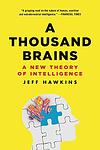
23. A Thousand Brains by Jeff Hawkins
A New Theory of Intelligence
This book introduces a groundbreaking theory of intelligence, proposing a novel understanding of how the brain works. It challenges traditional models by suggesting that the brain operates not through a single engine of reasoning but through a network of many tiny brains working in parallel. Each of these "brains" is a specialized unit responsible for understanding the world through a specific lens. The author, a renowned figure in the field of neuroscience and artificial intelligence, combines the latest scientific research with accessible explanations to explore how this theory could not only revolutionize our understanding of human intelligence but also pave the way for more advanced and empathetic artificial intelligence systems. Through this lens, the book delves into the implications for how we learn, how we make decisions, and how we perceive the world around us.
The 15619th Greatest Book of All TimePurchase from Amazon -
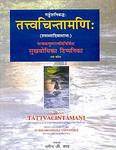
24. Tattvachintamani by Gaṅgeśa
Dīdhiti
"Tattvachintamani" is a seminal work in Indian philosophy that delves into the theory of knowledge, or epistemology, from the perspective of the Navya-Nyāya school. This text systematically explores the nature of perception, inference, comparison, and testimony, aiming to establish a rigorous logical framework for understanding truth and reality. The work is highly analytical and uses a new technical language devised by the author to address complex philosophical issues, significantly influencing subsequent Indian philosophical thought and debate.
The 15922nd Greatest Book of All TimePurchase from Bookshop.org or Amazon -
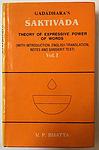
25. Gadādhara's Śaktivāda by Gadādharabhaṭṭācārya
A Treatise on the Doctrine of Power
"Gadādhara's Śaktivāda" is a philosophical treatise that delves into the intricate theories of meaning, epistemology, and logic within the classical Indian Nyāya tradition. The work primarily focuses on the concept of Śakti (potency or power) as the fundamental principle explaining the relationship between words and their meanings. Gadādhara, a prominent scholar, expands upon the Nyāya school's perspective by rigorously analyzing how knowledge is derived from verbal testimony and the conditions under which words convey particular meanings. His analysis not only addresses previous interpretations by earlier philosophers but also introduces novel viewpoints to resolve longstanding debates about linguistic and cognitive processes.
The 15922nd Greatest Book of All TimePurchase from Amazon






Reading Statistics
Click the button below to see how many of these books you've read!
Download
If you're interested in downloading this list as a CSV file for use in a spreadsheet application, you can easily do so by clicking the button below. Please note that to ensure a manageable file size and faster download, the CSV will include details for only the first 500 books.
DownloadTo download this list as a CSV file, please log in to your account. Once logged in, you'll be able to download the data for use in spreadsheet applications.
Login to Download