The Greatest Books of All Time on Epistemology
Click to learn how this list is calculated.
This list represents a comprehensive and trusted collection of the greatest books. Developed through a specialized algorithm, it brings together 759 'best of' book lists to form a definitive guide to the world's most acclaimed books. For those interested in how these books are chosen, additional details can be found on the rankings page.
What should I read next?
Get personalized book recommendations based on your reading history and preferences. Our algorithm analyzes your favorite books and reading patterns to suggest your next great read.
Get RecommendationsGenres
Countries
Date Range
Filter books by their publication year. Enter the earliest year (Start) and latest year (End) to find books published within that period. Leave either field empty to search from the beginning of time or up to the present day.
Reading Statistics
Click the button below to see how many of these books you've read!
Download
If you're interested in downloading this list as a CSV file for use in a spreadsheet application, you can easily do so by clicking the button below. Please note that to ensure a manageable file size and faster download, the CSV will include details for only the first 500 books.
DownloadTo download this list as a CSV file, please log in to your account. Once logged in, you'll be able to download the data for use in spreadsheet applications.
Login to Download-
1. Critique of Pure Reason by Immanuel Kant
This philosophical work delves into the nature and limits of human knowledge, proposing that while our knowledge begins with experience, it doesn't necessarily arise out of experience. The author argues that pure reason itself has the ability to contribute to our knowledge and understanding of the universe. He further explores the concept of metaphysics, asserting that while it is possible, it is also severely limited by the human mind's ability to comprehend it.
The 458th Greatest Book of All TimePurchase from Bookshop.org or Amazon -
2. Discourse on Method by Rene Descartes
And Meditations on First Philosophy
The book is a philosophical and autobiographical treatise that introduces a new form of scientific and philosophical method, which emphasizes on doubt and systematic questioning as the primary means to achieve knowledge. The author argues that by doubting everything, one can then rebuild knowledge, piece by piece, on a more solid foundation. This method is applied to a wide range of topics, including God's existence, the nature of the human mind and body, and the acquisition of knowledge.
The 543rd Greatest Book of All TimePurchase from Bookshop.org or Amazon -
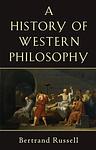
3. A History of Western Philosophy by Bertrand Russell
And Its Connection with Political and Social Circumstances from the Earliest Times to the Present Day
This book provides a comprehensive overview of Western philosophy from the pre-Socratic philosophers through the Middle Ages and the Renaissance, up to the early 20th century. It examines the ideas and contributions of major philosophers, including Plato, Aristotle, Descartes, Spinoza, Leibniz, Locke, Hume, Kant, and others, while also exploring the cultural and historical context in which their thoughts developed. The work is known for its accessible prose and critical perspective, as it not only presents philosophical concepts but also offers the author's analysis and interpretation of these ideas, highlighting their relevance to the broader sweep of human thought and society.
The 1526th Greatest Book of All TimePurchase from Bookshop.org or Amazon -
4. The Problems of Philosophy by Bertrand Russell
This book is an introduction to the central issues of philosophy, discussing topics such as reality, existence, knowledge, freedom, and ethics. It seeks to promote critical thinking and skepticism, encouraging readers to question their own beliefs and the world around them. The author uses clear and accessible language to explain complex philosophical concepts, making it an ideal starting point for those new to philosophy.
The 1803rd Greatest Book of All TimePurchase from Bookshop.org or Amazon -
5. The Order of Things by Michel Foucault
An Archaeology of the Human Sciences
"The Order of Things" is a philosophical exploration of the historical changes in the human sciences, including economics, natural history, and philology. The author delves into the concept of 'epistemes' or the unconscious rules that govern the way people perceive the world, and how these have changed over the centuries. The book challenges the idea that knowledge has progressively improved over time, instead suggesting that each era has its own unique framework for understanding and interpreting the world.
The 1855th Greatest Book of All TimePurchase from Bookshop.org or Amazon -
6. On the Revolutions of the Heavenly Spheres by Nicolaus Copernicus
De revolutionibus orbium coelestium
This book presents the revolutionary astronomical model that places the sun, rather than the earth, at the center of the universe. The author challenges the geocentric model of the cosmos, which had been widely accepted since the time of Aristotle, and instead proposes a heliocentric system, where the planets orbit the sun. This revolutionary idea transformed the way we understand our place in the universe, paving the way for modern astronomy and science.
The 2031st Greatest Book of All TimePurchase from Bookshop.org or Amazon -
7. Rationalism in Politics by Michael Oakeshott
And Other Essays
"Rationalism in Politics" is a collection of essays that critique the role of rationalism in politics, arguing that political decisions should be based on tradition and experience rather than abstract theories. The author asserts that rationalism, with its emphasis on premeditated, systematic approaches, often fails to acknowledge the complexity and unpredictability of human behavior and social dynamics. He emphasizes the importance of practical knowledge, acquired through experience, in political decision-making and criticizes the rationalist's disregard for such wisdom.
The 2080th Greatest Book of All TimePurchase from Bookshop.org or Amazon -
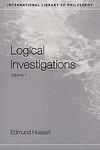
8. Logical Investigations by Edmund Husserl
Prolegomena to Pure Logic
This seminal work is a foundational text in the field of phenomenology and philosophy, presenting a rigorous critique of psychologism—the view that logic is a part of psychology—and arguing for the independence and objectivity of logical truths. Through a series of detailed investigations, the author explores the nature of meaning, the structure of consciousness, and the relationship between language and logic. By distinguishing between the act of thinking and the content of thought, the work lays the groundwork for a new science of consciousness and establishes the author as a pivotal figure in 20th-century philosophy. The text is notable for its methodical approach and its significant influence on both the analytic and continental traditions in philosophy.
The 2635th Greatest Book of All TimePurchase from Bookshop.org or Amazon -
9. Insight by Bernard Lonergan
A Study of Human Understanding
The book is a comprehensive exploration of human understanding and cognition from a philosophical perspective. It delves into the nature of knowledge, the process of knowing, and the dynamics of inquiry and learning. The author presents a detailed analysis of the human intellect and its operations, investigating the role of insight in decision-making, problem-solving, and discovery. The book also discusses the relationship between understanding and other cognitive faculties such as perception, memory, and imagination, while examining the impact of cultural, social, and historical factors on human understanding.
The 3561st Greatest Book of All TimePurchase from Bookshop.org or Amazon -
10. The Black Swan by Nassim Nicholas Taleb
The Impact of the Highly Improbable
The book delves into the profound impact of highly improbable and unpredictable events that have massive consequences, which the author terms as "Black Swans." It challenges our understanding of the world by critiquing how we rely on simplistic models to predict the future, often overlooking the possibility of such rare events that can reshape our reality. Through a blend of philosophical insights and practical wisdom, the narrative encourages readers to embrace uncertainty and unpredictability, arguing that our ability to deal with Black Swans is more important than trying to predict them. The author's exploration spans across various domains, including finance, science, and history, illustrating how Black Swans have shaped the course of human events and urging a reevaluation of how we think about risk and reward in an inherently unpredictable world.
The 4994th Greatest Book of All TimePurchase from Amazon -
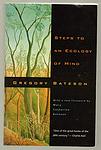
11. Steps To An Ecology Of Mind by Gregory Bateson
Collected Essays in Anthropology, Psychiatry, Evolution, and Epistemology
The book in question is a seminal collection of essays and lectures that delve into the interconnectedness of biological, psychological, and sociological systems. The author, an anthropologist and cybernetic theorist, explores the concept of the mind as a fundamental element of the larger ecological system, challenging traditional boundaries between individual and environment. Through a series of interdisciplinary discussions, the work examines patterns of communication, the nature of learning and adaptation, and the importance of understanding the complex relationships that underpin the functioning of ecosystems, societies, and individuals. The author's innovative ideas encourage readers to reconceptualize the way they think about the world, emphasizing the necessity of a holistic approach to solving the myriad of problems facing humanity.
The 5503rd Greatest Book of All TimePurchase from Bookshop.org or Amazon -
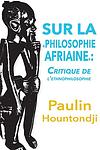
12. Sur La Philosophie Africaine by Paulin Hountondji
Critique de l'ethnophilosophie
"Sur La Philosophie Africaine" is a thought-provoking exploration of African philosophy by Paulin Hountondji. The book challenges the prevailing notion that African thought is inherently inferior to Western philosophy, advocating for a reevaluation of African intellectual traditions. Hountondji critically examines the impact of colonialism on African philosophy and argues for the development of a truly African philosophical framework that embraces cultural diversity and challenges Eurocentric biases. Through his insightful analysis, Hountondji highlights the richness and complexity of African thought, making a compelling case for its recognition and inclusion in the global philosophical discourse.
The 5692nd Greatest Book of All TimePurchase from Bookshop.org -
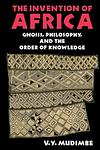
13. The Invention Of Africa by V. Y. Mudimbe
Gnosis, Philosophy, and the Order of Knowledge
"The Invention of Africa" explores the construction and representation of Africa as a continent and its people through the lens of Western knowledge and power. V.Y. Mudimbe critically examines the historical, cultural, and political processes that have shaped Africa's image, challenging the dominant narratives and highlighting the complexities and diversity of African identities. Through an interdisciplinary approach, Mudimbe deconstructs the Eurocentric gaze and invites readers to rethink their understanding of Africa and its place in the global context.
The 6952nd Greatest Book of All TimePurchase from Bookshop.org or Amazon -
14. Ideas by Edmund Husserl
General Introduction to Pure Phenomenology
This philosophical work delves into the complex realm of phenomenology, exploring the intricate relationship between consciousness and the objects of its awareness. The author systematically unpacks the concept of intentionality, the idea that consciousness is always consciousness of something, and introduces the method of phenomenological reduction as a means to study the essential structures of consciousness. Through a rigorous examination of the acts of consciousness, including perception, imagination, and judgment, the text seeks to lay bare the foundational elements of human experience, arguing for a direct investigation into the phenomena as they present themselves to consciousness, free from presuppositions. This exploration aims to establish a solid groundwork for understanding the nature of reality as it is experienced, emphasizing the importance of subjective experience in the constitution of the world.
The 8265th Greatest Book of All TimePurchase from Bookshop.org or Amazon -
15. From A Logical Point Of View by Willard Van Orman Quine
9 Logico-Philosophical Essays
This book is a collection of nine essays that delve into the philosophy of logic and the methodology of science. The author critically examines the relationship between language and reality, challenging the distinction between analytic and synthetic statements and advocating for a holistic approach to the empirical content of scientific theories. Through rigorous analysis and argumentation, the work explores foundational questions in epistemology and the philosophy of language, offering insights into the nature of concepts, the structure of scientific theories, and the limitations of our knowledge. The essays collectively argue for a naturalized epistemology, emphasizing the importance of empirical inquiry in understanding the world.
The 8514th Greatest Book of All TimePurchase from Amazon -
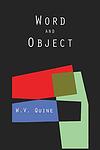
16. Word And Object by Willard Van Orman Quine
This philosophical work delves into the nature of meaning and the relationship between language and reality. It challenges the conventional distinction between analytic and synthetic statements and argues against the possibility of a neutral observation language. The author introduces the concept of the indeterminacy of translation, suggesting that there are multiple valid ways to translate words and sentences between languages without a definitive way to determine which translation is correct. Through rigorous analysis, the book explores how our understanding of the world is shaped by the structure of the language we use, ultimately questioning the foundations of semantics and the philosophy of language itself.
The 8559th Greatest Book of All TimePurchase from Bookshop.org or Amazon -
17. Philosophy And The Mirror Of Nature by Richard Rorty
The book challenges the traditional conceptions of philosophy by critiquing the idea that the mind is a mirror of nature, reflecting reality. The author argues against the notion that philosophy's role is to provide foundational knowledge about the objective world. Instead, he proposes that philosophers abandon the quest for epistemological certainty and embrace a pragmatic approach. The work calls for a departure from the Cartesian and Kantian philosophies that dominate Western thought, suggesting that knowledge should be seen as a tool for conversation and cultural change rather than as an attempt to mirror nature. The author's perspective is a significant contribution to the pragmatist tradition, advocating for a more interdisciplinary, holistic approach to philosophical inquiry.
The 8883rd Greatest Book of All TimePurchase from Bookshop.org or Amazon -
18. The Taming of Chance by Ian Hacking
Statistical Science and the Transformation of Society
"The Taming of Chance" delves into the evolution of the concept of probability and its societal implications. The book takes the reader through the historical progression of probability and statistics, illustrating how they have shaped and been shaped by societal norms. The author highlights the profound impact of this mathematical concept on various aspects of life, including law, science, and philosophy, and how it has fundamentally changed our perception of the world.
The 10122nd Greatest Book of All TimePurchase from Bookshop.org or Amazon -
19. A History of Philosophy by Frederick Charles Copleston
This book is a comprehensive overview of Western philosophy, starting from the Pre-Socratic philosophers to contemporary thinkers. It meticulously traces the evolution of philosophical thought, providing in-depth analysis of key figures and their contributions. The book also critically examines various philosophical doctrines, their influences, and their relevance to contemporary society. It's a valuable resource for anyone interested in understanding the origins, developments, and complexities of philosophical ideas.
The 10248th Greatest Book of All TimePurchase from Bookshop.org or Amazon -
20. Naming And Necessity by Saul Kripke
This philosophical work challenges prevailing theories of naming and necessity within the analytic tradition. It argues against the descriptivist theory of names, which suggests that a name is merely a cluster of descriptions associated with an object. Instead, the author introduces the concept of rigid designators to explain how names refer to the same object in all possible worlds where that object exists, emphasizing that names are directly linked to their referents without the mediation of descriptive content. The book also explores the necessity of identity statements and the contingent nature of scientific identities, significantly influencing contemporary philosophy of language and metaphysics.
The 10286th Greatest Book of All TimePurchase from Amazon -
21. Robert Grosseteste by R. W. Southern
An Historical Study
This insightful biography delves into the life and legacy of a pivotal figure in medieval scholarship and ecclesiastical history. It explores the multifaceted contributions of a man who was not only a bishop but also a philosopher, theologian, and scientist. The narrative captures his profound influence on the intellectual landscape of the 13th century, highlighting his pioneering work in natural science and his role in the reform of the English church. Through meticulous research, the book paints a vivid portrait of a visionary thinker whose ideas transcended his time, leaving an indelible mark on both religious and academic spheres.
The 10929th Greatest Book of All TimePurchase from Amazon -
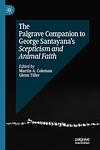
22. Scepticism and Animal Faith by George Santayana
Introduction to a System of Philosophy
"Scepticism and Animal Faith" is a philosophical work that presents the idea that knowledge is not found through evidence or reason, but through animal faith, a term referring to instinctive beliefs. The book delves into the nature of perception and consciousness, and argues that all human knowledge is grounded in unproven preconceptions. The author suggests that to understand the world, humans must first acknowledge their own preconceived notions and biases, and then attempt to understand the world through a lens of skepticism.
The 11572nd Greatest Book of All TimePurchase from Amazon -
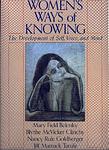
23. Women's Ways Of Knowing by Mary Field Belenky
The Development of Self, Voice, and Mind
This book explores the intellectual and emotional development of women, presenting a nuanced understanding of how women come to know and understand the world. It identifies five different perspectives from which women approach knowledge: silence, received knowledge, subjective knowledge, procedural knowledge, and constructed knowledge. Through interviews and research, the book delves into the ways in which women's experiences, particularly their educational and social experiences, shape their thought processes, self-perception, and the manner in which they assert their voices. It challenges traditional epistemologies and offers insight into the importance of context, relationships, and personal experience in the development of women's knowledge and self-identity.
The 11582nd Greatest Book of All TimePurchase from Amazon -
24. Outlines of Pyrrhonism by Sextus Empiricus
"Outlines of Pyrrhonism" is a philosophical text that delves into the teachings of Pyrrho, a Greek philosopher known for his skepticism. The book explores the concept of skepticism as a pathway to "ataraxia" (tranquility), arguing that suspending judgment leads to a state of mental peace. It presents Pyrrhonism as a philosophy that encourages the suspension of judgment about the truth of beliefs in order to achieve this tranquility. The text also provides a detailed comparison of Pyrrhonism with other philosophical schools of thought, such as Stoicism and Epicureanism.
The 14754th Greatest Book of All TimePurchase from Amazon -
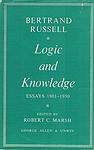
25. Logic And Knowledge by Bertrand Russell
Essays 1901-1950
"Logic and Knowledge" is a collection of essays that delve into the philosophical inquiries surrounding logic, mathematics, and epistemology. The book compiles the author's rigorous analyses and arguments on various topics such as the foundations of mathematics, the principles of logic, the nature of truth, and the processes of scientific reasoning. Through these essays, the author explores the relationships between reality and our representations of it, emphasizing the role of logical structure in the pursuit of knowledge and the understanding of the world. This compilation not only reflects the author's profound contributions to analytic philosophy but also his enduring influence on the philosophy of language and modern logic.
The 14820th Greatest Book of All TimePurchase from Bookshop.org or Amazon











Reading Statistics
Click the button below to see how many of these books you've read!
Download
If you're interested in downloading this list as a CSV file for use in a spreadsheet application, you can easily do so by clicking the button below. Please note that to ensure a manageable file size and faster download, the CSV will include details for only the first 500 books.
DownloadTo download this list as a CSV file, please log in to your account. Once logged in, you'll be able to download the data for use in spreadsheet applications.
Login to Download