The Greatest Books of All Time on Epistemology
Click to learn how this list is calculated.
This list represents a comprehensive and trusted collection of the greatest books. Developed through a specialized algorithm, it brings together 759 'best of' book lists to form a definitive guide to the world's most acclaimed books. For those interested in how these books are chosen, additional details can be found on the rankings page.
What should I read next?
Get personalized book recommendations based on your reading history and preferences. Our algorithm analyzes your favorite books and reading patterns to suggest your next great read.
Get RecommendationsGenres
Countries
Date Range
Filter books by their publication year. Enter the earliest year (Start) and latest year (End) to find books published within that period. Leave either field empty to search from the beginning of time or up to the present day.
Reading Statistics
Click the button below to see how many of these books you've read!
Download
If you're interested in downloading this list as a CSV file for use in a spreadsheet application, you can easily do so by clicking the button below. Please note that to ensure a manageable file size and faster download, the CSV will include details for only the first 500 books.
DownloadTo download this list as a CSV file, please log in to your account. Once logged in, you'll be able to download the data for use in spreadsheet applications.
Login to Download-
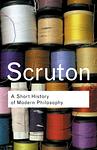
51. A Short History Of Modern Philosophy by Roger Scruton
From Descartes to Wittgenstein
This book provides a concise overview of modern philosophy, tracing its development from the early 17th century to the mid-20th century. It explores the key ideas, debates, and philosophers who have shaped modern thought, starting with René Descartes and progressing through significant figures such as Spinoza, Leibniz, Kant, Hegel, and Wittgenstein. The text examines how these thinkers addressed fundamental questions in metaphysics, epistemology, and ethics, while also considering the historical context that influenced their work. This exploration not only highlights the evolution of philosophical ideas but also illustrates the ongoing dialogue between philosophy and the broader cultural and scientific changes of the modern era.
The 17174th Greatest Book of All TimePurchase from Amazon -
52. Evolutionary Epistemology, Rationality, And The Sociology Of Knowledge by Gerard Radnitzky
Open Questions in the Philosophy of Science
The book explores the intersection of evolutionary theory and epistemology, examining how knowledge and rationality develop through evolutionary processes. It delves into the sociology of knowledge, analyzing how social factors influence the development and acceptance of scientific theories. The work argues for a naturalistic approach to understanding knowledge, suggesting that our cognitive faculties and scientific practices are shaped by evolutionary pressures. It also discusses the implications of this perspective for the philosophy of science and the nature of rationality, proposing that our understanding of knowledge is inherently linked to our biological and social evolution.
The 17174th Greatest Book of All TimePurchase from Amazon -
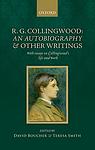
53. An Autobiography by RG Collingwood
The book is a reflective exploration of the author's intellectual journey and philosophical development. It delves into his experiences and thoughts on various subjects, including history, art, and metaphysics, illustrating how these shaped his ideas and academic pursuits. Through personal anecdotes and critical analysis, the author provides insight into the evolution of his philosophical beliefs and the broader intellectual landscape of his time, offering readers a profound understanding of his contributions to philosophy and the humanities.
The 16989th Greatest Book of All TimePurchase from Amazon -
54. Leviathan And The Air Pump by Steven Shapin
Hobbes, Boyle, and the Experimental Life

This book explores the historical debate between Thomas Hobbes and Robert Boyle over the role of experimentation in the production of scientific knowledge during the 17th century. It delves into the philosophical and methodological differences between the two thinkers, highlighting Boyle's advocacy for empirical experimentation using the air pump and Hobbes' skepticism about the reliability of such methods without a solid theoretical foundation. The narrative examines how this debate reflects broader questions about the nature of scientific inquiry and the social and political contexts that shape scientific practices.
The 17174th Greatest Book of All TimePurchase from Bookshop.org -
55. The World As Will And Representation, Volume Ii by Arthur Schopenhauer
The World as Will and Idea
This philosophical work delves deeper into the exploration of the metaphysical concept of "will" as the fundamental essence of reality, building upon the ideas introduced in the first volume. It examines the interplay between the will and human perception, emphasizing the role of art, aesthetics, and genius in transcending the suffering inherent in existence. The text also critiques the limitations of human knowledge and rationality, proposing that true understanding lies in the intuitive grasp of the world as a manifestation of the will. Through a blend of rigorous analysis and profound insight, it offers a compelling vision of the world that challenges conventional notions of reality and consciousness.
The 17027th Greatest Book of All TimePurchase from Bookshop.org -
56. Länsimaisen Filosofian Historia Huipulta Huipulle, Sokrateesta Marxiin by Esa Saarinen
Sokrateesta Marxiin
This book provides a comprehensive overview of Western philosophy, tracing its evolution from the ancient musings of Socrates to the revolutionary ideas of Karl Marx. It delves into the lives and thoughts of influential philosophers, exploring how their ideas have shaped the intellectual landscape of the West. The narrative captures the dynamic interplay of philosophical thought through the ages, highlighting key concepts and debates that have driven philosophical inquiry. With a focus on clarity and accessibility, the book invites readers to engage with the profound questions and insights that have defined Western philosophical tradition.
The 17174th Greatest Book of All Time -
57. Intelligence And Spirit by Reza Negarestani
This philosophical exploration delves into the intricate relationship between intelligence and the concept of spirit, examining how they intertwine and influence human understanding and existence. It challenges traditional notions of intelligence by proposing a framework that integrates artificial intelligence and human cognition, suggesting that the evolution of intelligence is deeply connected to the development of spirit. Through a blend of philosophical inquiry and speculative thought, the work invites readers to reconsider the boundaries of intelligence and its potential to transcend human limitations, ultimately reshaping our perception of consciousness and agency.
The 17174th Greatest Book of All Time -
58. The Sleepwalkers by Arthur Koestler
A History of Man's Changing Vision of the Universe
This compelling narrative explores the evolution of human understanding of the cosmos, tracing the journey from ancient Greek astronomy to the revolutionary ideas of Copernicus, Kepler, and Galileo. It delves into the intellectual struggles and breakthroughs that reshaped humanity's perception of the universe, highlighting the tension between tradition and innovation. Through vivid storytelling, the book examines the personal and philosophical conflicts faced by these pioneering thinkers, illustrating how their groundbreaking discoveries were often met with resistance and skepticism, yet ultimately paved the way for modern science.
The 16812th Greatest Book of All TimePurchase from Bookshop.org -
59. Worldviews by Richard DeWitt
An Introduction to the History and Philosophy of Science
This book offers a comprehensive exploration of the evolution of scientific thought, examining how different worldviews have shaped our understanding of the universe. It delves into the historical development of key scientific concepts, from the ancient Greek philosophers to the modern scientific revolution, highlighting the shifts in perspective that have occurred over time. Through a clear and engaging narrative, the book provides readers with insights into the philosophical underpinnings of science, encouraging a deeper appreciation of how our current worldview has been influenced by past ideas and discoveries.
The 17174th Greatest Book of All TimePurchase from Bookshop.org -
60. A Prolegomena To Any Future Metaphysics by Immanuel Kant
This concise philosophical primer argues that genuine metaphysics is possible only by clarifying how synthetic a priori knowledge arises, distinguishing the roles of sensibility (space and time) and understanding (the categories) in structuring experience. It maintains that we can know only appearances shaped by our cognitive faculties, while things-in-themselves remain inaccessible, thereby placing strict limits on speculative reason. Reconciling insights from rationalism and empiricism, it explains how metaphysical judgments can achieve scientific rigor within the bounds of possible experience. Serving as a roadmap to a critical methodology, it sets secure principles for any future metaphysical inquiry.
The 17174th Greatest Book of All TimePurchase from Bookshop.org -
61. Fields Of Sense: A New Realist Ontology by Markus Gabriel
A New Realist Ontology
Proposes a pluralist realism in which entities exist within irreducible “fields of sense”—domains of meaning that disclose objects—rather than within a single all-encompassing world. It rejects scientistic naturalism and the notion of a totalized “world,” arguing instead for many ontological domains with their own criteria of existence. By blending phenomenological insights with analytic rigor, it shows how objects can be mind-independent yet accessible only within structures that render them intelligible, reframing debates about correlationism, ontology, and the scope of metaphysics.
The 17174th Greatest Book of All TimePurchase from Bookshop.org -
62. Nagarjuna's Madhyamaka: A Philosophical Introduction by Jan Westerhoff
A Philosophical Introduction
An accessible yet rigorous introduction to Madhyamaka as articulated by Nagarjuna, explaining the doctrine of emptiness and dependent origination, the two truths framework, and the rejection of intrinsic natures. It reconstructs core arguments against essentialism across causation, motion, composite objects, and personal identity, deploying clear analysis and formal tools. The discussion dispels charges of nihilism, situates the view within classical Indian Buddhist debates, and highlights its implications for contemporary metaphysics, epistemology, and philosophy of language.
The 17174th Greatest Book of All Time -
63. Apoha: Buddhist Nominalism And Human Cognition by Mark Siderits, Tom Tillemans, Arindam Chakrabarti
Buddhist Nominalism and Human Cognition
An interdisciplinary exploration of the Buddhist theory of apoha (exclusion), arguing that concepts and word meanings arise by differentiating what something is not rather than by invoking real universals. Bringing together historical analysis and analytic reconstruction of classical arguments, it examines how categorization, reference, and inference can function without universals, addresses objections such as circularity and regress, and connects these nominalist insights to contemporary debates in semantics, cognition, and philosophy of language.
The 17174th Greatest Book of All Time -
64. Is Science Western In Origin? by C.K. Raju
The book argues that modern science did not arise solely in the West, tracing important contributions from non‑Western traditions—especially Indian mathematics, astronomy and computational methods—while critiquing Eurocentric historiography and colonial distortions; it examines how philosophical assumptions about proof, experiment and causality are culturally situated and calls for a pluralist, decolonized understanding of the history and practice of science that recognizes cross‑cultural exchange and social context.
The 17174th Greatest Book of All Time -
65. The World Of Null A by A. E. Van Vogt
Gilbert Gosseyn, a man with baffling gaps in memory and an uncanny knack for surviving assassination attempts, discovers that his mastery of non-Aristotelian logic is his only tool for untangling a vast conspiracy that reaches across planets and secret societies. As he probes attempts to control, duplicate, and manipulate human identity and power, he is forced to reevaluate what is real, who he truly is, and what kind of future human reasoning can create or destroy, leading to a tense clash between cold formal logic and raw, primal forces shaping society's destiny.
The 16888th Greatest Book of All TimePurchase from Bookshop.org

Reading Statistics
Click the button below to see how many of these books you've read!
Download
If you're interested in downloading this list as a CSV file for use in a spreadsheet application, you can easily do so by clicking the button below. Please note that to ensure a manageable file size and faster download, the CSV will include details for only the first 500 books.
DownloadTo download this list as a CSV file, please log in to your account. Once logged in, you'll be able to download the data for use in spreadsheet applications.
Login to Download