The Greatest Books of All Time on Objectivity
Click to learn how this list is calculated.
This list represents a comprehensive and trusted collection of the greatest books. Developed through a specialized algorithm, it brings together 759 'best of' book lists to form a definitive guide to the world's most acclaimed books. For those interested in how these books are chosen, additional details can be found on the rankings page.
What should I read next?
Get personalized book recommendations based on your reading history and preferences. Our algorithm analyzes your favorite books and reading patterns to suggest your next great read.
Get RecommendationsGenres
Countries
Date Range
Filter books by their publication year. Enter the earliest year (Start) and latest year (End) to find books published within that period. Leave either field empty to search from the beginning of time or up to the present day.
Reading Statistics
Click the button below to see how many of these books you've read!
Download
If you're interested in downloading this list as a CSV file for use in a spreadsheet application, you can easily do so by clicking the button below. Please note that to ensure a manageable file size and faster download, the CSV will include details for only the first 500 books.
DownloadTo download this list as a CSV file, please log in to your account. Once logged in, you'll be able to download the data for use in spreadsheet applications.
Login to Download-
1. The Historian’s Craft by Marc Bloch
Reflections on the Nature and Uses of History and the Techniques and Methods of Historians
The book in question is a seminal work on the methodology of historical research and writing, exploring the nature, purpose, and challenges of history as a discipline. The author, a renowned historian, delves into the critical analysis of historical evidence, the importance of understanding the past in its own context, and the role of the historian in reconstructing history. He emphasizes the need for rigorous critical thinking and the avoidance of presentism, while also discussing the limitations and potential biases that historians must navigate. The work is both a philosophical reflection on the nature of historical knowledge and a practical guide to the craft of researching and writing history.
The 6355th Greatest Book of All TimePurchase from Bookshop.org or Amazon -
2. Ideas by Edmund Husserl
General Introduction to Pure Phenomenology
This philosophical work delves into the complex realm of phenomenology, exploring the intricate relationship between consciousness and the objects of its awareness. The author systematically unpacks the concept of intentionality, the idea that consciousness is always consciousness of something, and introduces the method of phenomenological reduction as a means to study the essential structures of consciousness. Through a rigorous examination of the acts of consciousness, including perception, imagination, and judgment, the text seeks to lay bare the foundational elements of human experience, arguing for a direct investigation into the phenomena as they present themselves to consciousness, free from presuppositions. This exploration aims to establish a solid groundwork for understanding the nature of reality as it is experienced, emphasizing the importance of subjective experience in the constitution of the world.
The 8265th Greatest Book of All TimePurchase from Bookshop.org or Amazon -
3. Rules Of Sociological Method by Emile Durkheim
and Selected Texts on Sociology and its Method
"Rules of Sociological Method" is a foundational text that outlines the principles and approaches necessary for the study of sociology. The book emphasizes the importance of treating social facts as things, which are external and coercive forces that can be studied objectively. The author argues for the necessity of establishing sociology as a scientific discipline with its own distinct methods and object of study, separate from psychology and philosophy. He advocates for the use of empirical data to understand social phenomena and introduces concepts such as the normal and the pathological to distinguish between typical and deviant social behaviors. This work is crucial for understanding the methodological framework that underpins sociological analysis and research.
The 15923rd Greatest Book of All TimePurchase from Bookshop.org or Amazon -
4. What Is History? by E. H. Carr
The George Macaulay Trevelyan Lectures Delivered in the University of Cambridge January-March 1961
The book explores the nature of historical knowledge, examining the role of the historian in shaping history through the selection and interpretation of facts. It challenges the objective stance of historians, arguing that history is an ongoing dialogue between the past and present, influenced by the societal, political, and personal biases of its narrators. The work delves into the impact of societal structures and the individual agency, advocating for a more nuanced understanding of historical processes and the subjective elements that inevitably enter into the recording of history.
The 15923rd Greatest Book of All TimePurchase from Amazon -
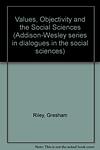
5. Values, Objectivity, And The Social Sciences by Gresham Riley
The Search for a Common Ground
"Values, Objectivity, and the Social Sciences" explores the complex interplay between values and objectivity in social science research. The book critically examines the assumption that social sciences can be value-free and highlights how values inevitably influence both the choice of research topics and the interpretation of data. Through a philosophical lens, the text delves into the implications of these influences for the objectivity and credibility of social science research, arguing for a more reflexive and transparent approach in acknowledging the role of values. The book also discusses strategies for maintaining rigorous standards while accepting the subjective elements inherent in social science inquiry.
The 16690th Greatest Book of All TimePurchase from Amazon -
6. Personal Knowledge by Michael Polanyi
Towards a Post-Critical Philosophy

Argues that knowledge is not a purely impersonal, formal product but always involves a tacit, personal dimension: practitioners rely on skills, judgment, and intellectual passion—‘we know more than we can tell’—to perceive and articulate facts. Scientific knowing is portrayed as an exercise of personal commitment and fiduciary trust within traditions and communities, where subsidiary awareness and focal attention (indwelling) enable discovery and explanation. The work critiques strict positivist objectivism and shows how objective knowledge emerges through the interplay of subjective judgment, communal standards, and disciplined practice.
The 16673rd Greatest Book of All TimePurchase from Bookshop.org -
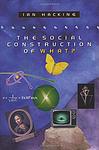
7. The Social Construction Of What? by Ian Hacking
The Social Construction of What?
"The Social Construction of What?" explores the concept of social constructionism, a theory that argues various aspects of our everyday lives, including knowledge, truth, and social realities, are shaped by social processes and interactions. The book critically examines how this theory is applied across different fields such as science, mathematics, technology, and gender, questioning what exactly is being constructed and the implications of labeling something as socially constructed. The author delves into the debates and controversies surrounding social constructionism, offering a nuanced perspective on its uses and limitations, and encourages readers to consider how social factors influence our understanding of the world.
The 17174th Greatest Book of All TimePurchase from Amazon -
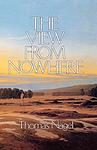
8. The View From Nowhere by Thomas Nagel
An Essay on Objectivity and the Subjective Point of View
"The View from Nowhere" explores the challenge of reconciling two perspectives: the subjective and the objective. The author delves into philosophical issues such as the nature of reality, our understanding of the self, and how we relate to the world around us. He examines the tension between our personal, internal experiences and the external, impersonal viewpoint of the universe. The book critically analyzes how we can gain objective knowledge while acknowledging our own subjective consciousness, ultimately aiming to bridge the gap between these fundamentally different viewpoints.
The 17174th Greatest Book of All TimePurchase from Amazon -
9. Relativism Refuted by Harvey Siegel
A Critique of Contemporary Epistemological Relativism
"Relativism Refuted" is a critical examination of the philosophical concept of relativism, which posits that truth, knowledge, and morality are not absolute but vary according to different frameworks or perspectives. The book systematically addresses and counters various forms of relativism, particularly cognitive relativism and ethical relativism. Through rigorous argumentation and analysis, the text defends the notion of objective truth and rational standards of justification, arguing that relativism undermines the possibility of meaningful intellectual discourse and the pursuit of knowledge. The author emphasizes the importance of maintaining objective standards in both science and ethics to ensure coherent and consistent reasoning.
The 17174th Greatest Book of All Time


Reading Statistics
Click the button below to see how many of these books you've read!
Download
If you're interested in downloading this list as a CSV file for use in a spreadsheet application, you can easily do so by clicking the button below. Please note that to ensure a manageable file size and faster download, the CSV will include details for only the first 500 books.
DownloadTo download this list as a CSV file, please log in to your account. Once logged in, you'll be able to download the data for use in spreadsheet applications.
Login to Download