Edward Herman
Edward S. Herman was an American economist, media scholar, and social critic known for his work on media bias and propaganda. He co-authored 'Manufacturing Consent' with Noam Chomsky, which explores the ways in which mass media serves the interests of corporate and political elites.
Books
This list of books are ONLY the books that have been ranked on the lists that are aggregated on this site. This is not a comprehensive list of all books by this author.
-
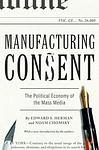
1. Manufacturing Consent
The Political Economy of the Mass Media
The book explores how the mass media in the United States serves as a propaganda system that promotes the interests of the elite economic, political, and social groups. It introduces the "propaganda model" to explain the forces behind media biases, arguing that the concentration of media ownership, the influence of funding sources, and the reliance on official information sources result in a systematic filtering of news that supports the agendas of those in power. Through detailed case studies, the authors demonstrate how this model leads to media coverage that often obscures important truths and shapes public opinion in ways that benefit the dominant elite groups at the expense of democratic discourse.
The 13506th Greatest Book of All TimePurchase from Bookshop.org or Amazon -
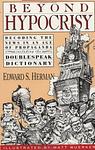
2. Beyond Hypocrisy
Decoding the News in an Age of Propaganda: Including A Doublespeak Dictionary for the 1990s
This incisive work delves into the intricate mechanisms of media manipulation and the pervasive influence of propaganda in shaping public perception. It critically examines the role of language and euphemisms in obscuring truth and perpetuating systemic biases, particularly in the context of political and economic power structures. Through a series of compelling examples, the book reveals how media narratives are crafted to serve the interests of the powerful, often at the expense of transparency and accountability, urging readers to question the information they consume and recognize the underlying agendas at play.
-
3. The Politics Of Genocide

This book critically examines how political and media narratives shape the perception and understanding of genocides, arguing that Western powers often manipulate these narratives to serve their geopolitical interests. It delves into the selective labeling of atrocities as "genocide," highlighting the inconsistencies and biases in the global response to different conflicts. By scrutinizing case studies from various regions, the book challenges the reader to question the motives behind the portrayal of certain events and the silence surrounding others, ultimately calling for a more equitable and truthful discourse on human rights violations.
Purchase from Bookshop.org