Robert D. Kaplan
Robert David Kaplan is an American author known for his books on geopolitics and travel. He has written extensively on international affairs and has been a correspondent for The Atlantic.
Books
This list of books are ONLY the books that have been ranked on the lists that are aggregated on this site. This is not a comprehensive list of all books by this author.
-
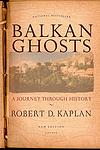
1. Balkan Ghosts
A Journey Through History
"Balkan Ghosts" is a vivid travelogue that delves into the complex history, politics, and culture of the Balkan Peninsula. Through a series of journeys in the late 20th century, the author explores the tumultuous past and present of this region, providing insights into the ethnic conflicts and nationalistic fervor that have frequently erupted into violence. The book offers a personal and historical exploration of several Balkan countries, shedding light on how the shadows of past empires, wars, and political regimes continue to influence the modern identities and conflicts of these nations.
The 11007th Greatest Book of All TimePurchase from Bookshop.org or Amazon -
2. The Tragic Mind
Fear, Fate, and the Burden of Power

In this insightful exploration, the author delves into the complex interplay between human nature and the tragic elements of history, politics, and personal experience. By drawing on a rich tapestry of philosophical thought and historical examples, the narrative examines how the inevitability of tragedy shapes our decisions and worldviews. The work challenges readers to confront the harsh realities of life, urging a deeper understanding of the moral and ethical dilemmas that arise from the human condition, and ultimately, to find meaning and resilience amidst the chaos.
The 17168th Greatest Book of All TimePurchase from Bookshop.org -
3. The Coming Anarchy
Shattering the Dreams of the Post Cold War
In this thought-provoking analysis, the author explores the potential for global instability driven by environmental degradation, overpopulation, and cultural conflicts. The narrative delves into how these factors contribute to the erosion of nation-states and the rise of anarchy, particularly in developing regions. Through vivid examples and on-the-ground observations, the book paints a picture of a world where traditional political boundaries are increasingly blurred, leading to a future marked by chaos and unpredictability.
Purchase from Bookshop.org -
4. The Ends Of The Earth
A Journey at the Dawn of the 21st Century
In this compelling exploration of the geopolitical landscape, the author embarks on a journey through the world's most volatile regions, offering a vivid portrayal of the cultural, political, and economic forces shaping the future. Through firsthand accounts and insightful analysis, the narrative delves into the complexities of global power dynamics, highlighting the interplay between tradition and modernity, and the impact of historical legacies on contemporary societies. The book serves as a thought-provoking examination of the challenges and opportunities that lie at the fringes of the global order, urging readers to consider the broader implications of regional conflicts and transformations.
Purchase from Bookshop.org -
5. Eastward To Tartary
Travels in the Balkans, the Middle East, and the Caucasus
In this captivating travelogue, the author embarks on a journey through the lesser-known regions of Eastern Europe and the Middle East, exploring the cultural and political landscapes that shape these areas. The narrative weaves through the historical complexities and modern-day challenges faced by countries such as Bulgaria, Turkey, Syria, and Iran. Through vivid descriptions and insightful observations, the book delves into the intricate tapestry of ethnic tensions, economic struggles, and the enduring influence of ancient empires, offering readers a nuanced understanding of a region on the brink of transformation.
Purchase from Bookshop.org -
6. Soldiers Of God
With Islamic Warriors in Afghanistan and Pakistan
A gritty piece of reportage in which the author embeds with Islamist fighters in Afghanistan and Pakistan to chronicle their daily lives, beliefs, and motivations; blending interviews, historical context, and on-the-ground observation to show how tribal dynamics, religious fervor, and regional geopolitics combine to fuel militant movements and shape the borderlands' instability.
-
7. Moesson
A sweeping geopolitical travelogue that argues the Indian Ocean and its seasonal monsoon patterns will shape 21st-century power dynamics, linking rising Asian economies, energy routes, maritime trade, and regional conflicts. The book traces historical and contemporary rivalries across the ocean’s rim — from East Africa and the Middle East to South and Southeast Asia and China — and examines how shifting sea power, economic growth, weak states, and environmental pressures interact to redefine global influence. Combining on-the-ground reporting with strategic analysis, it warns that control of sea lanes and coastal access will be decisive in the coming decades.
-
8. What You Really Need To Lead
Drawing on interviews and on-the-ground reporting, the book argues that effective leadership combines strategic realism, operational competence, and moral courage: leaders must think like owners by taking initiative, accepting responsibility for outcomes, and making hard trade-offs with a long-term perspective. It emphasizes sharpening judgment through direct experience, knowledge of history and context, and a willingness to learn from failure, while cultivating character, humility, and decisive accountability. Practical advice covers hiring and mentoring, building resilient institutions, and resisting managerial detachment, urging leaders to balance vision with hands-on engagement and to prioritize competence over ideology.
-
9. Balanced Scorecard
Translating Strategy into Action
A practical framework for turning strategy into action, this work shows how organizations can supplement financial measures with customer, internal-process, and learning-and-growth perspectives to create a balanced set of performance indicators; it introduces tools such as strategy maps and scorecards to link objectives, measures, targets, and initiatives so leaders can align the organization, monitor execution, and use measurement as a driver of continuous strategic improvement.
-
10. Imperial Grunts
The American Military on the Ground
A reportage-driven examination of how U.S. power is exercised at street level through the experiences of ordinary soldiers and Marines, arguing that America’s global influence often takes the form of small-unit occupation, constabulary duties and improvisational nation-building rather than grand strategy; by embedding with troops in hotspots around the world the book connects tactical behavior to broader geopolitical consequences, criticizes policymakers’ ignorance of local culture and geography, and urges a more realistic, ground-informed approach to American military engagement.
Purchase from Bookshop.org -