Michael Mann
Michael E. Mann is a distinguished American climatologist and geophysicist, known for his work on climate change and the development of the 'hockey stick' graph, which shows the rise in global temperatures. He is a professor at Pennsylvania State University and has authored several books on climate science.
Books
This list of books are ONLY the books that have been ranked on the lists that are aggregated on this site. This is not a comprehensive list of all books by this author.
-
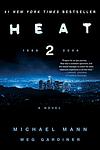
1. Heat 2
Set in the gritty underworld of Los Angeles, this gripping crime saga delves into the lives of both law enforcement and criminals, exploring the intricate dance between them. The narrative weaves through time, offering a deeper look into the pasts and futures of its complex characters, including a determined detective and a master thief. As their paths cross in a high-stakes game of cat and mouse, the story unfolds with intense action, emotional depth, and a relentless pursuit of justice and redemption. The tale captures the essence of human ambition, loyalty, and the thin line between right and wrong.
-
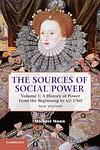
2. The Sources Of Social Power
A History of Power from the Beginning to AD 1760
This comprehensive analysis delves into the intricate web of power dynamics that have shaped human societies throughout history. It explores the multifaceted nature of power, identifying four primary sources: ideological, economic, military, and political. By examining the interplay between these sources across different civilizations and time periods, the work offers a nuanced understanding of how power is distributed and exercised, influencing the development and transformation of societies. The narrative is both a historical journey and a theoretical exploration, providing insights into the mechanisms that underpin social structures and their evolution.
-
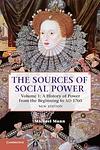
3. The Sources Of Social Power
A History of Power from the Beginning to AD 1760
This comprehensive work delves into the intricate dynamics of power throughout human history, examining how societies have been shaped by the interplay of ideological, economic, military, and political forces. It offers a detailed analysis of how these sources of power have evolved and interacted from ancient times to the modern era, highlighting the complex and often unpredictable nature of societal development. The narrative weaves together historical events and theoretical insights to provide a nuanced understanding of the mechanisms that drive social change and the formation of power structures across different civilizations.
-
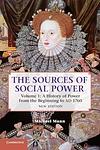
4. The Sources Of Social Power
A History of Power from the Beginning to AD 1760
This comprehensive work delves into the intricate dynamics of power throughout history, examining how different forms of power—ideological, economic, military, and political—interact and shape societies. It offers a detailed analysis of the development of social structures from ancient times to the modern era, emphasizing the multifaceted nature of power and its influence on human civilization. Through a comparative approach, it explores how these power sources have evolved and intersected, providing a nuanced understanding of the forces that drive social change and continuity.
-
5. The Dark Side Of Democracy
Explaining Ethnic Cleansing

Argues that ethnic cleansing and genocide can arise from modern democratic nation-building when the ideal of popular sovereignty fuses with ethnic nationalism, enabling majorities to exclude, expel, or annihilate minorities during crises. Using comparative cases such as the Armenians, the Holocaust, the Balkans, and Rwanda, it identifies conditions—contested sovereignty, radicalizing elites, polarized civil society, paramilitary mobilization, and mid-level state capacity—that escalate violence. The result is a portrait of “murderous cleansing” as a tragic byproduct of modernity rather than ancient hatreds or uniquely totalitarian regimes.
Purchase from Bookshop.org