Juan J. Linz
Juan José Linz was a prominent Spanish sociologist and political scientist known for his work on authoritarianism, totalitarianism, and the breakdown of democratic regimes. He was a Sterling Professor Emeritus of Political and Social Science at Yale University and made significant contributions to the study of political systems and comparative politics.
Books
This list of books are ONLY the books that have been ranked on the lists that are aggregated on this site. This is not a comprehensive list of all books by this author.
-
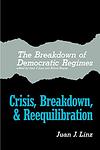
1. The Breakdown Of Democratic Regimes
Crisis, Breakdown, and Reequilibration
This insightful analysis delves into the factors leading to the collapse of democratic systems, examining the interplay of political, social, and economic elements that contribute to their instability. It explores the role of leadership, institutional weaknesses, and societal divisions in undermining democratic governance, offering a comparative study of various countries that have experienced democratic breakdowns. The work emphasizes the importance of understanding these dynamics to prevent future failures and sustain democratic institutions.
Purchase from Bookshop.org -
2. Problems Of Democratic Transition And Consolidation
Southern Europe, South America, and Post-Communist Europe

A comparative analysis of how different authoritarian legacies shape the paths and prospects of democratization across Southern Europe, South America, and post-Communist Europe. It proposes a framework for democratic consolidation centered on five arenas—civil society, political society, rule of law, a usable state, and an institutionalized economic sphere—arguing that effective stateness is a prerequisite for durable democracy. Through case studies, it shows how constitutional design, elite pacts, and institutional crafting affect transitions, highlighting the distinction between achieving competitive elections and building a stable, consolidated democratic order.
Purchase from Bookshop.org -
3. La Quiebra De Las Democracias
Examines the political dynamics that lead democratic systems to fail, emphasizing how legitimacy crises, polarized party competition, institutional deadlock, and the presence of disloyal or semi-loyal opposition actors erode norms and weaken governance. Through comparative case studies, it shows how leadership choices, coalition breakdowns, and escalating confrontations during social or economic crises normalize exceptional measures and undermine consensus, making authoritarian solutions appear viable even in societies with democratic traditions.