Alfred North Whitehead
Alfred North Whitehead was an English mathematician and philosopher. He is best known for his work in mathematical logic and the philosophy of science. He co-authored the landmark work 'Principia Mathematica' with Bertrand Russell and later developed a comprehensive metaphysical system known as process philosophy.
Books
This list of books are ONLY the books that have been ranked on the lists that are aggregated on this site. This is not a comprehensive list of all books by this author.
-
1. The Principia Mathematica
Mathematical Logic
The Principia Mathematica is a three-volume work on the foundations of mathematics, written with the goal of deriving all mathematical truths from a well-defined set of axioms and inference rules in symbolic logic. The authors aim to show that mathematics is a development of logic and avoid any hidden assumptions. The work covers topics like class theory, relation theory, and quantity theory, and it is known for its rigorous and meticulous approach.
The 1706th Greatest Book of All TimePurchase from Bookshop.org or Amazon -
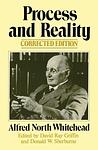
2. Process And Reality
An Essay in Cosmology
This philosophical work is a profound exploration of metaphysics, presenting a comprehensive framework that integrates the realities of experience, the nature of objects, and the essence of time. The author introduces the concept of "process" as the cornerstone of reality, arguing that the universe is characterized by a dynamic process of becoming rather than static being. Through the development of a complex system of thought known as "process philosophy," the text challenges traditional metaphysical notions, advocating for a reality that is interconnected, ever-evolving, and fundamentally constituted by events and occurrences. This seminal work is both a critique of classical metaphysics and an ambitious attempt to establish a new philosophical understanding that emphasizes the intrinsic relatedness and creativity of existence.
The 8089th Greatest Book of All TimePurchase from Bookshop.org or Amazon -
3. An Introduction to Mathematics
This book serves as a comprehensive guide to the fundamental concepts and principles of mathematics. It provides an in-depth overview of different mathematical concepts, including algebra, geometry, calculus, and logic, and their applications in various fields. The author makes use of clear and concise language, making the complex world of mathematics accessible to novices. The book also discusses the historical development of mathematics, its philosophical aspects, and its role in the advancement of human civilization.
The 15915th Greatest Book of All TimePurchase from Amazon -
4. Science and the Modern World
Lowell Lectures, 1925
"Science and the Modern World" is a philosophical exploration of the impact of scientific advancement on contemporary society. The author examines the development of science and its historical influence, asserting that modern science has transformed our understanding of the world and ourselves. He explores the philosophical implications of scientific discoveries, discussing topics such as the nature of matter, time, space, and the relationship between mind and body. He also critiques materialistic and mechanistic views of the universe, advocating for a holistic and organic worldview.
The 15915th Greatest Book of All TimePurchase from Amazon -
5. The Aims Of Education And Other Essays
This collection of essays delves into the philosophy and purpose of education, emphasizing the importance of fostering creativity and critical thinking over rote memorization. It argues for an educational system that adapts to the evolving needs of society and encourages students to engage with their subjects in a meaningful way. The essays explore the interplay between knowledge and imagination, advocating for a holistic approach that nurtures intellectual curiosity and prepares individuals to contribute thoughtfully to the world around them.
Purchase from Bookshop.org -
6. Adventures Of Ideas
An Essay on the Adventure of Ideas
This philosophical work explores the evolution of human thought and culture, tracing the development of ideas from ancient civilizations to modern times. It delves into the interplay between science, religion, and philosophy, examining how these domains have shaped human understanding and progress. The narrative weaves through historical contexts, highlighting the transformative power of ideas and their impact on society. It presents a comprehensive analysis of the dynamic relationship between creativity, knowledge, and civilization, offering insights into the enduring quest for meaning and truth.
Purchase from Bookshop.org -
7. The Function Of Reason

It argues that the aim of rationality is not merely to secure survival or accumulate facts, but to advance the art of life by directing experience toward greater richness, harmony, and beauty. Challenging purely mechanistic accounts of nature, it defends purpose and creativity as real features of the world and treats foresight as central to human action. The discussion integrates science, ethics, and aesthetics, emphasizing a dynamic balance of order and adventure so that civilization can both endure and progress. Overall, it reframes evolution and culture as value-seeking processes guided by the pursuit of novelty and the enrichment of experience.