Ludwig Wittgenstein
Ludwig Wittgenstein was an Austrian philosopher who worked primarily in logic, the philosophy of mathematics, the philosophy of mind, and the philosophy of language. He is considered one of the most influential philosophers of the 20th century.
Books
This list of books are ONLY the books that have been ranked on the lists that are aggregated on this site. This is not a comprehensive list of all books by this author.
-
1. Tractatus Logico-Philosophicus
Logisch-Philosophische Abhandlung
"Tractatus Logico-Philosophicus" is a seminal work in analytic philosophy that presents a comprehensive picture of reality and our knowledge of it. The book outlines a logical structure for all scientific discourse, arguing that language and its logical structure are the primary tools for understanding and representing the world. It proposes that all philosophical problems arise from misunderstandings of the logic of language, and that all meaningful propositions are pictures of states of affairs in the world. The book concludes with the famous line "Whereof one cannot speak, thereof one must be silent," suggesting that things that cannot be spoken about logically should not be spoken about at all.
The 369th Greatest Book of All TimePurchase from Bookshop.org or Amazon -
2. Philosophical Investigations
The German text, with a revised English translation
This book is a seminal work in 20th-century philosophy, presenting a detailed critique of the notion that our language directly corresponds to reality. The author argues that the meaning of words is not inherent, but rather derives from their use within specific forms of life. The book also introduces the concept of language games, suggesting that our understanding of language is akin to learning the rules of a game. The author further explores the limits of language, the nature of understanding, and the relationship between public and private language.
The 438th Greatest Book of All TimePurchase from Bookshop.org or Amazon -
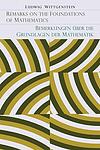
3. Remarks On The Foundations Of Mathematics
The book is a collection of Ludwig Wittgenstein's critical reflections on the philosophy of mathematics, exploring the nature of mathematical truth, the role of logic, and the foundations of mathematical concepts. Through a series of dialogues and remarks, Wittgenstein challenges conventional views, arguing that mathematical propositions are not discoveries but inventions, shaped by human practices and language. He emphasizes the importance of understanding mathematics as a human activity, questioning the objectivity and certainty traditionally attributed to mathematical knowledge. The work is notable for its influence on the philosophy of mathematics and its contribution to the broader philosophical discourse on language and meaning.
The 17158th Greatest Book of All TimePurchase from Amazon -
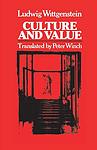
4. Culture And Value
The book is a collection of reflections and aphorisms by a prominent philosopher, exploring the intricate relationship between culture, art, and philosophy. It delves into the nature of human values, the essence of language, and the impact of cultural context on understanding and meaning. Through a series of personal notes and observations, the author provides insights into the philosophical underpinnings of everyday life, emphasizing the complexity and often subjective nature of interpreting cultural phenomena. The work offers a profound contemplation on how values are shaped and perceived within the tapestry of human experience.
The 17158th Greatest Book of All TimePurchase from Amazon -
5. On Certainty
The book explores the nature of knowledge, belief, and certainty, delving into the foundational aspects of human understanding and the limits of skepticism. Through a series of reflections and aphorisms, it examines how certain basic beliefs underpin our ability to claim knowledge and engage in meaningful discourse. The work challenges the notion of absolute certainty, suggesting that what we consider to be certain is often based on unexamined assumptions and forms of life that are taken for granted. It ultimately presents a philosophical investigation into how language, thought, and reality intersect in the formation of what we consider to be certain knowledge.
-
6. Lectures and Conversations on Aesthetics, Psychology, and Religious Belief
This book is a compilation of Ludwig Wittgenstein's informal lectures and conversations, where he explores the intricate relationships between aesthetics, psychology, and religious belief. Through these discussions, Wittgenstein delves into the nature of artistic expression, the subjective experience of beauty, and the complexities of religious faith, often questioning traditional philosophical approaches. His insights reveal a deep skepticism towards the possibility of definitive explanations in these areas, emphasizing instead the importance of understanding the language games and forms of life that shape human experience. The work captures Wittgenstein's unique approach to philosophy, characterized by his focus on ordinary language and the ways in which meaning is constructed through social practices.
-
7. Conferencia Sobre ética

A reflection on the limits of language in matters of morality, it argues that judgments about absolute value cannot be meaningfully stated as facts, even though they express a profound human tendency toward the transcendent. It distinguishes verifiable, relative value claims from absolute ethical and aesthetic claims, uses experiences like safety, guilt, and wonder at existence to illustrate this gap, and concludes that ethics is transcendental—something shown in a way of life rather than said in propositions.
-
8. Remarks On Frazer's Golden Bough
An aphoristic critique of anthropological explanations of ritual and magic, contending that such practices are expressive forms of life rather than mistaken proto-science. It challenges evolutionary narratives and reductive rationalism, urging description over theory and attention to the grammar of customs and shared human reactions. By likening understanding of ceremonies to grasping gestures, music, or jokes, it exposes the condescension and misreadings in purportedly scientific accounts.
Purchase from Bookshop.org -
9. The Blue And Brown Books
Preliminary Studies for the 'Philosophical Investigations
A collection of informal lecture notes and reflections that challenge traditional views of meaning, mind, and language by arguing that understanding comes from use within ordinary practices; it introduces ideas such as language-games, the rejection of a private language, the importance of grammar and rule-following, and critiques of mentalistic explanations, serving as a transitional work toward a later, more developed philosophy of ordinary language and meaning.
Purchase from Bookshop.org -
10. Scrisori Despre Tractatus
A concise collection of correspondence that illuminates and defends the core ideas of the Tractatus, clarifying the picture theory of language, the boundary between what can be said and what must be shown, and the limits of propositional discourse; the letters respond to critics, untangle technical points of logic and notation, and explore the ethical and mystical implications that the author regards as lying beyond ordinary philosophical statement, offering a more personal view of his aims and the methodological lessons he drew for philosophy.
-
11. über Gewißheit
A collection of philosophical reflections arguing that many of our most basic convictions function as ‘hinges’ for thought and action: they are background certainties embedded in forms of life and language-games rather than beliefs that can be justified or doubted in the ordinary evidential way. The notes challenge traditional foundationalist responses to skepticism by treating these propositions as grammatical rules or practices that make empirical inquiry possible, show how doubt is context-sensitive, and emphasize the pragmatic role of certainty in shaping when and how evidence or questioning are appropriate. The overall move reframes epistemology from seeking indubitable foundations to describing the ordinary mores and uses that sustain our claims to knowledge.