G. W. F. Hegel
Georg Wilhelm Friedrich Hegel was a German philosopher and one of the most important figures in German idealism. He developed a comprehensive philosophical framework, or 'system', of absolute idealism to account in an integrated and developmental way for the relation of mind and nature, the subject and object of knowledge, psychology, the state, history, art, religion, and philosophy.
Books
This list of books are ONLY the books that have been ranked on the lists that are aggregated on this site. This is not a comprehensive list of all books by this author.
-
1. Phenomenology of Mind
Spirit
This profound philosophical work delves into the evolution of consciousness, examining the stages it goes through from simple sensory awareness to the complexities of ethical life and self-awareness. The author argues that the mind does not exist in isolation, but rather develops through interpersonal relationships and societal interactions. The book also presents the concept of dialectical reasoning, suggesting that truth is not static but evolves over time through a process of thesis, antithesis, and synthesis.
The 1295th Greatest Book of All TimePurchase from Bookshop.org or Amazon -
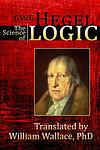
2. Science Of Logic
Being Part One of the Encyclopaedia of the Philosophical Sciences
This philosophical work delves into the intricate structures of thought and reality, exploring the foundational principles that govern logic and reason. It systematically examines the development of concepts, judgments, and syllogisms, presenting a comprehensive framework for understanding the dialectical process. Through a meticulous analysis of being, essence, and concept, the text seeks to unravel the dynamic interplay between thought and existence, offering profound insights into the nature of reality and the progression of human understanding.
The 16521st Greatest Book of All TimePurchase from Bookshop.org or Amazon -
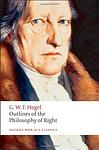
3. Hegel's Philosophy Of Right By Georg Wilhelm Friedrich Hegel, T. M. Knox Paperback
Natural Law and Political Science in Outline
This philosophical work delves into the intricate relationship between individual freedom and societal structures, exploring how personal liberties are realized within the framework of ethical life. It examines the evolution of law, morality, and the state, proposing that true freedom is achieved not through isolation but through participation in a rational and ethical community. The text intricately weaves together concepts of rights, duties, and the role of the state, offering a profound analysis of how individuals can harmonize personal aspirations with communal responsibilities, ultimately contributing to the development of a just society.
Purchase from Bookshop.org -
4. Introductory Lectures On Aesthetics

This work delves into the philosophical exploration of art, examining its nature, purpose, and significance within human experience. It presents a comprehensive analysis of aesthetics, emphasizing the interplay between art and reality, and how art serves as a medium for expressing the spirit of an era. The text explores the evolution of artistic expression, from symbolic and classical forms to romantic art, highlighting the dynamic relationship between form and content. Through these lectures, the reader gains insight into the profound ways art reflects and shapes cultural and intellectual life.
Purchase from Bookshop.org -
5. Dvasios Fenomenologija
This philosophical work explores the evolution of human consciousness and self-awareness through a dialectical process, tracing the journey from sense perception to absolute knowledge. It delves into the development of the spirit as it navigates through various stages of consciousness, including self-consciousness, reason, and spirit, ultimately culminating in the realization of freedom and self-actualization. The narrative is a complex interplay of ideas, examining how individuals come to understand themselves and the world around them through a synthesis of opposites, leading to a deeper comprehension of reality.
Purchase from Bookshop.org -
6. Andens Fenomenologi
This philosophical work delves into the intricate journey of human consciousness as it evolves from mere sensory perception to the attainment of absolute knowledge. It explores the dialectical process through which the spirit, or "Geist," transcends individual subjectivity to achieve a universal understanding of reality. The narrative unfolds through a series of stages, each representing a different form of consciousness, including self-awareness, reason, and ethical life, ultimately culminating in the realization of freedom and self-actualization. This profound exploration challenges readers to reconsider the nature of reality, identity, and the interconnectedness of human experience.
Purchase from Bookshop.org -
7. Grundlinien Der Philosophie Des Rechts Oder Naturrecht & Staatswissenschaft Im Grundrisse
Naturrecht & Staatswissenschaft Im Grundrisse
This philosophical work delves into the intricate relationship between law, morality, and the state, exploring the foundations of legal and political structures within the context of ethical life. It presents a systematic framework for understanding how individual freedom is realized through the institutions of civil society and the state, emphasizing the importance of rationality and ethical norms in shaping human interactions. The text is a profound examination of the principles underlying rights, duties, and the role of government, offering a comprehensive vision of how personal and collective freedoms can coexist harmoniously within a structured society.
Purchase from Bookshop.org -
8. Wer Denkt Abstrakt?
A concise reflection on how everyday judgments often think most abstractly, reducing people and events to single, isolated traits or acts, while genuinely concrete thought grasps the whole—context, relations, and mediations. Through vivid examples, it shows how prejudice and moralism spring from such abstractions and urges a more context-sensitive, dialectical understanding that situates particulars within their living connections.
-
9. The Difference Between Fichte's And Schelling's System Of Philosophy
This work contrasts Fichte’s subjective idealism, which derives the world from the self-positing I and emphasizes moral-practical activity, with Schelling’s philosophy of identity, which posits an Absolute in which subject and object are identical; diagnosing the former’s inability to ground nature and objectivity and the latter’s risk of collapsing differences into indifference, it argues for a speculative, dialectical method that preserves determinate difference within unity and sketches the contours of a systematic science integrating freedom, nature, and spirit.
Purchase from Bookshop.org -
10. Lectures On Logic
A pedagogical exposition of dialectical logic, it presents the self-development of pure thought and critiques traditional formal and empirical approaches while guiding the reader through the triadic progression of Being, Essence, and Concept. Showing how categories generate themselves through contradiction and resolution, it culminates in the Idea that unifies thought and being and opens the transition to nature and spirit. Emphasizing method and clarity, it frames logic as both the structure of thinking and the inner architecture of reality.
Purchase from Bookshop.org -
11. Lecciones Sobre La Historia De La Filosofía 1
This first volume surveys the origins of Western philosophy, presenting the history of thought as a dialectical progression in which each system embodies a partial truth. It sets out principles for writing the history of philosophy, then examines the pre-Socratics (Ionians, Pythagoreans, Heraclitus, Eleatics), the Sophists, Socrates, and the classical syntheses of Plato and Aristotle, emphasizing the shift from cosmological speculation to ethical self-consciousness and systematic metaphysics, and showing how earlier doctrines are preserved and overcome in later ones.
-
12. The Philosophy Of History
A systematic interpretation of world history as a rational, teleological process in which Spirit (Geist) progressively realizes human freedom through a dialectical sequence of conflicts and reconciliations. Civilizations, institutions, and great individuals are portrayed as moments in this unfolding, where apparent contingencies and struggles are understood as necessary steps toward greater self-awareness and the institutionalization of liberty in the modern constitutional state.
Purchase from Bookshop.org -
13. Retsfilosofi
A systematic account of law, morality, and political institutions that explains how individual freedom is actualized through social structures: it distinguishes abstract right (personhood, property, and contract), morality (the subjective will and conscience), and ethical life (Sittlichkeit), comprising family, civil society, and the modern state. The work argues that rights and duties are mediated through institutions—property, markets, corporations, administration, and law—and that genuine freedom is realized not in mere autonomy but in participation in rational ethical communities, with the state as the culminating embodiment that reconciles private interests and universal norms and organizes relations between peoples.
Purchase from Bookshop.org -
14. Oikeusfilosofia
A systematic, dialectical account of freedom that traces how individual rights and moral will are progressively realized through law and concrete social institutions, distinguishing abstract right, morality, and ethical life; it analyzes property, contract, family relations, civil society’s economic and corporate structures, and punishment, and argues that true freedom becomes objective only within a rational, constitutional state that mediates private interests and universal norms while criticizing merely formal or abstract notions of rights.
Purchase from Bookshop.org