Aristotle
Aristotle was an ancient Greek philosopher and scientist, one of the greatest intellectual figures of Western history. He made significant contributions to numerous fields including metaphysics, ethics, politics, logic, and biology.
Books
This list of books are ONLY the books that have been ranked on the lists that are aggregated on this site. This is not a comprehensive list of all books by this author.
-
1. The Nicomachean Ethics
This philosophical work focuses on the concept of ethics, specifically virtue ethics, and how it relates to a person's character and happiness. The author argues that happiness is the highest good and the end goal of life, and that it is achieved not through pleasure, but through virtuous actions. The book also explores the nature of practical reasoning, the different kinds of virtues, the importance of friendship, and the role of luck in human welfare.
The 402nd Greatest Book of All TimePurchase from Bookshop.org or Amazon -
2. The Politics
"The Politics" is a foundational text in political philosophy, where the author explores various forms of government and their respective merits and drawbacks. The work delves into the nature of the state, citizenship, and the role of the middle class in achieving political stability. It emphasizes the importance of a constitution that balances the interests of different parts of society and discusses the conditions under which various types of governments can be successful. The author also examines the relationship between politics and ethics, asserting that the main purpose of the state is to promote a good and virtuous life among its citizens.
The 1192nd Greatest Book of All TimePurchase from Bookshop.org or Amazon -
3. Poetics
This book is a seminal work of literary criticism that has profoundly influenced western thought. The book discusses the nature of poetry, tragedy, and comedy, as well as the components that make up a good story such as plot, character, thought, diction, melody, and spectacle. The author also introduces the concept of catharsis, the purging of emotions through the experience of art, and discusses the role of the tragic hero. The book is a must-read for anyone interested in literature, drama, or philosophy.
The 1297th Greatest Book of All TimePurchase from Bookshop.org or Amazon -
4. Corpus Aristotelicum
The "Corpus Aristotelicum" is a collection of texts by an ancient Greek philosopher, providing an extensive exploration of numerous fields of knowledge, such as metaphysics, ethics, logic, politics, biology, and poetry. These works have been instrumental in shaping Western philosophy and have had a profound influence on a wide range of subjects, including science, theology, and politics. The collection is known for its systematic and logical approach, and for its groundbreaking ideas that continue to stimulate intellectual discourse.
The 1449th Greatest Book of All TimePurchase from Bookshop.org or Amazon -
5. Metaphysics
"Metaphysics" is a philosophical work that delves into the fundamental nature of reality, including the relationship between matter and substance, potentiality and actuality, form and matter, existence and essence, and the underlying principles of being. It also explores the concept of 'first philosophy' or 'wisdom', and the existence of God as an unmoved mover. The book is a profound exploration of ontology, causality, and the abstract concepts of being and knowing.
The 2510th Greatest Book of All TimePurchase from Bookshop.org or Amazon -
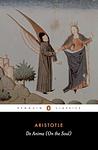
6. De Anima
"De Anima" is a foundational philosophical treatise that explores the concept of the soul and its relation to the body. The work delves into the nature of life itself, categorizing different kinds of souls possessed by different kinds of living things, such as plants, animals, and humans. It discusses the faculties of the soul, including the nutritive, perceptive, and intellectual aspects, and investigates their functions and interactions. The treatise also examines issues of perception, cognition, and memory, arguing that the soul is the principle of life and the source of all vital functions, ultimately aiming to define the essence of life and the basis of all living activities.
The 14726th Greatest Book of All TimePurchase from Bookshop.org or Amazon -
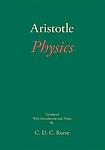
7. Physics
The Complete Works of Aristotle, Volume 1
"Physics" is a foundational text in the field of natural philosophy that explores the nature of the physical world and the principles underlying its behavior. The work delves into concepts such as change, causality, motion, and the infinite, providing a comprehensive framework for understanding the material universe. Through logical reasoning and empirical observation, the text examines the causes and principles of natural phenomena, offering insights into the dynamics of time, space, and matter. This treatise lays the groundwork for subsequent scientific inquiry and philosophical thought, influencing the development of Western science and philosophy.
The 14755th Greatest Book of All TimePurchase from Amazon -
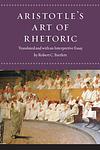
8. The Art Of Rhetoric
This seminal work explores the principles and techniques of effective persuasion, focusing on the art of rhetoric as a crucial skill in public discourse. It delves into the three modes of persuasion: ethos, which relies on the speaker's credibility; pathos, which appeals to the audience's emotions; and logos, which is based on logical argumentation. The text provides a comprehensive analysis of rhetorical strategies, including the use of language, style, and structure, to influence and engage an audience. Through detailed examination, it offers insights into the ethical considerations and practical applications of rhetoric in various contexts, emphasizing its role in shaping opinions and decision-making.
The 16755th Greatest Book of All Time -
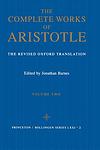
9. The Works Of Aristotle, Vol. 2
The Physics, On the Heavens, On Generation and Corruption, Meteorology
This volume delves into Aristotle's exploration of natural philosophy and metaphysics, offering insights into his understanding of the physical world and the principles underlying existence. It covers a range of topics including the nature of the soul, the concept of motion, and the structure of the cosmos. Through detailed analysis and logical reasoning, Aristotle examines the causes and principles of natural phenomena, providing a foundational framework that has influenced scientific and philosophical thought for centuries. The text reflects his methodical approach to categorizing knowledge and his commitment to empirical observation and rational inquiry.
-
10. The Works Of Aristotle, Vol. 7
Metaphysics

This volume delves into the intricate realms of Aristotle's philosophical inquiries, focusing on his exploration of natural phenomena and metaphysical concepts. It presents a detailed examination of the principles governing the natural world, the essence of being, and the nature of existence. Through a series of methodical analyses, the text offers insights into Aristotle's theories on causality, substance, and the interplay between potentiality and actuality. The work serves as a testament to his enduring influence on the foundations of Western philosophy, providing readers with a comprehensive understanding of his intellectual legacy.
Purchase from Bookshop.org -
11. The Complete Works Of Aristotle
This comprehensive collection brings together the extensive writings of one of the most influential philosophers in history, offering a profound exploration of diverse subjects such as metaphysics, ethics, politics, logic, and natural sciences. The works delve into the nature of reality, the principles of reasoning, the foundations of ethical behavior, and the structure of political systems, reflecting a deep inquiry into the human condition and the world around us. Through a blend of empirical observation and philosophical inquiry, the collection provides timeless insights that have shaped Western thought and continue to inspire philosophical discourse today.
Purchase from Bookshop.org -
12. Categorias
This philosophical treatise explores the fundamental concepts of being and categorization, laying the groundwork for understanding how language and thought relate to the world. It systematically examines ten categories, such as substance, quantity, quality, and relation, which serve as the basic building blocks for analyzing and describing reality. Through a meticulous analysis of these categories, the work provides insights into the nature of existence and the structure of human cognition, influencing subsequent philosophical discourse on ontology and logic.
Purchase from Bookshop.org -
13. The Athenian Constitution
This historical treatise provides an insightful examination of the political and legal institutions of ancient Athens, tracing their evolution from the city's early days through the classical period. It offers a detailed analysis of the various governmental structures, including the roles of different offices and the functioning of the democratic system. The work highlights the reforms introduced by key figures such as Solon and Cleisthenes, illustrating how these changes shaped Athenian society and governance. Through its meticulous documentation, the text serves as a valuable resource for understanding the complexities of Athenian democracy and its enduring influence on political thought.
Purchase from Bookshop.org -
14. The Eudemian Ethics
This philosophical treatise explores the nature of human happiness and virtue, delving into the intricacies of ethical behavior and the pursuit of the good life. It examines the role of reason and moral character in achieving eudaimonia, or flourishing, and discusses the importance of friendship, justice, and wisdom in cultivating a virtuous life. Through a series of methodical arguments, the text seeks to understand the balance between personal desires and moral obligations, ultimately aiming to provide a comprehensive framework for ethical living.
Purchase from Bookshop.org -
15. Rinktiniai Raštai
This collection serves as a comprehensive anthology of philosophical works, delving into the realms of ethics, politics, metaphysics, and logic. It offers a profound exploration of the nature of reality, the principles of human behavior, and the foundations of political theory. Through a series of essays and treatises, the text provides insights into the pursuit of knowledge, the essence of virtue, and the structure of the ideal state, reflecting a timeless inquiry into the fundamental questions of human existence.
-
16. Nikomahova Etika
This philosophical treatise explores the nature of ethical virtues and the path to achieving eudaimonia, or human flourishing. It delves into the concept of the "Golden Mean," advocating for a balanced approach to virtues, where moral excellence is found between extremes of deficiency and excess. The work emphasizes the importance of rationality, character development, and the role of friendship in leading a fulfilling life. It also discusses the significance of practical wisdom and the pursuit of the highest good, which is achieved through a life of virtuous activity in accordance with reason.
Purchase from Bookshop.org -
17. The Rhetoric & The Poetics Of Aristotle
This seminal work delves into the art of persuasion and the principles of literary composition, exploring the intricate relationship between rhetoric and poetics. It offers a comprehensive analysis of rhetorical techniques, emphasizing the importance of ethos, pathos, and logos in effective communication. Additionally, it examines the elements of tragedy, comedy, and epic poetry, providing insights into the structure and purpose of these literary forms. Through a blend of philosophical inquiry and practical guidance, the text serves as a foundational treatise on the power of language and its role in shaping human thought and society.
Purchase from Bookshop.org -
18. Protréptico
A persuasive exhortation to pursue philosophy as the highest human calling, arguing that the natural desire to know finds fulfillment in contemplation and reasoned inquiry. It answers objections that philosophy is useless by showing how understanding grounds virtue, guides practical decision-making, and elevates civic and personal life. By contrasting fleeting external goods with the enduring goods of wisdom and moral excellence, it urges readers—especially the young—to reorient their aims and live in accordance with the soul’s highest capacities.
-
19. The Pocket Aristotle
A concise anthology of foundational writings that spans logic, metaphysics, psychology, ethics, politics, rhetoric, and poetics, highlighting core ideas such as the categories, syllogistic reasoning, the four causes, substance and change, the nature of the soul, virtue as the mean, the polis as a community aimed at living well, and art as mimesis. The selections foreground a unified vision of purpose in nature and human life, offering an accessible gateway to key concepts that shaped classical philosophy.
-
20. The Basic Works Of Aristotle
A comprehensive collection of foundational classical writings that presents systematic treatments of logic, metaphysics, natural philosophy, biology, ethics, politics, rhetoric and poetics, offering the central theories of causation, substance, form and matter, syllogistic reasoning, the nature of the soul and living beings, and practical and civic virtues—serving as an essential survey of ancient philosophical methods and scientific inquiry.
Purchase from Bookshop.org -
21. The Works Of Aristotle The Famous Philosopher Containing His Complete Masterpiece And Family Physician; His Experienced Midwife, His Book Of Problems And His Remarks On Physiognomy
Containing His Complete Masterpiece And Family Physician; His Experienced Midwife, His Book Of Problems And His Remarks On Physiognomy
A compiled volume of practical and theoretical treatises presenting household medical remedies and advice, obstetrical guidance for pregnancy and childbirth, a series of posed natural-philosophical problems with brief solutions, and discussions on reading facial and bodily features; the work blends classical natural inquiry with folk medicine and midwifery, offering insight into pre-modern approaches to diagnosis, treatment, and the interpretation of physical signs.
Purchase from Bookshop.org -
22. A New Translation Of The Nichomachean Ethics
The work presents a systematic investigation of the nature of the good life, arguing that human flourishing is achieved through the cultivation of moral and intellectual virtues practiced as a mean between excess and defect; it explains how virtue is formed by habituation and guided by practical wisdom, examines justice, friendship, and the role of pleasure, and emphasizes the centrality of reason and contemplative activity in attaining the highest form of well-being within a political community.
Purchase from Bookshop.org -
23. Politiikka
A systematic examination of the political community as the natural culmination of human associations, arguing that the city-state exists to enable the good life rather than merely provide security; it surveys origins and parts of the polis (household, village), analyzes what makes a citizen, and classifies constitutions into good forms (rule by one, few, or many) and their corrupt counterparts (tyranny, oligarchy, democracy) while assessing their strengths and weaknesses. The work investigates practical institutions—law, education, property, and the role of a stable middle class—to promote civic virtue and stability, argues for mixed or context-sensitive constitutions as often best in practice, and considers who should rule and under what conditions. Throughout it balances normative claims about the common good with empirical comparisons of existing constitutions, aiming to show how political arrangements shape human flourishing.
Purchase from Bookshop.org -
24. Nikomakhoksen Etiikka
Teos käsittelee hyvän elämän luonnetta ja onnellisuuden (eudaimonian) saavuttamista, esittäen, että korkein hyvä toteutuu hyveellisessä toiminnassa järjen mukaisesti. Moraaliset hyveet ovat tapoja, jotka muodostuvat tottumuksen kautta ja sijaitsevat kultaisena keskitienä liiallisuuden ja vajavaisuuden välillä, kun taas älylliset hyveet kehittyvät opetuksen ja pohdinnan kautta. Käytännön viisaus (phronesis) on välttämätön hyvien valintojen tekemiseksi, ja teos käsittelee myös oikeudenmukaisuuden, ystävyyden ja yhteisön merkitystä hyveellisessä elämässä. Lopuksi pohditaan ajattelun ja kontemplatiivisen toiminnan arvoa ihmisen kukoistuksen korkeimpana ilmenemismuotona.
-
25. Metafysiikka
A foundational inquiry into Being itself, its causes and principles, that investigates what entities are in their most general sense and how they can be classified and explained; it develops distinctions such as substance, form and matter, potentiality and actuality, and the four causes to account for change and existence. The work examines universals, first principles, and the nature of scientific explanation, and culminates in an argument for a prime unmoved mover as the ultimate cause of motion and intelligibility in the world. Throughout it combines metaphysical analysis with logical and theological considerations to establish a framework for understanding reality beyond what the natural sciences describe.
-
26. Sielusta/Pieniä Tutkielmia
A systematic inquiry into the nature and powers of the soul, presented as the form or principle of living bodies rather than a separate material substance; it examines perception, sensation, imagination, intellect, nutrition, reproduction, growth, movement, sleep, dreams and memory, and distinguishes nutritive, perceptive and rational faculties. The work combines empirical observations of animals and plants with conceptual analysis to argue that mental functions arise from bodily organization while treating the intellect as a special case whose immortality and separability are debated. Overall it offers a foundational account of psychology and biology that ties mental life to the organism’s structure and activities.
-
27. Fysiikka
An extended inquiry into the principles and causes of natural change and motion, arguing that nature itself is a principle of movement and rest; it develops the distinction between form and matter and between potentiality and actuality, formulates the four causes (material, formal, efficient, final) as keys to explanation, and examines the nature of place, void, time, motion, and the continuum while critiquing rival accounts and defending a teleological and empirical approach to understanding physical reality.
-
28. Teokset Ii
-
29. Teokset I
-
30. The Organon
A systematic treatment of logical theory and method that lays out categories of being and predication, analyzes propositions and their oppositions, formulates the rules of syllogistic inference and demonstration, outlines procedures for dialectical inquiry and topical argument, and catalogs common fallacies; presenting logic as the essential instrument for clarifying concepts, establishing definitions, and securing scientific knowledge through valid demonstration.
Purchase from Bookshop.org