Ray Monk's Top 10 Philosophy Books of the 20th Century
This is one of the 759 lists we use to generate our main The Greatest Books list.
-
The Principia Mathematica by Alfred North Whitehead, Bertrand Russell
Mathematical Logic
The Principia Mathematica is a three-volume work on the foundations of mathematics, written with the goal of deriving all mathematical truths from a well-defined set of axioms and inference rules in symbolic logic. The authors aim to show that mathematics is a development of logic and avoid any hidden assumptions. The work covers topics like class theory, relation theory, and quantity theory, and it is known for its rigorous and meticulous approach.
The 1706th Greatest Book of All TimePurchase from Bookshop.org or Amazon -
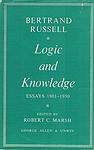
Logic And Knowledge by Bertrand Russell
Essays 1901-1950
"Logic and Knowledge" is a collection of essays that delve into the philosophical inquiries surrounding logic, mathematics, and epistemology. The book compiles the author's rigorous analyses and arguments on various topics such as the foundations of mathematics, the principles of logic, the nature of truth, and the processes of scientific reasoning. Through these essays, the author explores the relationships between reality and our representations of it, emphasizing the role of logical structure in the pursuit of knowledge and the understanding of the world. This compilation not only reflects the author's profound contributions to analytic philosophy but also his enduring influence on the philosophy of language and modern logic.
The 14820th Greatest Book of All TimePurchase from Bookshop.org or Amazon -
Tractatus Logico-Philosophicus by Ludwig Wittgenstein
Logisch-Philosophische Abhandlung
"Tractatus Logico-Philosophicus" is a seminal work in analytic philosophy that presents a comprehensive picture of reality and our knowledge of it. The book outlines a logical structure for all scientific discourse, arguing that language and its logical structure are the primary tools for understanding and representing the world. It proposes that all philosophical problems arise from misunderstandings of the logic of language, and that all meaningful propositions are pictures of states of affairs in the world. The book concludes with the famous line "Whereof one cannot speak, thereof one must be silent," suggesting that things that cannot be spoken about logically should not be spoken about at all.
The 369th Greatest Book of All TimePurchase from Bookshop.org or Amazon -
Philosophical Investigations by Ludwig Wittgenstein
The German text, with a revised English translation
This book is a seminal work in 20th-century philosophy, presenting a detailed critique of the notion that our language directly corresponds to reality. The author argues that the meaning of words is not inherent, but rather derives from their use within specific forms of life. The book also introduces the concept of language games, suggesting that our understanding of language is akin to learning the rules of a game. The author further explores the limits of language, the nature of understanding, and the relationship between public and private language.
The 438th Greatest Book of All TimePurchase from Bookshop.org or Amazon -
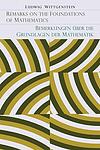
Remarks On The Foundations Of Mathematics by Ludwig Wittgenstein
The book is a collection of Ludwig Wittgenstein's critical reflections on the philosophy of mathematics, exploring the nature of mathematical truth, the role of logic, and the foundations of mathematical concepts. Through a series of dialogues and remarks, Wittgenstein challenges conventional views, arguing that mathematical propositions are not discoveries but inventions, shaped by human practices and language. He emphasizes the importance of understanding mathematics as a human activity, questioning the objectivity and certainty traditionally attributed to mathematical knowledge. The work is notable for its influence on the philosophy of mathematics and its contribution to the broader philosophical discourse on language and meaning.
The 17166th Greatest Book of All TimePurchase from Amazon -
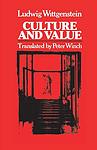
Culture And Value by Ludwig Wittgenstein
The book is a collection of reflections and aphorisms by a prominent philosopher, exploring the intricate relationship between culture, art, and philosophy. It delves into the nature of human values, the essence of language, and the impact of cultural context on understanding and meaning. Through a series of personal notes and observations, the author provides insights into the philosophical underpinnings of everyday life, emphasizing the complexity and often subjective nature of interpreting cultural phenomena. The work offers a profound contemplation on how values are shaped and perceived within the tapestry of human experience.
The 17166th Greatest Book of All TimePurchase from Amazon -
The Crisis of European Sciences and Transcendental Phenomenology by Edmund Husserl
An Introduction to Phenomenological Philosophy
This book is a philosophical work that explores the crisis facing the sciences in Europe, arguing that this crisis stems from the disregard for transcendental phenomenology. The author asserts that the sciences have lost their grounding in the world of lived experience and have become too abstract and disconnected from human life, leading to a crisis of meaning. He proposes a return to the "lifeworld" and a recentering of science on human experience, using the methods of phenomenology to uncover the essential structures of consciousness and the world.
The 2564th Greatest Book of All TimePurchase from Bookshop.org or Amazon -
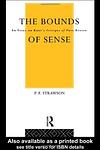
The Bounds Of Sense by P. F. Strawson
An Essay on Kant's Critique of Pure Reason
"The Bounds of Sense" is a philosophical work that critically examines Immanuel Kant's seminal "Critique of Pure Reason." The book explores the central themes and arguments of Kant's critique, particularly focusing on his theories of knowledge, metaphysics, and the limits of human understanding. The author provides a detailed analysis of Kant's use of synthetic a priori knowledge and the conditions of possible experience, while also addressing the coherence and contradictions within Kant's system. This work not only serves as a rigorous critique of Kantian philosophy but also as a discussion on the broader implications of Kant's ideas for contemporary epistemology and metaphysics.
The 14985th Greatest Book of All TimePurchase from Amazon -
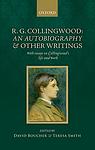
An Autobiography by RG Collingwood
The book is a reflective exploration of the author's intellectual journey and philosophical development. It delves into his experiences and thoughts on various subjects, including history, art, and metaphysics, illustrating how these shaped his ideas and academic pursuits. Through personal anecdotes and critical analysis, the author provides insight into the evolution of his philosophical beliefs and the broader intellectual landscape of his time, offering readers a profound understanding of his contributions to philosophy and the humanities.
The 16978th Greatest Book of All TimePurchase from Amazon -
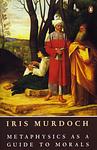
Metaphysics As A Guide To Morals by Iris Murdoch
The book explores the intricate relationship between metaphysical concepts and moral philosophy, delving into how our understanding of reality and existence influences ethical thought and behavior. It examines the role of art, religion, and culture in shaping moral values, while questioning the nature of goodness and the human capacity for moral reasoning. Through a rich tapestry of philosophical discourse, the work challenges readers to consider the profound impact of metaphysical beliefs on the moral landscape, encouraging a deeper reflection on the pursuit of virtue and the complexities of human life.
The 17166th Greatest Book of All TimePurchase from Amazon




Ray Monk / Guardian, 10 Books
Ray Monk's top 10 philosophy books of the 20th century.
From the Guardian:
Ray Monk is professor of philosophy at the University of Southampton and is the author of Ludwig Wittgenstein: The Duty of Genius, and Bertrand Russell: The Spirit of Solitude. His most recent book, Bertrand Russell: The Ghost of Madness 1921-1970, focuses on Russell's relationship with his son, John.
"The following list is unashamedly 'unbalanced'. Of the 10 books listed, four are by a single philosopher: Ludwig Wittgenstein. I make no apologies for this. In my view, Wittgenstein towers above all other 20th century philosophers to such an extent that it is surprising to find any books not written by him included in such a list."
This list was originally published in 2001 and was added to this site almost 2 years ago.
This list has a weight of 1%. To learn more about what this means please visit the Rankings page.
Here is a list of what is decreasing the importance of this list:
- Voters: Voter Count
- List: only covers 1 specific genre
- List: only covers mostly "Western Canon" books
- List: only covers 100 years
If you think this is incorrect please contact us.
- Number of Voters:
- 1
- Voter Count Unknown:
- No
- Voter Names Unknown:
- No
- High Quality Source:
- No
- Location Specific:
- No
- Category Specific:
- Yes