The Greatest Technical Books of All Time
Click to learn how this list is calculated.
This list represents a comprehensive and trusted collection of the greatest books. Developed through a specialized algorithm, it brings together 759 'best of' book lists to form a definitive guide to the world's most acclaimed books. For those interested in how these books are chosen, additional details can be found on the rankings page.
What should I read next?
Get personalized book recommendations based on your reading history and preferences. Our algorithm analyzes your favorite books and reading patterns to suggest your next great read.
Get RecommendationsGenres
The "Technical" category for books encompasses a wide range of literature that focuses on specialized knowledge, skills, and methodologies related to specific fields or industries. These books are often characterized by their detailed and precise content, aimed at professionals, students, or enthusiasts seeking to deepen their understanding of complex subjects. Topics within this category can include engineering, computer science, information technology, mathematics, and various applied sciences. Technical books often serve as reference materials, instructional guides, or comprehensive overviews, providing readers with the necessary tools and insights to solve practical problems, implement new technologies, or advance their expertise in a particular domain.
Countries
Date Range
Filter books by their publication year. Enter the earliest year (Start) and latest year (End) to find books published within that period. Leave either field empty to search from the beginning of time or up to the present day.
Reading Statistics
Click the button below to see how many of these books you've read!
Download
If you're interested in downloading this list as a CSV file for use in a spreadsheet application, you can easily do so by clicking the button below. Please note that to ensure a manageable file size and faster download, the CSV will include details for only the first 500 books.
DownloadTo download this list as a CSV file, please log in to your account. Once logged in, you'll be able to download the data for use in spreadsheet applications.
Login to Download-
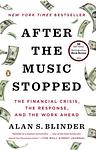
76. After The Music Stopped by Alan S. Blinder
The Financial Crisis, the Response, and the Work Ahead
After the Music Stopped is a comprehensive analysis of the 2008 financial crisis and its aftermath. Alan S. Blinder, a former vice chairman of the Federal Reserve, examines the causes of the crisis, the government's response to it, and the ongoing challenges facing the global economy. Blinder argues that the crisis was caused by a combination of factors, including lax regulation, excessive risk-taking, and a housing bubble. He also explores the various policy responses to the crisis, including the Troubled Asset Relief Program (TARP) and the Dodd-Frank Wall Street Reform and Consumer Protection Act. Finally, Blinder offers recommendations for preventing future financial crises and ensuring long-term economic stability.
The 4952nd Greatest Book of All TimePurchase from Bookshop.org or Amazon -
77. Economy and Society by Max Weber
An Outline of Interpretive Sociology
"Economy and Society" is a comprehensive analysis of the relationship between economy and society, focusing on the role of social actions and their impact on economic systems. The book presents a theoretical framework for understanding how economic and social structures influence each other, including the role of bureaucracy, power, and authority. The author also introduces his famous concept of the "Protestant Ethic", linking the rise of capitalism to certain aspects of Christian beliefs. The book is considered a fundamental text in sociology and economics, providing a deep understanding of social and economic phenomena.
The 5414th Greatest Book of All TimePurchase from Bookshop.org or Amazon -
78. Sociobiology by E. O. Wilson
The New Synthesis
"Sociobiology" is a comprehensive and scholarly work that explores the biological basis of social behavior in all species, including humans. The author weaves together findings from various fields such as ethology, anthropology, evolution, and genetics to propose a new discipline - sociobiology. He suggests that social behavior, including altruism, aggression, and nurturance, is not just a product of learning and environment, but also has a genetic basis. This work sparked considerable debate and controversy, particularly regarding its implications for human behavior and society.
The 5425th Greatest Book of All TimePurchase from Bookshop.org or Amazon -
79. The Economic Consequences of the Peace by John Maynard Keynes
This book is a critique of the Treaty of Versailles, written by a British economist who was part of the British delegation to the peace conference. The author argues that the harsh reparations and economic measures imposed on Germany after World War I were unfair and would lead to economic instability and another war. He suggests that a more just and economically sound approach would have been to rebuild Germany and integrate it into the global economy, rather than punishing it.
The 5460th Greatest Book of All TimePurchase from Bookshop.org or Amazon -
80. Bureaucracy by Ludwig von Mises
The Classic Analysis of the Nature, Causes, and Effects of Governmental Bureaucracy
"Bureaucracy" is a critical examination of the structure and function of bureaucracies in both the public and private sectors. The author argues that bureaucratic management, with its focus on rules and regulations, is not only inefficient but also stifles innovation and individual initiative. He further contends that these problems are inherent in the nature of bureaucracy itself and are not simply due to poor management or corruption. The book also explores the impact of bureaucracy on economics, politics, and society as a whole.
The 5634th Greatest Book of All TimePurchase from Bookshop.org or Amazon -
81. Darwin's Black Box by Michael J. Behe
The Biochemical Challenge to Evolution
This book presents a critique of the theory of evolution from a biochemical perspective. The author argues that complex biochemical systems within the cell, such as blood clotting and vision, could not have evolved gradually through natural selection because they are "irreducibly complex" - all parts must be present and functioning for the system to work. He proposes that such systems must have been deliberately designed, introducing the concept of "intelligent design" as an alternative to Darwinian evolution.
The 5714th Greatest Book of All TimePurchase from Bookshop.org or Amazon -
82. The Way the World Works by Jude Wanniski
How Economies Fail—and Succeed
"The Way the World Works" is an in-depth exploration of political economy, presenting an argument for supply-side economics. The author suggests that economic growth is primarily influenced by the reduction of barriers in production, including lower tax rates. The book presents historical examples to support this theory, arguing that government intervention often leads to economic instability. This text is considered a fundamental work in supply-side economics and has had a significant influence on economic policy discussions.
The 5736th Greatest Book of All TimePurchase from Amazon -
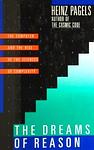
83. The Dreams Of Reason by Heinz R. Pagels
The Computer and the Rise of the Sciences of Complexity
This book delves into the transformative impact of computer technology on the scientific understanding of complex systems, exploring the intersection of computation with the natural world. It examines how the advent of computers has revolutionized the study of complex phenomena, from the behavior of subatomic particles to the dynamics of ecosystems, and even the patterns of human societies. Through accessible language, the narrative bridges the gap between advanced scientific theories and the layperson's understanding, offering insights into how complexity science, powered by computational tools, is reshaping our perception of the universe's inherent unpredictability and interconnectedness.
The 5743rd Greatest Book of All TimePurchase from Amazon -
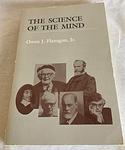
84. The Science Of The Mind by Owen J. Flanagan
This book offers a comprehensive exploration into the complexities of human consciousness and cognition, blending insights from psychology, philosophy, and neuroscience. It delves into the nature of the mind, examining how mental states correlate with brain states, the concept of the self, and the philosophical implications of cognitive science. The author critically analyzes various theories of consciousness, aiming to bridge the gap between empirical research and philosophical inquiry. By doing so, it seeks to provide a deeper understanding of what it means to be a conscious being, challenging readers to reconsider the essence of human thought, emotion, and identity within a scientific framework.
The 5806th Greatest Book of All TimePurchase from Amazon -
85. The Dancing Wu Li Masters by Gary Zukav
An Overview of the New Physics
"The Dancing Wu Li Masters" is a book that explores the concepts of quantum physics and relativity in an accessible way for non-scientists. The author uses metaphors and analogies, drawing on Eastern philosophies and spiritual concepts to explain complex scientific theories. The book delves into topics such as the nature of reality, the relationship between observer and observed, and the interconnectedness of all things, aiming to bridge the gap between science and spirituality.
The 5892nd Greatest Book of All TimePurchase from Bookshop.org or Amazon -
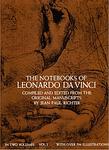
86. Notebooks by Leonardo da Vinci
The book is a compilation of writings and sketches from one of history's most brilliant minds, offering a window into the intellectual pursuits and creative process of the Renaissance polymath. It encompasses a wide array of subjects, from anatomy to hydraulics, from painting to engineering, revealing the author's insatiable curiosity and his systematic approach to observation and inquiry. The collection is not only a testament to the author's genius but also a source of inspiration and insight into the fusion of art and science during the Renaissance period.
The 6496th Greatest Book of All TimePurchase from Bookshop.org or Amazon -
87. Capital in the Twenty-First Century by Thomas Piketty
The Dynamics of Inequality
This book provides a comprehensive analysis of the dynamics of capital accumulation and distribution over the last few centuries. The author argues that the rate of capital return in developed countries is persistently greater than the rate of economic growth, leading to high levels of wealth inequality. The book further suggests that the level of income inequality is not primarily a result of differences in individual labor income but rather the result of differences in capital ownership and the income derived from it. The author proposes a global tax on wealth to prevent soaring inequality.
The 7369th Greatest Book of All TimePurchase from Bookshop.org or Amazon -
88. Consciousness Explained by Daniel Dennett
The book in question offers a comprehensive theory of consciousness, challenging traditional views and proposing a scientific understanding of the mind. The author argues against the Cartesian model of consciousness as a central, unified entity and instead presents the "Multiple Drafts" model, which posits that consciousness arises from various cognitive processes occurring in parallel. The work delves into the nature of perception, memory, and language, employing insights from psychology, neuroscience, and artificial intelligence to explain how complex phenomena such as self-awareness and intentionality can emerge from the interactions of non-conscious brain functions. The book is both a critique of outdated philosophical ideas about the mind and an attempt to clarify how consciousness can be studied and understood through empirical means.
The 7403rd Greatest Book of All TimePurchase from Bookshop.org or Amazon -
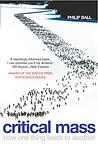
89. Critical Mass by Philip Ball
How One Thing Leads to Another
"Critical Mass: How One Thing Leads To Another" explores the concept of criticality and its pervasive influence in various natural and human-made systems. Through a captivating blend of scientific explanations and real-world examples, the author delves into the interconnectedness of phenomena, illustrating how small changes can lead to dramatic and unpredictable outcomes. From the behavior of avalanches and forest fires to the dynamics of financial markets and social networks, this thought-provoking book sheds light on the underlying principles that govern our complex world.
The 7440th Greatest Book of All TimePurchase from Bookshop.org or Amazon -
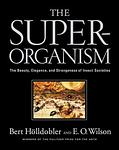
90. The Insect Societies by E. O. Wilson
The book is a comprehensive study of the complex social structures and behaviors of insects, such as ants, bees, wasps, and termites. It delves into the intricate organization of their societies, exploring how these creatures communicate, reproduce, and function within their ecosystems. The author examines the evolutionary biology that has led to the diverse forms of social organization observed in insect species, shedding light on the parallels between human societies and those of these small, yet incredibly sophisticated, creatures. Through detailed observations and scientific analysis, the book provides a deep understanding of the principles governing social behavior in the insect world.
The 7536th Greatest Book of All TimePurchase from Bookshop.org -
91. The First Three Minutes by Steven Weinberg
A Modern View of the Origin of the Universe
The book provides a detailed account of the universe's early stages, focusing on the critical first three minutes following the Big Bang when the conditions were set for the formation of matter as we know it. It delves into the fundamental particles and forces that shaped the cosmos, exploring concepts like nucleosynthesis, the formation of light elements, and the cosmic microwave background radiation. The author combines the realms of theoretical physics and cosmology to offer insights into how the universe began and evolved, making complex scientific ideas accessible to a broader audience.
The 7543rd Greatest Book of All TimePurchase from Bookshop.org or Amazon -
92. The Mind and Society by Vilfredo Pareto
A Treatise on General Sociology
This book is a comprehensive analysis of the social and psychological processes that shape human behavior and society. The author introduces the concept of "residues" and "derivations" as the main drivers of human actions and societal change. He argues that residues, innate characteristics within individuals, are more stable and influential in shaping social phenomena, while derivations are the justifications or explanations people give for their actions. The book further delves into the classification of residues and the role they play in economics, politics, and social dynamics.
The 7558th Greatest Book of All TimePurchase from Bookshop.org or Amazon -
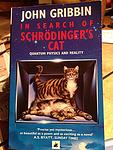
93. In Search Of Schrodinger's Cat by John Gribbin
Quantum Physics and Reality
The book delves into the mysterious and often paradoxical world of quantum mechanics, exploring the groundbreaking experiments and theories that have shaped our understanding of the subatomic realm. It takes readers on a journey through the development of quantum physics, from its early stages in the 20th century to the complex and mind-bending concepts that challenge our perceptions of reality. The narrative unpacks the implications of quantum phenomena such as superposition and entanglement, and discusses the famous thought experiment involving a cat that is simultaneously alive and dead, illustrating the peculiar nature of quantum states and the difficulty of reconciling them with classical physics.
The 7558th Greatest Book of All TimePurchase from Amazon -
94. Micrographia by Robert Hooke
or Some Physiological Descriptions of Minute Bodies Made by Magnifying Glasses with Observations and Inquiries Thereupon
This seminal work from the 17th century is renowned for its detailed and pioneering illustrations of the microscopic world. The author, using one of the earliest compound microscopes, meticulously documented his observations of a previously unseen universe, ranging from the structure of snowflakes and the anatomy of insects to the crystalline forms of minerals and the cellular patterns of plants. The book not only captured the public's imagination with its intricate engravings but also laid the groundwork for the field of microscopy and significantly advanced the scientific community's understanding of biology and the nature of matter.
The 7753rd Greatest Book of All TimePurchase from Bookshop.org or Amazon -
95. Gaia by James Lovelock
A New Look at Life on Earth
The book presents a groundbreaking hypothesis that redefines Earth as a self-regulating system, where the biosphere, atmosphere, oceans, and soil function as a single living organism. This entity, named after the Greek goddess of Earth, maintains the conditions necessary for life through complex interactions among its components. The author, an independent scientist, argues that life on Earth actively shapes the environment for its own survival, challenging traditional views of the relationship between organisms and their habitat. The work has sparked widespread debate and research, influencing fields from biology to environmental science, and has profound implications for our understanding of life on Earth and how we approach environmental stewardship.
The 7799th Greatest Book of All TimePurchase from Bookshop.org or Amazon -
96. Chaos by James Gleick
Making a New Science
This book delves into the complex world of chaos theory, a branch of mathematics that studies the behavior of dynamic systems highly sensitive to initial conditions, often referred to as the butterfly effect. Through engaging storytelling, the narrative explores the pioneering work of scientists who uncovered patterns in what seemed to be randomness, from weather systems to population growth. It charts the evolution of chaos theory from a scientific curiosity to a field that has profound implications across disciplines, offering insights into the inherent unpredictability of nature and the universe. The book makes a compelling case for the beauty and universality of chaos, transforming how we understand the interconnectedness of the world around us.
The 7869th Greatest Book of All TimePurchase from Bookshop.org or Amazon -
97. Earth by Richard Fortey
An Intimate History
This book provides a comprehensive understanding of the Earth's geological history. The author explores how the planet's diverse landscapes were formed over billions of years, examining various regions around the world from Hawaii to the Alps. The narrative intertwines scientific theories with engaging storytelling, making complex geological concepts accessible to a general audience. The book also emphasizes the impact of geological forces on human history and culture.
The 8291st Greatest Book of All TimePurchase from Bookshop.org or Amazon -
98. The Weather Makers by Tim Flannery
How Man Is Changing the Climate and What It Means for Life on Earth
"The Weather Makers" is an informative and thought-provoking book about climate change. It explores the history of global warming, its current impact on our planet, and the potential future consequences if we do not take action. The book also discusses the role of humans in accelerating climate change, the science behind it, and the measures that can be taken to mitigate its effects. It serves as a comprehensive guide to understanding the complexities of climate change and urges the reader to acknowledge and act upon this urgent global issue.
The 8291st Greatest Book of All TimePurchase from Bookshop.org or Amazon -
99. The Revenge of Gaia by James Lovelock
Earth's Climate Crisis and the Fate of Humanity
The book presents a compelling argument about the Earth's self-regulating system, Gaia theory, and the severe impact of climate change on it. The author warns that if humans continue to harm the environment, Gaia will take revenge, leading to a much hotter and less hospitable planet. He proposes solutions to mitigate the damage, such as nuclear power and sustainable technology, emphasizing the urgency to act before it's too late.
The 8291st Greatest Book of All TimePurchase from Amazon -
100. Scientific Autobiography and Other Papers by Max Planck
The book is a collection of essays and reflections by a pioneering physicist, offering insights into his personal and professional journey. It delves into the development of quantum theory and the scientific landscape of the early 20th century, highlighting the challenges and breakthroughs that shaped modern physics. The author shares his philosophical views on science, the nature of reality, and the role of creativity and intuition in scientific discovery, providing a unique perspective on the interplay between science and society during a transformative era.
The 8441st Greatest Book of All TimePurchase from Bookshop.org or Amazon









Reading Statistics
Click the button below to see how many of these books you've read!
Download
If you're interested in downloading this list as a CSV file for use in a spreadsheet application, you can easily do so by clicking the button below. Please note that to ensure a manageable file size and faster download, the CSV will include details for only the first 500 books.
DownloadTo download this list as a CSV file, please log in to your account. Once logged in, you'll be able to download the data for use in spreadsheet applications.
Login to Download