The Greatest German Books of All Time on Knowledge
Click to learn how this list is calculated.
This list represents a comprehensive and trusted collection of the greatest books. Developed through a specialized algorithm, it brings together 759 'best of' book lists to form a definitive guide to the world's most acclaimed books. For those interested in how these books are chosen, additional details can be found on the rankings page.
What should I read next?
Get personalized book recommendations based on your reading history and preferences. Our algorithm analyzes your favorite books and reading patterns to suggest your next great read.
Get RecommendationsGenres
Countries
Date Range
Filter books by their publication year. Enter the earliest year (Start) and latest year (End) to find books published within that period. Leave either field empty to search from the beginning of time or up to the present day.
Reading Statistics
Click the button below to see how many of these books you've read!
Download
If you're interested in downloading this list as a CSV file for use in a spreadsheet application, you can easily do so by clicking the button below. Please note that to ensure a manageable file size and faster download, the CSV will include details for only the first 500 books.
DownloadTo download this list as a CSV file, please log in to your account. Once logged in, you'll be able to download the data for use in spreadsheet applications.
Login to Download-
1. Faust by Johann Wolfgang von Goethe
A Tragedy
The book is a tragic play in two parts that tells the story of a scholarly man named Faust, who becomes dissatisfied with his life and makes a pact with the devil, Mephistopheles. In exchange for unlimited knowledge and worldly pleasures, Faust agrees to give his soul to Mephistopheles after death. The narrative explores themes of ambition, despair, love, and redemption, ultimately leading to Faust's salvation.
The 96th Greatest Book of All TimePurchase from Bookshop.org or Amazon -
2. Aphorisms by Georg Christoph Lichtenberg
This collection of sharp and witty aphorisms offers a profound exploration of human nature, society, and the intricacies of everyday life. Through concise and thought-provoking statements, the author delves into the complexities of human behavior, often with a touch of irony and humor. The work reflects on themes such as the folly of human vanity, the paradoxes of knowledge, and the absurdities of social conventions, inviting readers to question their own beliefs and assumptions. Each aphorism serves as a mirror, reflecting the timeless truths and contradictions inherent in the human condition.
The 1429th Greatest Book of All TimePurchase from Bookshop.org or Amazon -
3. Galileo by Bertolt Brecht
A Play in Fifteen Scenes
This play delves into the life of the renowned Italian scientist, Galileo Galilei, who challenged the church's belief in a geocentric universe. It explores his struggles against the Catholic Church, his recantation, and the consequences of his actions on his life and those around him. The narrative also examines the conflict between science and religion, the ethics of scientific discovery, and the price of truth.
The 2424th Greatest Book of All TimePurchase from Bookshop.org or Amazon -
4. The Crisis of European Sciences and Transcendental Phenomenology by Edmund Husserl
An Introduction to Phenomenological Philosophy
This book is a philosophical work that explores the crisis facing the sciences in Europe, arguing that this crisis stems from the disregard for transcendental phenomenology. The author asserts that the sciences have lost their grounding in the world of lived experience and have become too abstract and disconnected from human life, leading to a crisis of meaning. He proposes a return to the "lifeworld" and a recentering of science on human experience, using the methods of phenomenology to uncover the essential structures of consciousness and the world.
The 2564th Greatest Book of All TimePurchase from Bookshop.org or Amazon -
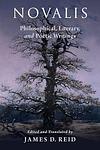
5. Philosophical Writings by Novalis
"Philosophical Writings" is a collection of works by a key figure in German Romantic philosophy. The book explores the author's thoughts on a wide range of subjects including art, religion, morality, nature, and the human mind. The author's poetic and imaginative style of writing is used to challenge traditional philosophical ideas and to propose a more holistic understanding of the world. The text is recognized for its deep insights and its significant influence on later philosophical and literary movements.
The 2737th Greatest Book of All TimePurchase from Bookshop.org or Amazon -
6. Brockhaus Enzyklopädie by Unknown
in vierundzwanzig Bänden
The book is a comprehensive and authoritative reference work that offers a wealth of information across a wide range of subjects. It serves as an invaluable resource for readers seeking in-depth knowledge on various topics, from history and science to art and culture. Each entry is meticulously researched and presented in a clear, concise manner, making it an essential tool for students, educators, and anyone with a thirst for learning. The work is celebrated for its accuracy and breadth, providing insights and understanding that enrich the reader's perspective on the world.
The 3638th Greatest Book of All TimePurchase from Bookshop.org or Amazon -
7. Aphorisms by Novalis
Fragments and Reflections
This book is a collection of philosophical reflections and maxims that delve into the nature of human experience, art, and spirituality. The author, a prominent figure of early German Romanticism, uses concise and often poetic language to explore themes such as the interconnectedness of the universe, the role of the poet and the philosopher in society, and the pursuit of knowledge and self-awareness. The work is characterized by its depth and the author's belief in the power of imagination and the transcendental qualities of the human mind, offering readers a contemplative journey through a series of thought-provoking and introspective insights.
The 7216th Greatest Book of All Time -
8. The Social Construction Of Reality by Peter Berger, Thomas Luckmann
A Treatise in the Sociology of Knowledge
The book explores how individuals and groups create and maintain societal norms and values through their interactions, shaping reality through a process called social construction. It delves into the mechanisms by which knowledge and understanding of the world are collaboratively built, emphasizing the role of language and communication in this process. The authors argue that the reality perceived by a society is a complex interplay of historical, cultural, and social factors, which are continuously reconstructed and reinforced through social practices. This work provides a foundational analysis of the sociology of knowledge, examining how subjective meanings become objective elements of culture and influence human behavior and social institutions.
The 8723rd Greatest Book of All TimePurchase from Amazon -
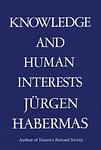
9. Knowledge And Human Interests by Jürgen Habermas
The book explores the relationship between knowledge and human interests, proposing that different forms of knowledge are driven by distinct human interests. It categorizes knowledge into three types: empirical-analytic, historical-hermeneutic, and critical, each associated with specific cognitive interests—technical control, mutual understanding, and emancipation, respectively. The author argues that understanding these underlying interests is crucial for comprehending the development and application of knowledge, ultimately advocating for a critical approach that seeks human emancipation by challenging power structures and ideologies.
The 9148th Greatest Book of All TimePurchase from Bookshop.org or Amazon -
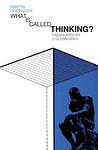
10. What Is Called Thinking? by Martin Heidegger
The book explores the nature of thought and understanding, delving into the essence of what it means to think. The author challenges the traditional views of thinking as mere cognition or problem-solving, proposing instead that true thinking is a profound engagement with being itself. Through a detailed examination of the works of philosophers, poets, and other thinkers, the text invites readers to reconsider the relationship between thought, language, and the essence of humanity, emphasizing the need for authenticity in the process of thinking and the transformative potential it holds for understanding our existence.
The 10308th Greatest Book of All TimePurchase from Bookshop.org or Amazon -
11. On Truth And Lies In A Nonmoral Sense by Friedrich Nietzsche

This philosophical essay delves into the nature of truth and language, challenging the conventional understanding of truth as an objective reality. It argues that human concepts and language are mere constructs, shaped by societal norms and subjective perceptions, rather than reflections of an absolute truth. The work suggests that humans create metaphors and symbols to navigate the world, but these are ultimately illusions that mask the chaotic and indifferent nature of reality. Through this exploration, it questions the value and purpose of truth in human life, proposing that our pursuit of knowledge is driven more by pragmatic needs than by a genuine quest for truth.
The 16523rd Greatest Book of All TimePurchase from Bookshop.org -
12. Die andere Bildung. Was man von den Naturwissenschaften wissen sollte by Ernst Peter Fischer
Was man von den Naturwissenschaften wissen sollte
The book explores the essential knowledge and insights offered by the natural sciences, arguing for their fundamental importance in education and everyday life. It emphasizes how scientific thinking can enhance our understanding of the world and addresses the often overlooked or misunderstood concepts within various scientific fields. The author advocates for a broader educational approach that integrates scientific literacy, promoting a deeper appreciation of how science influences and enriches our understanding of the universe and ourselves.
The 17162nd Greatest Book of All TimePurchase from Amazon -
13. Against Method by Paul Feyerabend
Outline of an Anarchistic Theory of Knowledge
"Against Method" argues that science does not adhere to a strict, universal method and that the idea of a singular scientific method is a myth. The author challenges the notion that science progresses through a consistent, rule-based approach, suggesting instead that scientific breakthroughs often require creativity, non-conformity, and the breaking of rules. The book posits that the advancement of knowledge depends on anarchistic strategies that subvert rigid scientific norms, advocating for a more pluralistic, tolerant, and individualistic approach to scientific research. This perspective encourages a methodological pluralism where multiple methodologies coexist, allowing for a more diverse and dynamic scientific inquiry.
The 17162nd Greatest Book of All TimePurchase from Bookshop.org or Amazon -
14. A Prolegomena To Any Future Metaphysics by Immanuel Kant
This concise philosophical primer argues that genuine metaphysics is possible only by clarifying how synthetic a priori knowledge arises, distinguishing the roles of sensibility (space and time) and understanding (the categories) in structuring experience. It maintains that we can know only appearances shaped by our cognitive faculties, while things-in-themselves remain inaccessible, thereby placing strict limits on speculative reason. Reconciling insights from rationalism and empiricism, it explains how metaphysical judgments can achieve scientific rigor within the bounds of possible experience. Serving as a roadmap to a critical methodology, it sets secure principles for any future metaphysical inquiry.
The 17162nd Greatest Book of All TimePurchase from Bookshop.org -
15. Omnisophie by Gunter Dueck
A reflective, interdisciplinary guide that blends philosophical insight, personal observation and practical advice to help readers cultivate self-knowledge, clearer judgement and a more meaningful life; it critiques the narrowness of modern efficiency-driven thinking, promotes curiosity, humility and ethical responsibility, and offers frameworks and thought experiments for navigating complexity, making wiser choices, and integrating diverse domains of knowledge into everyday living.
The 17162nd Greatest Book of All TimePurchase from Bookshop.org -
16. Goethe Werke 6 Volumes In German Insel Verlag by Johann Wolfgang von Goethe
Eine sechsbändige Ausgabe, die zentrale Gedichte, Dramen, Erzählungen, Essays, autobiografische Passagen, Briefe und naturwissenschaftliche Studien eines prägenden deutschen Schriftstellers kompakt versammelt; sie zeichnet die Entwicklung seines literarischen und philosophischen Denkens von frühen Sturm-und-Drang-Impulsen über die Weimarer Klassik bis zu reifen, reflektierenden Spätwerken nach und bietet so einen umfassenden Einblick in Themen wie Liebe, Natur, Menschlichkeit, Formbewusstsein und ästhetische Theorie.
The 17162nd Greatest Book of All Time






Reading Statistics
Click the button below to see how many of these books you've read!
Download
If you're interested in downloading this list as a CSV file for use in a spreadsheet application, you can easily do so by clicking the button below. Please note that to ensure a manageable file size and faster download, the CSV will include details for only the first 500 books.
DownloadTo download this list as a CSV file, please log in to your account. Once logged in, you'll be able to download the data for use in spreadsheet applications.
Login to Download