Plato
Plato was a classical Greek philosopher, mathematician, student of Socrates, writer of philosophical dialogues, and founder of the Academy in Athens, the first institution of higher learning in the Western world.
Books
This list of books are ONLY the books that have been ranked on the lists that are aggregated on this site. This is not a comprehensive list of all books by this author.
-
1. The Republic
"The Republic" is a philosophical text that explores the concepts of justice, order, and character within the context of a just city-state and a just individual. It presents the idea of a utopian society ruled by philosopher-kings, who are the most wise and just. The dialogue also delves into theories of education, the nature of reality, and the role of the philosopher in society. It is a fundamental work in Western philosophy and political theory.
The 220th Greatest Book of All TimePurchase from Bookshop.org or Amazon -
2. The Complete Works of Plato
This comprehensive collection compiles the philosophical works of an influential Classical Greek philosopher. The book includes his dialogues, letters, and philosophical musings, exploring topics such as justice, beauty, truth, mathematics, politics, love, and virtue. The philosopher's ideas, including the theory of forms, the allegory of the cave, and the philosopher king, have had a profound impact on Western thought and continue to be studied and debated in modern philosophical and academic circles.
The 388th Greatest Book of All TimePurchase from Bookshop.org or Amazon -
3. The Symposium
In a lively and engaging dialogue set during a banquet, a group of prominent Athenian figures, including Socrates, engage in a series of speeches that explore the nature and purpose of love. Each guest presents their own perspective on love, ranging from physical attraction to the pursuit of divine beauty and truth. Through these varied discourses, the conversation delves into philosophical themes such as the duality of human nature, the role of love in personal and societal development, and the pursuit of wisdom. The dialogue ultimately highlights the transformative power of love as a force that transcends the physical realm, guiding individuals toward higher understanding and fulfillment.
The 1123rd Greatest Book of All TimePurchase from Bookshop.org or Amazon -
4. Apology
This philosophical text is a dialogue of Socrates' defense in 399 BC against the charges of 'corrupting the young, and by not believing in the gods in whom the city believes, but in other daimonia that are novel.' The dialogue is Socrates' defense at his trial and is his final public statement before his execution. In it, he discusses the moral and philosophical justification for his actions and beliefs, ultimately leading to his conviction and death.
The 1156th Greatest Book of All TimePurchase from Bookshop.org or Amazon -
5. Phaedo
On the Soul
"Phaedo" is a philosophical dialogue that takes place in ancient Greece, where the main character, a philosopher, is awaiting his execution. The story is a discussion on the nature of the afterlife, the immortality of the soul, and the theory of forms. The philosopher argues that the soul is immortal and that we should not fear death. He also discusses his theory of forms, stating that the world we perceive is merely a shadow of the true world of forms. The dialogue ends with the philosopher calmly accepting his fate, illustrating his belief in the immortality of the soul.
The 1647th Greatest Book of All TimePurchase from Bookshop.org or Amazon -
6. Phaedrus
Phaedrus is a Socratic dialogue that discusses topics such as love, the nature of the soul, and the art of rhetoric. The narrative begins with a myth about the chariot of the soul, then moves on to a discussion about the nature of love, particularly focusing on the concept of divine madness. The dialogue then transitions into a discussion about rhetoric and writing, debating the merits and pitfalls of both. The dialogue concludes with a critique of the art of rhetoric, arguing that true rhetoric must be based on truth and knowledge rather than manipulation and deceit.
The 2423rd Greatest Book of All TimePurchase from Bookshop.org or Amazon -
7. Crito
"Crito" is a philosophical dialogue where the main character, a renowned philosopher, is in prison awaiting execution and is visited by his friend, Crito, who urges him to escape. The philosopher argues that since the laws of Athens have given him life, education, and many other benefits, it would be unjust for him to break those laws by escaping. The dialogue explores themes of justice, law, obligation, and the social contract.
The 7021st Greatest Book of All TimePurchase from Bookshop.org or Amazon -
8. The Last Days Of Socrates
This philosophical work delves into the final days of a revered Athenian philosopher, capturing his trial, imprisonment, and ultimate execution. Through a series of dialogues, the narrative explores profound themes such as justice, morality, and the pursuit of truth. The protagonist's unwavering commitment to his principles, even in the face of death, serves as a testament to his enduring legacy and the power of reasoned discourse. The text invites readers to reflect on the nature of wisdom and the ethical responsibilities of individuals within society.
The 8334th Greatest Book of All TimePurchase from Bookshop.org or Amazon -
9. Euthyphro
"Euthyphro" is a philosophical dialogue that takes place in the weeks leading up to the trial of Socrates, where Socrates and Euthyphro engage in a conversation about the nature of piety. The dialogue begins with Socrates questioning Euthyphro about his decision to prosecute his own father for the murder of a slave. This leads to a discussion about what is considered holy and the nature of the gods. Despite their lengthy conversation, the two philosophers never arrive at a definitive answer, leaving the question of what constitutes true piety unresolved.
The 8512th Greatest Book of All TimePurchase from Bookshop.org or Amazon -
10. Timaeus
The book is a philosophical dialogue that explores the nature of the physical world and human beings. It presents a cosmological account of the universe's creation, describing it as a living being with a soul, crafted by a divine craftsman. The dialogue delves into the elements that constitute the world, the nature of the soul, and the relationship between the eternal and the temporal. It also touches on themes of order, harmony, and the role of reason in understanding the cosmos, offering a blend of myth and philosophy to explain the structure and purpose of the universe.
The 11538th Greatest Book of All TimePurchase from Bookshop.org or Amazon -
11. Gorgias
The book is a Socratic dialogue that explores the nature and value of rhetoric and its relationship to justice. Through a series of conversations between Socrates and several interlocutors, including the sophist Gorgias, the text examines whether rhetoric is a true art form or merely a means of persuasion without regard for truth. Socrates challenges the moral implications of using rhetoric to manipulate public opinion and argues for the pursuit of truth and virtue over the pursuit of power and success. The dialogue ultimately questions the ethical responsibilities of those who wield rhetorical skills and the impact of rhetoric on the soul and society.
The 15740th Greatest Book of All TimePurchase from Amazon -
12. Meno
In this philosophical dialogue, Socrates engages in a conversation with Meno, who poses the question of whether virtue can be taught. Through a series of probing questions and discussions, Socrates explores the nature of virtue, knowledge, and the process of learning. The dialogue introduces the concept of recollection, suggesting that knowledge is innate and can be brought to consciousness through proper questioning. The conversation also touches on the distinction between true belief and knowledge, ultimately leaving the question of virtue's teachability unresolved, while encouraging deeper reflection on the nature of human understanding and moral excellence.
The 16593rd Greatest Book of All Time -
13. Protagoras
The dialogue explores the nature of virtue and whether it can be taught, featuring a conversation between Socrates and the sophist Protagoras. Through a series of arguments and discussions, Socrates challenges Protagoras' views on the teachability of virtue, examining the unity and interdependence of virtues such as wisdom, courage, and justice. The dialogue delves into the philosophical underpinnings of moral education and the complexities of human knowledge, ultimately leaving the question open-ended and encouraging readers to ponder the nature of virtue themselves.
The 16741st Greatest Book of All Time -
14. Parmenides
The book is a philosophical dialogue that explores the nature of reality and the concept of being through a conversation between the young Socrates and the elder philosopher Parmenides. It delves into complex metaphysical themes, challenging the theory of forms and examining the limitations of human understanding. The dialogue presents a series of paradoxes and arguments that question the coherence of the forms, ultimately leaving readers with profound questions about the nature of existence and knowledge.
The 17033rd Greatest Book of All TimePurchase from Amazon -
15. Charmides
On Temperance
In this philosophical dialogue, Socrates engages in a conversation with the young Charmides and his guardian Critias to explore the nature of temperance, or self-control. Through a series of questions and answers, Socrates examines various definitions of temperance, ultimately revealing the complexity and difficulty of understanding this virtue. The dialogue delves into themes of knowledge, self-awareness, and the relationship between the mind and the soul, highlighting the challenges of defining moral concepts and the importance of philosophical inquiry in the pursuit of wisdom.
-
16. Critias
In this unfinished dialogue, a continuation of the themes explored in "Timaeus," the story delves into the legendary tale of Atlantis, an advanced civilization that existed around 9,000 years before Plato's time. The narrative is presented through the character Critias, who recounts how Atlantis, a powerful and technologically advanced society, became morally corrupt and attempted to conquer Athens, only to be defeated and subsequently submerged into the ocean by divine intervention. The dialogue explores themes of hubris, the ideal state, and the consequences of moral decay, leaving readers to ponder the lessons of this mythical account.
-
17. Sophist
In this philosophical dialogue, a group of thinkers, including Socrates and a visitor from Elea, engage in a deep exploration of the nature of sophistry, examining the distinctions between a true philosopher and a sophist. Through a series of dialectical exchanges, they dissect the concepts of reality, appearance, and falsehood, ultimately seeking to define what constitutes a sophist. The dialogue delves into complex metaphysical discussions about being and non-being, challenging the participants to refine their understanding of knowledge, truth, and deception.
-
18. Philebus
The dialogue explores the nature of the good life, examining the roles of pleasure and intellect in achieving the highest form of happiness. Through a conversation between Socrates, Philebus, and Protarchus, the text delves into the complexities of human experience, debating whether pleasure or wisdom holds greater value. Socrates argues for a balanced life where intellect and reason guide pleasures, ultimately suggesting that a harmonious blend of both leads to true fulfillment. The discussion highlights the importance of measure, proportion, and the integration of diverse elements in the pursuit of the good life.
-
19. Lesser Hippias
On Voluntary and Involuntary Wrongdoing
In this dialogue, Socrates engages in a conversation with the sophist Hippias, exploring the nature of lying and truthfulness. Through a series of questions and logical examinations, Socrates challenges Hippias to consider whether a person who lies intentionally is more knowledgeable and therefore better than one who lies unintentionally. The discussion delves into the complexities of moral character and the distinction between voluntary and involuntary actions, ultimately questioning the conventional understanding of honesty and virtue.
-
20. Theaetetus
The dialogue explores the nature of knowledge through a conversation between Socrates and the young mathematician Theaetetus. They examine various definitions of knowledge, including perception, true belief, and justified true belief, but ultimately find each definition lacking. The discussion delves into complex philosophical concepts such as the relativity of perception, the distinction between knowledge and belief, and the challenges of defining knowledge. The dialogue ends inconclusively, highlighting the difficulty of pinning down a precise definition of knowledge and encouraging continued philosophical inquiry.
-
21. Alcibiades
The dialogue explores the relationship between Socrates and the ambitious young Alcibiades, focusing on themes of self-knowledge and the nature of true leadership. Socrates engages Alcibiades in a philosophical discussion, challenging his understanding of justice, virtue, and the soul. Through a series of probing questions, Socrates aims to guide Alcibiades toward a deeper awareness of his own ignorance and the importance of self-improvement before seeking power and influence. The work highlights the Socratic method of inquiry and underscores the necessity of wisdom and self-awareness in the pursuit of a virtuous life.
-
22. Meno And Other Dialogues
None
This collection of dialogues explores fundamental philosophical themes such as virtue, knowledge, and the nature of the soul through engaging conversations primarily featuring Socrates. In "Meno," the dialogue examines whether virtue can be taught, introducing the concept of recollection and the idea that knowledge is innate. The other dialogues, including "Charmides," "Laches," and "Lysis," delve into topics like temperance, courage, and friendship, showcasing Socratic questioning as a method to uncover deeper truths and challenge assumptions. Through these dialogues, the text invites readers to reflect on ethical and philosophical questions that remain relevant today.
-
23. The Laws Of Plato
In this philosophical dialogue, a group of three elderly men, including an unnamed Athenian, engage in a comprehensive discussion about the ideal laws and governance for a new Cretan city called Magnesia. The conversation delves into various aspects of civic life, including education, religion, crime, and the role of citizens, aiming to establish a legal framework that promotes virtue and harmony within the society. Through their discourse, the text explores the balance between freedom and order, the importance of moral education, and the necessity of laws in guiding human behavior towards the common good.
-
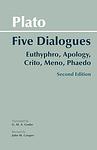
24. Five Dialogues
Euthyphro, Apology, Crito, Meno, Phaedo
This collection of philosophical dialogues explores fundamental questions about ethics, justice, and the nature of knowledge through engaging conversations between Socrates and various interlocutors. The dialogues delve into the essence of virtue, the immortality of the soul, and the pursuit of truth, often challenging conventional wisdom and encouraging readers to reflect on their own beliefs. Through Socratic questioning, the text invites readers to consider the complexities of human existence and the importance of critical thinking in the quest for understanding.
-
25. Selected Dialogues
The Dialogues of Plato
This collection of philosophical dialogues presents a series of engaging conversations that explore fundamental questions about ethics, politics, and the nature of knowledge. Through the character of Socrates, the dialogues delve into the art of dialectical reasoning, challenging assumptions and encouraging critical thinking. The discussions cover a range of topics, from the definition of justice and the ideal state to the immortality of the soul and the pursuit of truth. Each dialogue is crafted to provoke thought and reflection, offering timeless insights into human nature and the quest for wisdom.
Purchase from Bookshop.org -
26. Hippias Major
or What is the Beautiful?
In this engaging philosophical dialogue, Socrates engages with the sophist Hippias in a spirited discussion about the nature of beauty. Through a series of probing questions and thought experiments, Socrates challenges Hippias to define what beauty truly is, exposing the complexities and contradictions inherent in attempting to pin down such an abstract concept. The conversation delves into the subjective and objective aspects of beauty, ultimately leaving the question open-ended and encouraging readers to ponder the essence of beauty themselves.
Purchase from Bookshop.org -
27. Euthydemus
In this philosophical dialogue, a young Socrates engages in a lively debate with two sophists, Euthydemus and his brother Dionysodorus, who are skilled in the art of eristic argumentation. The conversation explores themes of logic, rhetoric, and the nature of knowledge, as the sophists employ paradoxical reasoning and verbal trickery to confound their interlocutors. Through a series of humorous and thought-provoking exchanges, the dialogue examines the distinction between genuine wisdom and mere sophistry, ultimately highlighting the importance of critical thinking and the pursuit of true understanding.
Purchase from Bookshop.org -
28. El Banquete; Critón, O El Deber Del Ciudadano
Critón, O El Deber Del Ciudadano

This philosophical work delves into the nature of love and duty through two distinct dialogues. The first explores the concept of love, examining its various forms and its role in the pursuit of truth and beauty. The second dialogue focuses on the obligations of a citizen, as a character grapples with the moral implications of obeying the law versus following personal convictions. Through these discussions, the text offers profound insights into human relationships and the ethical responsibilities of individuals within society.
-
29. Criton
In this philosophical dialogue, Socrates finds himself in prison, awaiting execution, when his friend Crito visits him with a plan for escape. Crito urges Socrates to flee and save his life, arguing that staying would be unjust to himself, his friends, and his family. However, Socrates engages in a reasoned debate, emphasizing the importance of justice, the rule of law, and the social contract. He argues that escaping would undermine the principles he has lived by, ultimately deciding that it is better to suffer an injustice than to commit one, thus choosing to accept his fate.
Purchase from Bookshop.org -
30. The Statesman
Politikos
In this philosophical dialogue, a young Socrates engages in a conversation with a Stranger from Elea, exploring the nature and qualities of a true statesman. Through a series of dialectical exchanges, they dissect the art of governance, contrasting it with other forms of expertise and leadership. The dialogue delves into the complexities of ruling, emphasizing the importance of wisdom, justice, and the ability to weave together the diverse elements of society into a harmonious whole. The discussion also touches upon the challenges of distinguishing genuine statesmanship from mere imitation, ultimately seeking to define the ideal ruler who possesses both knowledge and virtue.
Purchase from Bookshop.org -
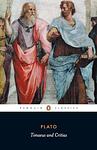
31. Timaeus And Critias
In this philosophical dialogue, a group of Athenian thinkers engage in a profound discussion about the nature of the universe, the origins of the world, and the ideal society. The narrative unfolds with an exploration of cosmology, where the universe is depicted as a living being with a soul, crafted by a divine creator. The dialogue then transitions to the legendary tale of Atlantis, a powerful and advanced civilization that ultimately falls due to its moral decay. Through these interwoven themes, the text delves into the relationship between the physical and metaphysical realms, the role of reason and order in the cosmos, and the moral lessons drawn from the rise and fall of civilizations.
Purchase from Bookshop.org -
32. A Alegoria Da Caverna
In this philosophical allegory, prisoners are confined in a dark cave, chained in such a way that they can only see the shadows cast on the wall by objects passing in front of a fire behind them. These shadows represent the prisoners' perception of reality, limited and distorted by their lack of knowledge and understanding. When one prisoner is freed and exposed to the outside world, he experiences enlightenment, realizing the true form of reality beyond the shadows. This journey symbolizes the transformative power of education and the pursuit of truth, urging individuals to seek knowledge and question their perceptions.
-
33. Alcibiades Ii
In this philosophical dialogue, the narrative explores the themes of self-knowledge and the nature of wisdom through a conversation between a young, ambitious statesman and a wise philosopher. The discussion delves into the complexities of human understanding, questioning the true essence of knowledge and the importance of recognizing one's own ignorance. Through probing questions and thoughtful reflections, the dialogue encourages the reader to consider the value of introspection and the pursuit of genuine wisdom as a foundation for effective leadership and personal growth.
Purchase from Bookshop.org -
34. Defence Of Socrates, Euthyphro, And Crito
This collection of dialogues presents a profound exploration of justice, morality, and the philosophical life through the lens of Socrates' trial and his interactions with others. In these works, Socrates engages in a deep discussion with Euthyphro about the nature of piety, defends his life's work and philosophy during his trial, and later, in his prison cell, converses with Crito about the importance of living a just life over escaping his impending execution. These dialogues collectively illuminate Socrates' unwavering commitment to truth and virtue, even in the face of death, and challenge readers to reflect on the principles that govern their own lives.
Purchase from Bookshop.org -
35. Platon Skrifter. Bok 1
This collection of dialogues delves into the philosophical teachings and ideas of ancient Greece, exploring themes such as justice, virtue, and the nature of knowledge. Through engaging conversations between Socrates and various interlocutors, the text examines the complexities of human existence and the pursuit of truth. The dialogues serve as a foundational exploration of philosophical inquiry, encouraging readers to question assumptions and seek deeper understanding of the world around them.
-
36. Platon Skrifter. Bok 4
This volume delves into the philosophical dialogues that explore the nature of justice, the ideal state, and the philosopher's role in society. Through a series of engaging conversations, the text examines the intricate relationship between individual virtue and societal harmony, questioning the essence of truth and the pursuit of knowledge. The dialogues are rich with allegorical narratives and thought experiments, inviting readers to reflect on the moral and ethical dimensions of human existence and the pursuit of the good life.
-
37. Platon Skrifter. Bok 2
This volume delves into the philosophical dialogues that explore the nature of justice, virtue, and the ideal state. Through engaging conversations, the text examines the complexities of human behavior, the pursuit of knowledge, and the essence of truth. The dialogues challenge readers to reflect on moral and ethical dilemmas, encouraging a deeper understanding of the principles that govern society and the individual's role within it. The work remains a cornerstone of philosophical thought, offering timeless insights into the human condition and the quest for a just and harmonious life.
-
38. The Collected Dialogues Of Plato
This comprehensive compilation presents the philosophical musings and teachings of a seminal thinker through a series of dialogues that explore fundamental questions about ethics, politics, metaphysics, and epistemology. Through engaging conversations between Socrates and various interlocutors, the text delves into the nature of justice, the ideal state, the theory of forms, and the immortality of the soul, offering profound insights into human nature and the pursuit of knowledge. The dialogues are characterized by their dialectical method, encouraging readers to critically examine their own beliefs and assumptions.
Purchase from Bookshop.org -
39. Lysis
In this philosophical dialogue, Socrates engages in a conversation with two young men, Lysis and Menexenus, exploring the nature of friendship. Through a series of probing questions and dialectical exchanges, Socrates examines whether friendship is based on similarity, utility, or a deeper, intrinsic connection. The dialogue delves into the complexities of human relationships, questioning the essence of true friendship and leaving readers with more questions than answers, as Socrates often does, highlighting the intricacies and paradoxes inherent in human connections.
Purchase from Bookshop.org -
40. The Dialogues Of Plato, Volume 3
This volume delves into the intricate philosophical discussions that explore the nature of justice, the soul, and the ideal state. Through a series of engaging dialogues, the text examines the interplay between individual virtue and societal harmony, offering profound insights into human nature and the pursuit of truth. The dialogues are characterized by their dialectical method, where characters engage in rigorous debate, challenging assumptions and refining ideas to uncover deeper understanding. This work continues to be a cornerstone of Western philosophy, inviting readers to reflect on the timeless questions of morality, governance, and the essence of a good life.
Purchase from Bookshop.org -
41. Early Socratic Dialogues
A collection of early dialogues in which Socrates questions friends, artisans, and sophists about virtue, piety, courage, knowledge, and justice. Using relentless cross-examination, the conversations often end in uncertainty, exposing the limits of common beliefs while modeling philosophy as a rigorous moral practice. Together they portray the social and political backdrop of Athens and lay the groundwork for later ethical and epistemological inquiry.
Purchase from Bookshop.org -
42. Ion
A philosopher questions a renowned rhapsode about the basis of his skill in performing and interpreting epic poetry, testing whether it stems from teachable knowledge or from divine inspiration that moves poets and performers like links in a magnetic chain. The exchange reveals the performer cannot demonstrate true expertise, suggesting that poetic success rests less on rational understanding than on inspired enthusiasm, while probing broader issues about art, authority, and the difference between knowledge and inspiration.
Purchase from Bookshop.org -
43. Feest/Euthyfron/Sokrates' Verdediging/Kriton/Faidon
A set of dialogues that follow a philosopher’s probing conversations on love, piety, and moral knowledge, then portray his dramatic defense at trial, a dispute about the obligation to obey the laws, and a final discussion on the soul and the afterlife; together they illustrate the dialectical method, the pursuit of virtue and truth, and the protagonist’s principled acceptance of fate.
Purchase from Bookshop.org -
44. Obras De Platón
Compilación de diálogos filosóficos presentados como conversaciones que exploran cuestiones fundamentales sobre la justicia, la virtud, el conocimiento, la realidad y la organización política. Empleando el método dialéctico y recursos narrativos, examina la naturaleza del bien, las Ideas o Formas, la inmortalidad del alma y el sentido de una vida examinada, ofreciendo tanto argumentos racionales como mitos ilustrativos que han cimentado buena parte de la tradición filosófica occidental.
Purchase from Bookshop.org -
45. Apology / Crito / Phaedo
A powerful sequence of dialogues that recounts a philosopher’s courtroom defense, his refusal to escape imprisonment, and his final reflections on death and the soul. The first part presents a spirited defense of a life devoted to questioning and moral inquiry and accepts the legal verdict with principled calm; the second records a conversation in which he rejects an offer of escape, arguing that one must honor the laws and moral obligations even at great cost; the third portrays his last hours as he offers several arguments for the soul’s immortality and treats death as a transition consistent with the life of philosophical pursuit. Together they examine justice, duty, the examined life, and hope for what follows death.
Purchase from Bookshop.org -
46. Theatetus
A Socratic dialogue that examines the nature of knowledge by testing several proposed definitions—knowledge as perception, as true belief, and as true belief with an account—probing problems of perception, belief, false judgment, and the need for justification, and ultimately ending in an inconclusive aporia that emphasizes how hard it is to define knowledge.
Purchase from Bookshop.org -
47. Cratylus
A philosophical dialogue investigates whether words have a natural, intrinsic link to the things they denote or are products of social convention, testing extreme naturalist and conventionalist claims through close etymological analysis and critical questioning; it highlights problems raised by change, imitation, and the limits of etymology, and ultimately suggests that naming is complex—shaped by linguistic practice, human reason and craft rather than by a simple, fixed correspondence between word and world.
Purchase from Bookshop.org -
48. Laches
On Courage
Socrates engages two Athenian generals and others in a brief dialogue prompted by how best to educate young men about courage; through probing questions he tests several proposed definitions—courage as standing firm in battle, as endurance, or as a kind of knowledge—and reveals problems with each account, ultimately leaving the question unresolved and highlighting the value of critical inquiry and recognizing one’s own ignorance when dealing with moral concepts.
Purchase from Bookshop.org -
49. The Allegory Of The Cave
A group of people, confined in a dark cave and able only to see shadows cast on a wall, take those shadows for reality until one prisoner is freed and discovers the outside world and the sun, realizing the shadows were mere illusions; when he returns to tell the others, he is met with disbelief and hostility, illustrating how education and enlightenment reveal deeper truths about reality and how difficult it is to change entrenched perceptions.
Purchase from Bookshop.org -
50. The Portable Plato
A curated collection of seminal dialogues that introduces Socratic inquiry and traces the development of classical philosophical themes—ethics, politics, metaphysics and epistemology—through dramatic conversations about justice, virtue, the soul, the theory of forms, love, education and the ideal polis; together the pieces showcase dialectical method and the search for truth by probing assumptions, testing arguments and illuminating how individuals and states ought to live.
Purchase from Bookshop.org -
51. Fedro
A young man and an older companion discuss the nature of love, rhetoric, the soul, and the pursuit of truth in a dialogue that moves from impassioned speeches on erotic madness and the soul’s ascent toward beauty to a philosophical account of knowledge, recollection, and the forms; the speaker distinguishes true, divine inspiration from mere cunning persuasion, offers the famous charioteer myth to describe the soul’s struggle between reason and desire, and closes with a critique of writing and a defense of dialectic as the path to genuine understanding.
Purchase from Bookshop.org -
52. êutifron/Apologia De Sócrates/Criton
A trio of dialogues follows Socrates through an inquiry into the nature of piety—exposing the weaknesses of ready definitions and leaving the question unresolved—then through his public defense against charges of corrupting the youth and impiety, where he explains his mission of questioning, refuses to compromise his principles, and calmly accepts the court’s sentence, and finally into a prison conversation in which he turns down escape, arguing that one must not repay injustice with injustice and must respect the laws and obligations of the polis; together they examine virtue, the philosopher’s duty to truth, and the ethical tensions between individual conscience and civic authority.
Purchase from Bookshop.org -
53. Skrifter 3
-
56. Euthyphro, Apologia Socratis, Crito, Phaedo, Cratylus, Sophista, Politicus, Theaetetus
A collection of dialogues that stages Socratic inquiry into ethical, metaphysical, and epistemological problems: probing the nature of piety, a famous defense and the duty to the laws, reflections on death, and sustained examinations of meaning, being, expertise, statesmanship, and the limits of knowledge. Through probing dialogue and elenctic questioning, the texts expose assumptions, refine concepts, and model a philosophical method aimed at conceptual clarity rather than settled dogma.
-
57. Great Dialogues Of Plato
A collection of dramatic conversations built around Socratic questioning that probe the nature of justice, virtue, knowledge, love, and the soul; through debates about the ideal state, the theory of forms, and the examined life, the texts model dialectical inquiry and contrast genuine philosophical pursuit with rhetoric and sophistry. Set in vivid scenes—trials, symposiums, and philosophical lessons—the dialogues present arguments, counterarguments, and thought experiments about moral responsibility, the immortality of the soul, the foundations of knowledge, and the principles of a good polity, offering a foundational exploration of Western ethical and political thought.
Purchase from Bookshop.org -
58. Teeteto
In this Socratic dialogue an older philosopher examines with a young mathematician what it means to know something, testing proposals that knowledge is merely perception, that it is true belief, and that it is true belief accompanied by an account (logos). Through questioning and examples — including discussion of relativistic claims about perception and the problem of false judgment — each definition is analyzed and shown to have serious difficulties. The investigation clarifies important distinctions between sensation, opinion, and justified belief, exposes puzzles about how we can explain or articulate knowledge, and ultimately ends in an aporetic conclusion: illuminating the problems without settling on a final definition.
Purchase from Bookshop.org -
59. Menexenus
A short Socratic conversation built around an elaborate funeral oration that Socrates claims to have learned from Aspasia, in which the city’s past deeds, civic virtues, and sacrifices are extolled in the grandiloquent terms of public epideictic rhetoric. The speech imitates and gently lampoons the conventional Athenian epitaphios logos—mixing myth, praise, and consolation—so that patriotic fervor and the language of honor are shown both to comfort and to gloss over the realities of war and imperial policy. Through its ironic tone and concentrated critique of rhetorical formulae, the piece probes how education, persuasion, and public speech shape collective memory, identity, and political self-justification.
Purchase from Bookshop.org -
60. Charmides Or Temperance
A conversational inquiry in which Socrates questions a young noble about the nature of temperance or self-control, testing several proposed definitions—quietness, modesty, restraint, a kind of bodily harmony or obedience—and using medical and craftsman analogies to probe whether temperance is distinct from or identical with knowledge, self-knowledge, or the good of the soul; through careful refutation of each account the discussion clarifies the problems involved and the ties between wisdom and virtue but ends without a decisive, agreed definition.
Purchase from Bookshop.org -
61. Lysis Or Friendship
On Friendship
A short Socratic dialogue in which Socrates questions a circle of youths and admirers about the nature of friendship, probing whether friends are chosen for similarity, difference, usefulness, or shared goodness. Through playful interrogation and several paradoxes—about self-love, the role of pleasure and utility, and whether friends seek what they lack or what they already possess—the speakers advance and refute competing accounts without reaching a definitive conclusion. The work highlights the difficulties of defining friendship and suggests that its true character resists simple classification, leaving the matter open for further thought.
Purchase from Bookshop.org -
62. Die Apologie Des Sokrates
At his trial, Socrates mounts a calm, uncompromising defense against charges of corrupting the young and impiety by explaining that his lifelong practice of questioning assumed authorities and exposing ignorance is a civic service; he cites the Delphic oracle’s paradoxical pronouncement that he is wise only because he knows that he does not know, cross-examines his accusers to reveal their contradictions, refuses to flatter the jury for acquittal, and ultimately accepts the guilty verdict and death sentence while arguing that a virtuous life matters more than mere survival and warning that silencing philosophical inquiry will harm the city’s moral health.
Purchase from Bookshop.org