Dracula by Bram Stoker
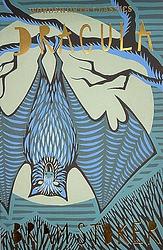

This classic horror novel tells the story of Count Dracula's attempt to move from Transylvania to England so that he may find new blood and spread the undead curse, and of the battle between Dracula and a small group of people led by Professor Abraham Van Helsing. The narrative is composed of journal entries, letters, and telegrams written by the novel's protagonists, providing different perspectives on the gruesome events unfolding. The book touches on themes of sexuality, gender roles, and the clash of modern science with traditional superstition.
The 53rd greatest book of all time
Ranking Details:
Our ranking system awards points to books based on their appearance and position on curated lists. Here's how it works:
Unranked Lists: For lists without specific rankings, each book receives points equivalent to the list's weight. This approach recognizes the book's inclusion on prestigious lists.
Ranked Lists: Books on ranked lists receive points in two ways:
- Base Points: Initially, every book is awarded points equal to the list's weight, acknowledging its significance.
- Bonus Points: Additionally, books earn bonus points based on their ranking. The total bonus pool, equal to 100% of the list's weight, is distributed among the books, with higher-ranked books receiving more points.
Exponential Distribution: The distribution of bonus points follows an exponential model. This means the top-ranked book (#1) receives significantly more bonus points than those further down the list (e.g., #100). Our algorithm ensures that higher placements are rewarded more generously, reflecting the achievement of a top rank on any given list.
This scoring system ensures that each book's ranking reflects both its presence on multiple lists and its positions within those lists, providing a comprehensive measure of its acclaim and popularity.
List Date Penalty Feature
In our continuous effort to provide the most accurate and fair rankings, we have introduced a new feature: the List Date Penalty. This feature aims to reduce recency bias in our rankings by applying a penalty to books based on their publication dates relative to the list's publication date.
How It Works
- Publication Date Comparison: For each book on a list, we compare its publication date to the publication date of the list.
-
Penalty Application:
- Maximum Penalty: If a book was published in the same year as the list, it receives the maximum penalty, as we believe it hasn't had enough time to stand the test of time.
- Proportional Penalty: Books that were published in the years leading up to the list's publication date receive a proportional penalty based on the number of years they have been available.
- No Penalty: Books that were published more than a specified number of years (max age for penalty) before the list's publication date do not receive any penalty, acknowledging their enduring relevance and influence.
Why This Matters
By mitigating recency bias, the List Date Penalty feature helps to ensure that books that have had more time to be evaluated by readers and critics are given their due weight. This results in a more equitable and historically balanced ranking that truly reflects the greatest books of all time.
Total Points: 3192
This book was first published in 1897
51 Lists
- score: 190 -- 1001 Books You Must Read Before You Die - 2006 (Weight: 180)
- score: 190 -- 'The perfect library': the 196 books selected by 133 personalities - 2020 (Weight: 190)
- score: 180 -- 222 Best Books of All Time That Deserve a Spot on Your Bookshelf, With Picks from Bestselling Authors and Indie Booksellers - 2024 (Weight: 170)
- score: 169 -- Harenberg Buch der 1000 Bücher - 2005 (Weight: 160)
- score: 169 -- The New York Public Library's Books of the Century - 1996 (Weight: 160)
- score: 160 -- The 100 Best Novels Of All Time In English - 2026 (Weight: 160)
- score: 150 -- 100 Books You Must Read Before You Die - 2020 (Weight: 142)
- score: 148 -- 1000 Novels Everyone Must Read - 2009 (Weight: 140)
- score: 148 -- Horror: The 100 Best Books - 1988 (Weight: 140)
- score: 146 -- Fantasy and Horror: A Critical and Historical Guide - 1999 (Weight: 119)
- score: 133 -- 100 Life-Changing Books - 2006 (Weight: 126)
- score: 127 -- The Great Books Podcast from John J. Miller - 2025 (Weight: 120)
- score: 120 -- The Top 100 Mystery Novels of All Time - 1990 (Weight: 120)
- score: 120 -- The 100 Stories that Shaped the World - 2019 (Weight: 120)
- score: 105 -- 200 Books That Shaped 200 Years of Literature - 2021 (Weight: 105)
- score: 94 -- Fifty French Writers Choose Their Favorite 10 Books - Honourable Mention - 2022 (Weight: 89)
- score: 93 -- Top 100 Killer Thrillers - 2010 (Weight: 80)
- score: 80 -- Click If You Dare: 100 Favorite Horror Stories - 2018 (Weight: 70)
- score: 80 -- What’s the Best Book of the Past 125 Years? We Asked Readers to Decide. - 2021 (Weight: 80)
- score: 71 -- The Big Read - 2003 (Weight: 70)
- score: 64 -- The 100 Greatest Novels - 2008 (Weight: 61)
- score: 63 -- Harold Bloom's The Western Canon - 1994 (Weight: 60)
- score: 61 -- Our Users' Top 100 Favorite Books of All Time - 2024 (Weight: 60)
- score: 56 -- The 50 Best Horror Novels of All Time - 2018 (Weight: 51)
- score: 54 -- R/ClassicLiterature's Top 100 Favorite Books - 2026 (Weight: 50)
- score: 42 -- 150 Great Reads - 1988 (Weight: 40)
- score: 36 -- Horror Literature: A Core Collection and Reference Guide - 1981 (Weight: 34)
- score: 30 -- The Novel 100: A Ranking of the Greatest Novels of All Time - 2004 (Weight: 30)
- score: 20 -- Top 50 Irish Novels - 2003 (Weight: 18)
- score: 20 -- The 500 best books of all time from Culture Café users - 2008 (Weight: 20)
- score: 10 -- 100 Main Fantasy and Science-Fiction Books - 2008 (Weight: 10)
- score: 10 -- How to Read Literature Like a Professor: A Reading List - 2003 (Weight: 10)
- score: 10 -- Masterpieces of World Literature - 1991 (Weight: 10)
- score: 10 -- 50 Books to (Re-)Read at 50 - 2012 (Weight: 10)
- score: 1 -- The Complete 500: OCLC - 2024 (Weight: 1)
- score: 1 -- Top 25 Pre-20th Century Classics - 2000 (Weight: 1)
- score: 1 -- The 25 Greatest Horror Books Of All Time - 2024 (Weight: 1)
- score: 1 -- 100 Must-Read Classics, as Chosen by our Readers - 2022 (Weight: 1)
- score: 1 -- 500 Must Read Books - 2013 (Weight: 1)
- score: 1 -- Nightmare Magazine's Top 100 Horror Books - 2013 (Weight: 1)
- score: 1 -- Horror Writer Association's Top 40 Horror Books of All Time - 1996 (Weight: 1)
- score: 1 -- 100 Best Novels Written in English - 2015 (Weight: 1)
- score: 1 -- 1,000 Books to Read Before You Die: A Life-Changing List - 2018 (Weight: 1)
- score: 1 -- Inteliquest's World's 100 Greatest Books of All-Time - 1993 (Weight: 1)
- score: 1 -- The Best Classics - 2006 (Weight: 1)
- score: 1 -- Haycraft-Queen Cornerstones - 1955 (Weight: 1)
- score: 1 -- 501 Must-Read Books - 2006 (Weight: 1)
- score: 1 -- The 100 Greatest Books Ever Written - 1979 (Weight: 1)
- score: 1 -- Great Books - 2006 (Weight: 1)
- score: 1 -- The Books You've Always Meant to Read - 2020 (Weight: 1)
- score: 1 -- Entertainment Weekly's Top 100 Novels - 2013 (Weight: 1)