The Greatest Technical Books of All Time
Click to learn how this list is calculated.
This list represents a comprehensive and trusted collection of the greatest books. Developed through a specialized algorithm, it brings together 759 'best of' book lists to form a definitive guide to the world's most acclaimed books. For those interested in how these books are chosen, additional details can be found on the rankings page.
What should I read next?
Get personalized book recommendations based on your reading history and preferences. Our algorithm analyzes your favorite books and reading patterns to suggest your next great read.
Get RecommendationsGenres
The "Technical" category for books encompasses a wide range of literature that focuses on specialized knowledge, skills, and methodologies related to specific fields or industries. These books are often characterized by their detailed and precise content, aimed at professionals, students, or enthusiasts seeking to deepen their understanding of complex subjects. Topics within this category can include engineering, computer science, information technology, mathematics, and various applied sciences. Technical books often serve as reference materials, instructional guides, or comprehensive overviews, providing readers with the necessary tools and insights to solve practical problems, implement new technologies, or advance their expertise in a particular domain.
Countries
Date Range
Filter books by their publication year. Enter the earliest year (Start) and latest year (End) to find books published within that period. Leave either field empty to search from the beginning of time or up to the present day.
Reading Statistics
Click the button below to see how many of these books you've read!
Download
If you're interested in downloading this list as a CSV file for use in a spreadsheet application, you can easily do so by clicking the button below. Please note that to ensure a manageable file size and faster download, the CSV will include details for only the first 500 books.
DownloadTo download this list as a CSV file, please log in to your account. Once logged in, you'll be able to download the data for use in spreadsheet applications.
Login to Download-
26. On Growth and Form by D'Arcy Wentworth Thompson
"On Growth and Form" is a landmark work that explores the science of biology from a mathematical perspective, emphasizing the patterns and geometry found in living organisms. The book discusses how physical and mathematical laws influence the way that organisms grow and develop, and how different species exhibit similar patterns of growth. It also touches on how these principles apply to the structure of the universe and the patterns found in nature. This work is considered a foundational text in the field of mathematical biology.
The 1674th Greatest Book of All TimePurchase from Bookshop.org or Amazon -
27. The Principia Mathematica by Alfred North Whitehead, Bertrand Russell
Mathematical Logic
The Principia Mathematica is a three-volume work on the foundations of mathematics, written with the goal of deriving all mathematical truths from a well-defined set of axioms and inference rules in symbolic logic. The authors aim to show that mathematics is a development of logic and avoid any hidden assumptions. The work covers topics like class theory, relation theory, and quantity theory, and it is known for its rigorous and meticulous approach.
The 1699th Greatest Book of All TimePurchase from Bookshop.org or Amazon -
28. The Concept Of Law by H. L. A. Hart
This seminal work in legal philosophy offers a comprehensive analysis of the nature of law, articulating a sophisticated theory that emphasizes law as a system of social rules. It challenges earlier positivist and command theories of law, introducing the idea of the "rule of recognition" as a fundamental aspect by which a society accepts certain norms as legally binding. The book also explores the relationship between law and morality, the variety of legal systems, and the notion of legal rights, ultimately providing a framework for understanding the complex structure and functioning of legal institutions in modern societies.
The 1765th Greatest Book of All TimePurchase from Bookshop.org or Amazon -
29. Gaia by James Lovelock
A New Look at Life on Earth
The book presents a groundbreaking hypothesis that redefines Earth as a self-regulating system, where the biosphere, atmosphere, oceans, and soil function as a single living organism. This entity, named after the Greek goddess of Earth, maintains the conditions necessary for life through complex interactions among its components. The author, an independent scientist, argues that life on Earth actively shapes the environment for its own survival, challenging traditional views of the relationship between organisms and their habitat. The work has sparked widespread debate and research, influencing fields from biology to environmental science, and has profound implications for our understanding of life on Earth and how we approach environmental stewardship.
The 1801st Greatest Book of All TimePurchase from Bookshop.org or Amazon -
30. Smoking and Health by Surgeon General
Report of the Advisory Committee to the Surgeon General of the Public Health Service
This book provides a comprehensive overview of the impact of smoking on health, as well as the societal and economic consequences of tobacco use. It delves into the scientific evidence linking smoking to various diseases, including lung cancer, heart disease, and respiratory illnesses. Additionally, the book discusses the addictive nature of nicotine, the marketing strategies of tobacco companies, and the effectiveness of public health interventions aimed at reducing smoking rates. It serves as a valuable resource for anyone interested in understanding the full scope of the tobacco epidemic.
The 1831st Greatest Book of All TimePurchase from Bookshop.org or Amazon -
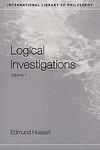
31. Logical Investigations by Edmund Husserl
Prolegomena to Pure Logic
This seminal work is a foundational text in the field of phenomenology and philosophy, presenting a rigorous critique of psychologism—the view that logic is a part of psychology—and arguing for the independence and objectivity of logical truths. Through a series of detailed investigations, the author explores the nature of meaning, the structure of consciousness, and the relationship between language and logic. By distinguishing between the act of thinking and the content of thought, the work lays the groundwork for a new science of consciousness and establishes the author as a pivotal figure in 20th-century philosophy. The text is notable for its methodical approach and its significant influence on both the analytic and continental traditions in philosophy.
The 1939th Greatest Book of All TimePurchase from Bookshop.org or Amazon -
32. The Strategy Of Conflict by Thomas Schelling
With a New Preface by the Author
The book in question is a seminal work in game theory and strategic thinking, exploring how individuals and organizations can achieve their goals in situations of competition and conflict. The author delves into the paradoxes of strategic behavior, emphasizing the importance of credible commitments, communication, bargaining tactics, and the role of brinkmanship. By examining a wide range of examples, from everyday life to international crises, the book provides insights into the nature of conflict and cooperation, offering a framework for understanding the strategic actions that can lead to mutually beneficial outcomes or escalate to destructive confrontations.
The 1964th Greatest Book of All TimePurchase from Bookshop.org or Amazon -
33. What Is Life? by Erwin Schrödinger
The Physical Aspect of the Living Cell
"What is Life?" is a scientific exploration that delves into the intersection of physics and biology. The book presents the idea that life, at its most basic level, operates according to the laws of physics and chemistry. It introduces the concept of an "aperiodic crystal" that contains genetic information in its configuration of covalent chemical bonds, which later inspired the discovery of the structure of DNA. The book also discusses entropy and negentropy, suggesting that life feeds on negentropy to counteract the natural process of increasing entropy.
The 2209th Greatest Book of All TimePurchase from Bookshop.org or Amazon -
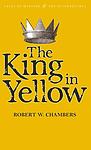
34. The King In Yellow by Robert W. Chambers
"The King In Yellow" is a collection of interconnected short stories that explore the mysterious and macabre world of the eponymous play, which is said to drive those who read it to madness. Set in a fictional world where the play's influence spreads like a plague, the book delves into themes of forbidden knowledge, the fragility of sanity, and the blurred lines between reality and fiction. With its haunting atmosphere and unsettling tales, "The King In Yellow" captivates readers with its dark and enigmatic narrative.
The 2224th Greatest Book of All TimePurchase from Bookshop.org or Amazon -
35. One Two Three . . . Infinity by George Gamow
Facts and Speculations of Science
This book explores complex scientific concepts and theories in a manner that is accessible to the general reader. It discusses a wide range of topics, from atoms and molecules, through the principles of mechanics, to elements of probability theory. The book also ventures into the realms of modern physics, discussing quantum theory and relativity, as well as exploring the universe, discussing its size, structure and the theory of its origin. In addition, it also speculates about the possibilities of other dimensions and time travel.
The 2259th Greatest Book of All TimePurchase from Bookshop.org or Amazon -
36. The Elegant Universe by Brian Greene
Superstrings, Hidden Dimensions, and the Quest for the Ultimate Theory
"The Elegant Universe" by Brian Greene is a captivating exploration of the fundamental principles of physics, delving into the intricate world of string theory and its potential to unify the laws of the universe. Through vivid explanations and thought-provoking analogies, Greene takes readers on a journey from the early discoveries of Newton and Einstein to the cutting-edge theories of quantum mechanics and relativity. With a blend of scientific rigor and accessible language, the book offers a compelling narrative that challenges our understanding of space, time, and the nature of reality itself.
The 2311th Greatest Book of All TimePurchase from Bookshop.org or Amazon -
37. Thinking, Fast and Slow by Daniel Kahneman
The book delves into the two systems that drive the way we think—System 1, which is fast and intuitive, and System 2, which is slow and deliberate. The author, a Nobel laureate, explores how these systems shape our judgments and decision-making. He presents several groundbreaking experiments that have shaped our understanding of human thought, revealing where we can trust our intuitions and how we can tap into the benefits of slow thinking. The book also discusses how our cognitive biases often lead to errors in judgment and affect our decision-making processes.
The 2552nd Greatest Book of All TimePurchase from Bookshop.org or Amazon -
38. Genetics and the Origin of Species by Theodosius Dobzhansky
Columbia Biological Series
This book is a seminal work in the field of evolutionary biology that introduces the concept of genetics as a fundamental mechanism in the process of evolution and speciation. The author combines theoretical concepts and empirical data to argue that natural selection and genetic variability are the driving forces behind the evolution of species. He also discusses the role of geographic isolation in speciation and provides a comprehensive overview of the genetic basis of evolutionary change.
The 2601st Greatest Book of All TimePurchase from Bookshop.org or Amazon -
39. Cybernetics by Norbert Wiener
or Control and Communication in the Animal and the Machine
"Cybernetics" is a groundbreaking work that explores the complex relationship between humans and machines. The book delves into the field of cybernetics, a term coined by the author, which refers to the study of systems and processes that exist in mechanical, biological, and electronic domains. The author discusses the potential of machine learning, artificial intelligence, and computer technology, predicting their profound impact on society, economy, and human behavior. The book also highlights the ethical implications of these technological advancements.
The 2601st Greatest Book of All TimePurchase from Bookshop.org or Amazon -
40. Syntactic Structures by Noam Chomsky
This groundbreaking work introduces the theory of generative grammar, revolutionizing the study of linguistics by arguing that the structure of language is innate to the human mind rather than learned through social interaction. The book presents a new approach to the study of language, suggesting that linguistic structures are not simply mirrors of social realities but are governed by universal rules and principles. It also introduces the concept of transformational-generative grammar, a framework for describing the syntactic structures of language.
The 2601st Greatest Book of All TimePurchase from Bookshop.org or Amazon -
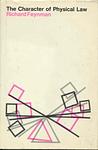
41. The Character Of Physical Law by Richard P. Feynman
"The Character of Physical Law" is a collection of lectures that explores the nature of the laws of physics. The book delves into the principles that govern the physical universe, discussing topics such as the relationship between mathematics and physics, the role of symmetry in physical laws, and the conservation principles that underpin the laws of nature. Through engaging and accessible language, the author provides insights into how physicists think about problems and develop theories, emphasizing the beauty and simplicity inherent in nature's laws. The work also reflects on the philosophical implications of scientific discoveries and the interconnectedness of various physical phenomena.
The 2601st Greatest Book of All TimePurchase from Bookshop.org -
42. Sociobiology by E. O. Wilson
The New Synthesis
"Sociobiology" is a comprehensive and scholarly work that explores the biological basis of social behavior in all species, including humans. The author weaves together findings from various fields such as ethology, anthropology, evolution, and genetics to propose a new discipline - sociobiology. He suggests that social behavior, including altruism, aggression, and nurturance, is not just a product of learning and environment, but also has a genetic basis. This work sparked considerable debate and controversy, particularly regarding its implications for human behavior and society.
The 2612th Greatest Book of All TimePurchase from Bookshop.org or Amazon -
43. Bureaucracy by Ludwig von Mises
The Classic Analysis of the Nature, Causes, and Effects of Governmental Bureaucracy
"Bureaucracy" is a critical examination of the structure and function of bureaucracies in both the public and private sectors. The author argues that bureaucratic management, with its focus on rules and regulations, is not only inefficient but also stifles innovation and individual initiative. He further contends that these problems are inherent in the nature of bureaucracy itself and are not simply due to poor management or corruption. The book also explores the impact of bureaucracy on economics, politics, and society as a whole.
The 2646th Greatest Book of All TimePurchase from Bookshop.org or Amazon -
44. On the Fabric of the Human Body by Andreas Vesalius
De Humani Corporis Fabrica Libri Septem
"On the Fabric of the Human Body" is a seminal work in the field of anatomy, providing detailed descriptions and illustrations of the human body's structure and functions. The book, written in the 16th century, revolutionized the understanding of human anatomy, challenging the prevailing ideas of the time, which were primarily based on the dissection of animals. Its author, a physician and anatomist, emphasized the importance of direct observation and dissection of human bodies in medical education and research.
The 2690th Greatest Book of All TimePurchase from Bookshop.org or Amazon -
45. Chaos by James Gleick
Making a New Science
This book delves into the complex world of chaos theory, a branch of mathematics that studies the behavior of dynamic systems highly sensitive to initial conditions, often referred to as the butterfly effect. Through engaging storytelling, the narrative explores the pioneering work of scientists who uncovered patterns in what seemed to be randomness, from weather systems to population growth. It charts the evolution of chaos theory from a scientific curiosity to a field that has profound implications across disciplines, offering insights into the inherent unpredictability of nature and the universe. The book makes a compelling case for the beauty and universality of chaos, transforming how we understand the interconnectedness of the world around us.
The 2713th Greatest Book of All TimePurchase from Bookshop.org or Amazon -
46. The Crisis of European Sciences and Transcendental Phenomenology by Edmund Husserl
An Introduction to Phenomenological Philosophy
This book is a philosophical work that explores the crisis facing the sciences in Europe, arguing that this crisis stems from the disregard for transcendental phenomenology. The author asserts that the sciences have lost their grounding in the world of lived experience and have become too abstract and disconnected from human life, leading to a crisis of meaning. He proposes a return to the "lifeworld" and a recentering of science on human experience, using the methods of phenomenology to uncover the essential structures of consciousness and the world.
The 2772nd Greatest Book of All TimePurchase from Bookshop.org or Amazon -
47. The Dancing Wu Li Masters by Gary Zukav
An Overview of the New Physics
"The Dancing Wu Li Masters" is a book that explores the concepts of quantum physics and relativity in an accessible way for non-scientists. The author uses metaphors and analogies, drawing on Eastern philosophies and spiritual concepts to explain complex scientific theories. The book delves into topics such as the nature of reality, the relationship between observer and observed, and the interconnectedness of all things, aiming to bridge the gap between science and spirituality.
The 2778th Greatest Book of All TimePurchase from Bookshop.org or Amazon -
48. The Way the World Works by Jude Wanniski
How Economies Fail—and Succeed
"The Way the World Works" is an in-depth exploration of political economy, presenting an argument for supply-side economics. The author suggests that economic growth is primarily influenced by the reduction of barriers in production, including lower tax rates. The book presents historical examples to support this theory, arguing that government intervention often leads to economic instability. This text is considered a fundamental work in supply-side economics and has had a significant influence on economic policy discussions.
The 2841st Greatest Book of All TimePurchase from Amazon -
49. Consciousness Explained by Daniel Dennett
The book in question offers a comprehensive theory of consciousness, challenging traditional views and proposing a scientific understanding of the mind. The author argues against the Cartesian model of consciousness as a central, unified entity and instead presents the "Multiple Drafts" model, which posits that consciousness arises from various cognitive processes occurring in parallel. The work delves into the nature of perception, memory, and language, employing insights from psychology, neuroscience, and artificial intelligence to explain how complex phenomena such as self-awareness and intentionality can emerge from the interactions of non-conscious brain functions. The book is both a critique of outdated philosophical ideas about the mind and an attempt to clarify how consciousness can be studied and understood through empirical means.
The 2860th Greatest Book of All TimePurchase from Bookshop.org or Amazon -
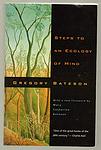
50. Steps To An Ecology Of Mind by Gregory Bateson
Collected Essays in Anthropology, Psychiatry, Evolution, and Epistemology
The book in question is a seminal collection of essays and lectures that delve into the interconnectedness of biological, psychological, and sociological systems. The author, an anthropologist and cybernetic theorist, explores the concept of the mind as a fundamental element of the larger ecological system, challenging traditional boundaries between individual and environment. Through a series of interdisciplinary discussions, the work examines patterns of communication, the nature of learning and adaptation, and the importance of understanding the complex relationships that underpin the functioning of ecosystems, societies, and individuals. The author's innovative ideas encourage readers to reconceptualize the way they think about the world, emphasizing the necessity of a holistic approach to solving the myriad of problems facing humanity.
The 3031st Greatest Book of All TimePurchase from Bookshop.org or Amazon








Reading Statistics
Click the button below to see how many of these books you've read!
Download
If you're interested in downloading this list as a CSV file for use in a spreadsheet application, you can easily do so by clicking the button below. Please note that to ensure a manageable file size and faster download, the CSV will include details for only the first 500 books.
DownloadTo download this list as a CSV file, please log in to your account. Once logged in, you'll be able to download the data for use in spreadsheet applications.
Login to Download