The Greatest Books of All Time on Knowledge
Click to learn how this list is calculated.
This list represents a comprehensive and trusted collection of the greatest books. Developed through a specialized algorithm, it brings together 759 'best of' book lists to form a definitive guide to the world's most acclaimed books. For those interested in how these books are chosen, additional details can be found on the rankings page.
What should I read next?
Get personalized book recommendations based on your reading history and preferences. Our algorithm analyzes your favorite books and reading patterns to suggest your next great read.
Get RecommendationsGenres
Countries
Date Range
Filter books by their publication year. Enter the earliest year (Start) and latest year (End) to find books published within that period. Leave either field empty to search from the beginning of time or up to the present day.
Reading Statistics
Click the button below to see how many of these books you've read!
Download
If you're interested in downloading this list as a CSV file for use in a spreadsheet application, you can easily do so by clicking the button below. Please note that to ensure a manageable file size and faster download, the CSV will include details for only the first 500 books.
DownloadTo download this list as a CSV file, please log in to your account. Once logged in, you'll be able to download the data for use in spreadsheet applications.
Login to Download-
76. The Ascent Of Man by Jacob Bronowski
A Personal View
This book is a profound exploration of the development of human society through its intellectual and technological advancements. It traces the journey of humanity from its primitive origins to the heights of scientific achievement, arguing that the progress of civilization is deeply intertwined with our capacity for understanding and manipulating the natural world. Through a series of thought-provoking essays, the work delves into the milestones of human invention and discovery, from the mastery of fire to the breakthroughs of quantum physics, emphasizing the role of creativity and scientific inquiry as the driving forces behind human evolution. The narrative not only celebrates the triumphs of the human intellect but also reflects on the moral and ethical responsibilities that come with knowledge, presenting a compelling case for the pursuit of wisdom as the foundation of a humane and progressive society.
The 10286th Greatest Book of All TimePurchase from Bookshop.org or Amazon -
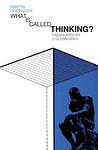
77. What Is Called Thinking? by Martin Heidegger
The book explores the nature of thought and understanding, delving into the essence of what it means to think. The author challenges the traditional views of thinking as mere cognition or problem-solving, proposing instead that true thinking is a profound engagement with being itself. Through a detailed examination of the works of philosophers, poets, and other thinkers, the text invites readers to reconsider the relationship between thought, language, and the essence of humanity, emphasizing the need for authenticity in the process of thinking and the transformative potential it holds for understanding our existence.
The 10308th Greatest Book of All TimePurchase from Bookshop.org or Amazon -
78. A Treatise Concerning the Principles of Human Knowledge by George Berkeley
Wherein the chief causes of error and difficulty in the Sciences, with the grounds of Scepticism, Atheism, and Irreligion, are inquired into
This philosophical work challenges the idea of materialism, arguing that objects only exist as a perception of the mind. The author asserts that we can only directly know sensations and ideas of objects, not the objects themselves. He also discusses the role of God, suggesting that our perceptions are dependent on the will of a higher power. The text is a significant contribution to the field of metaphysics and epistemology, offering a unique perspective on the nature of human knowledge and perception.
The 10633rd Greatest Book of All TimePurchase from Amazon -
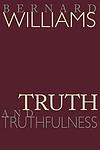
79. Truth And Truthfulness by Bernard Williams
An Essay in Genealogy
This philosophical work explores the importance of truth and the practice of truthfulness in society, arguing against the skepticism and relativism that question the value and possibility of truth. The author delves into the concepts of accuracy and sincerity, which he identifies as the two basic virtues of truth, and examines how these virtues are essential to human practices and institutions. Through a blend of historical analysis and philosophical inquiry, the book defends the indispensability of truth and truthfulness, while also acknowledging the challenges and complexities involved in upholding these ideals in the modern world. The author's insightful analysis aims to reconcile the demands of truth with the necessities of social cohesion, offering a compelling case for why truth and truthfulness matter profoundly in both personal and public life.
The 10739th Greatest Book of All TimePurchase from Amazon -
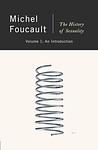
80. The History Of Sexuality by Michel Foucault
An Introduction
"The History of Sexuality" explores the complex relationship between power and sexual discourse, arguing that since the 17th century, Western societies have not repressed sexuality but rather incited it, making it an object of public discourse. The author examines how power operates through the production of knowledge about sex and uses this perspective to challenge the conventional narrative that society has been progressively liberating sexuality from repression. The book delves into the ways in which sexual norms and power relations are intertwined, suggesting that the discourse on sexuality is a tool of power used to regulate both individual bodies and entire populations.
The 10999th Greatest Book of All TimePurchase from Bookshop.org or Amazon -
81. Foundation's Edge by Isaac Asimov
In this science fiction novel, the protagonist, Golan Trevize, is sent on a quest to discover the origins of the Foundation, a society established to preserve knowledge and culture in the galaxy. Alongside a scholar, Janov Pelorat, and a telepathic woman, Bliss, Trevize's journey leads them beyond the boundaries of the known galaxy to two secretive worlds: Gaia, a planet with a collective consciousness, and Earth, the long-forgotten origin planet of humanity. The novel explores themes of free will versus determinism, the role of individuality within a collective society, and the search for a balanced path to galactic harmony, all while questioning the validity of the Seldon Plan, a predictive model for the future of civilization.
The 11177th Greatest Book of All TimePurchase from Bookshop.org or Amazon -
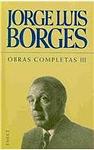
82. Complete Works by Jorge Luis Borges
This collection is a mesmerizing journey through the labyrinthine mind of a literary genius, offering a kaleidoscope of stories, essays, and poems that explore the nature of reality, identity, and the infinite. With a penchant for blending the fantastical with the philosophical, the works delve into themes of time, memory, and the universe, often blurring the lines between fiction and non-fiction. Each piece is a testament to the power of imagination, inviting readers to ponder the mysteries of existence and the complexities of human consciousness.
The 11365th Greatest Book of All TimePurchase from Bookshop.org or Amazon -
83. The Course in Positive Philosophy by Auguste Comte

"The Course in Positive Philosophy" is a philosophical work that introduces and elaborates on the concept of positivism, a belief system that emphasizes empirical science and factual knowledge. The author argues that society has passed through three stages: theological, metaphysical, and positive, with the positive stage being the most advanced and accurate. He asserts that all knowledge must come from observable phenomena and scientific inquiry, rejecting metaphysics and theology. The book is a cornerstone of modern sociology and philosophy, influencing many later thinkers.
The 11546th Greatest Book of All Time -
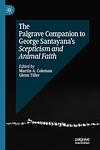
84. Scepticism and Animal Faith by George Santayana
Introduction to a System of Philosophy
"Scepticism and Animal Faith" is a philosophical work that presents the idea that knowledge is not found through evidence or reason, but through animal faith, a term referring to instinctive beliefs. The book delves into the nature of perception and consciousness, and argues that all human knowledge is grounded in unproven preconceptions. The author suggests that to understand the world, humans must first acknowledge their own preconceived notions and biases, and then attempt to understand the world through a lens of skepticism.
The 11571st Greatest Book of All TimePurchase from Amazon -
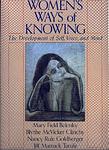
85. Women's Ways Of Knowing by Mary Field Belenky
The Development of Self, Voice, and Mind
This book explores the intellectual and emotional development of women, presenting a nuanced understanding of how women come to know and understand the world. It identifies five different perspectives from which women approach knowledge: silence, received knowledge, subjective knowledge, procedural knowledge, and constructed knowledge. Through interviews and research, the book delves into the ways in which women's experiences, particularly their educational and social experiences, shape their thought processes, self-perception, and the manner in which they assert their voices. It challenges traditional epistemologies and offers insight into the importance of context, relationships, and personal experience in the development of women's knowledge and self-identity.
The 11581st Greatest Book of All TimePurchase from Amazon -
86. Philosophical Explanations by Robert Nozick
"Philosophical Explanations" is a comprehensive work that delves into several core areas of philosophy, including metaphysics, epistemology, and ethics. The book challenges traditional philosophical methodologies and advocates for a new approach that emphasizes explanation over argument, theory, and proof. It explores profound questions about knowledge, free will, the nature of reality, and the meaning of life, offering innovative and thought-provoking perspectives. The author's style is notable for its clarity, depth, and a non-coercive mode of philosophy that invites readers to explore ideas rather than accepting them as absolute truths.
The 11662nd Greatest Book of All TimePurchase from Bookshop.org or Amazon -
87. Prelude To Foundation by Isaac Asimov
In this science fiction novel, a young mathematician arrives at the galactic empire's capital planet, hoping to present his revolutionary theory of psychohistory—a mathematical framework capable of predicting the future of large populations. While his ideas are initially met with skepticism, they soon attract the attention of the empire's political figures, who see potential for both control and upheaval. As the protagonist navigates the complex political landscape, he is pursued by various factions seeking to use his theory for their own ends. Along the way, he explores different cultures and subcultures of the sprawling empire, all while attempting to refine his nascent theory and understand the true implications of his work for the future of humanity.
The 12063rd Greatest Book of All TimePurchase from Bookshop.org or Amazon -
88. How We Think by John Dewey
A Restatement of the Relation of Reflective Thinking to the Educative Process
The book explores the process of thinking, emphasizing the importance of education in developing critical thinking skills. It delves into the relationship between thought and language, the role of experience in shaping thought, and the necessity of applying reflective thinking to education. The author argues for a more active, student-centered approach in schools, promoting inquiry and problem-solving to better prepare students for the demands of modern society. The work is both a philosophical treatise and a practical guide for educators seeking to implement more effective teaching methodologies.
The 12068th Greatest Book of All TimePurchase from Bookshop.org or Amazon -
89. The Day I Began My Studies In Philosophy by Margareta Ekström
"The Day I Began My Studies In Philosophy" is a reflective and introspective narrative that follows the protagonist's journey into the world of philosophy. As the character embarks on this intellectual pursuit, they encounter a myriad of philosophical concepts and thinkers that challenge their preconceived notions about life, existence, and the nature of knowledge. The book delves into the transformative impact that studying philosophy can have on an individual's perspective, prompting a deeper understanding of oneself and the complexities of the human condition. Through this exploration, the protagonist grapples with profound questions and the often bewildering yet enlightening path of philosophical inquiry.
The 12084th Greatest Book of All TimePurchase from Amazon -
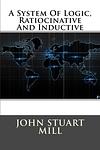
90. A System Of Logic by John Stuart Mill
Ratiocinative and Inductive
"A System of Logic" is a comprehensive treatise on the principles and methods of scientific reasoning. The book elaborates on the nature of logic and its relation to truth, knowledge, and human understanding. It systematically explores the process of human thought and the structure of logical argumentation, distinguishing between deductive and inductive reasoning. The work also discusses the application of logic to the natural and social sciences, emphasizing the importance of empirical evidence and the scientific method in establishing valid conclusions. Through its rigorous analysis, the book aims to lay the foundations for sound reasoning and empirical inquiry, influencing the development of modern logic and philosophy.
The 13362nd Greatest Book of All TimePurchase from Amazon -
91. Micromégas by Voltaire
A Philosophical History
"Micromégas" is a philosophical satire that tells the story of a giant from a planet circling the star Sirius, and his adventures traveling through the universe. Along with a companion from Saturn, who is also of considerable size though smaller than Micromégas, they visit Earth. Here, they interact with humanity, initially struggling to even perceive humans due to the vast difference in scale. The story explores themes of perspective, the relative nature of size and intelligence, and the limitations of human understanding. Through witty dialogue and ironic situations, the narrative critiques the arrogance and ignorance of human institutions and philosophies, highlighting the enlightenment ideals of reason and empirical knowledge.
The 13362nd Greatest Book of All TimePurchase from Amazon -
92. Papyrus by Irene Vallejo
The Invention of Books in the Ancient World
"Papyrus" by Irene Vallejo is a captivating exploration of the history of books and libraries in the ancient world. The narrative takes readers on a journey through significant historical moments and places, such as the battlefields of Alexander the Great, the eruptions of Mount Vesuvius, and the palaces of Cleopatra. Vallejo delves into the lives of those who played crucial roles in preserving literary traditions, including spies, scribes, librarians, and authors. The book highlights the timeless power of the written word and draws parallels between ancient and modern literary cultures, touching on themes like censorship, empowerment, and truth. Through vivid storytelling, Vallejo brings the wonder of the ancient world to life, celebrating the enduring legacy of books.
The 13591st Greatest Book of All TimePurchase from Bookshop.org or Amazon -
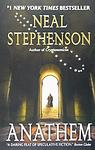
93. Anathem by Neal Stephenson
In a parallel world where intellectuals and scientists are cloistered in monastic communities called "concents," the story follows a young monk named Erasmas, who is drawn out of his secluded life by the discovery of an alien spacecraft orbiting his planet. As he and his companions are selected to interact with these extraterrestrial visitors, they are thrust into a complex web of political intrigue, philosophical debate, and existential risk. The narrative weaves together themes of mathematics, quantum mechanics, and multiple world theory, challenging the characters to question the nature of reality and their place within it as they strive to avert global catastrophe.
The 13765th Greatest Book of All TimePurchase from Amazon -
94. Second Foundation by Isaac Asimov
"Second Foundation" by Isaac Asimov is a science fiction novel set in a future galactic empire. The story follows a group of individuals who possess extraordinary mental abilities known as "psychohistory." As the empire crumbles, they work secretly to manipulate events and guide humanity towards a new era of peace. However, a dangerous adversary emerges, threatening to unravel their plans and plunge the galaxy into chaos. The novel delves into themes of power, control, and the unpredictable nature of human behavior.
The 13766th Greatest Book of All TimePurchase from Bookshop.org or Amazon -
95. A History Of Reading by Alberto Manguel
This book offers a captivating exploration of the evolution of reading throughout the centuries, tracing its transformation from a privileged art practiced by a select few to a widespread pastime enjoyed by many. The narrative delves into the intimate relationship between readers and texts, examining how reading practices have shaped human history, culture, and personal lives. Through a tapestry of anecdotes, analysis, and personal reflections, the work celebrates the reader's role in giving meaning to the written word and considers the future of reading in the digital age.
The 13939th Greatest Book of All TimePurchase from Amazon -
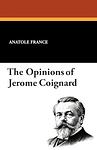
96. The Opinions Of Jerome Coignard by Anatole France
The Revolt of the Angels
This book presents a collection of philosophical and satirical essays that delve into the musings and reflections of the titular character, a learned but somewhat dissolute priest. Through his eyes, readers are treated to a critique of society, religion, and human nature, all conveyed with a blend of cynicism and humor. The character's erudition and wit make for engaging discourse on various subjects, from morality to the mundane, offering a rich tapestry of thoughts that mirror the complexities of life. The work stands as a testament to the author's skill in weaving together insightful commentary with entertaining narrative, inviting readers to ponder the deeper nuances of existence and belief.
The 14212th Greatest Book of All TimePurchase from Amazon -
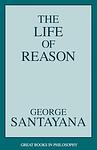
97. The Life Of Reason by George Santayana
The Phases of Human Progress
The book explores the development and application of human reason in various aspects of life, emphasizing the importance of rational thought in achieving a fulfilling and meaningful existence. It delves into the interplay between instinct, tradition, and intellect, arguing that reason is essential for progress and the cultivation of virtues. Through a philosophical lens, it examines how reason can guide individuals and societies toward greater harmony, creativity, and understanding, ultimately advocating for a balanced integration of rationality and human experience.
The 14410th Greatest Book of All TimePurchase from Amazon -
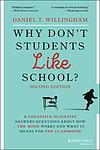
98. Why Don't Students Like School? by Daniel T. Willingham
A Cognitive Scientist Answers Questions About How the Mind Works and What It Means for the Classroom
This book delves into the cognitive science behind how students learn and why they often find school unengaging. It challenges educators to reconsider traditional teaching methods by presenting evidence-based insights into how the human brain works, learns, and retains information. The author, a cognitive scientist, uses accessible language to explain complex concepts and offers practical strategies for teachers to make learning more enjoyable and effective. By addressing common misconceptions about education and providing a deeper understanding of student motivation and thought processes, the book aims to transform classroom practices and enhance students' academic experiences.
The 14499th Greatest Book of All TimePurchase from Amazon -
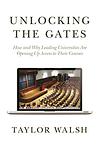
99. Unlocking The Gates by Taylor Walsh
How and Why Leading Universities Are Opening Up Access to Their Courses
This book explores the transformative journey of digital technology in the realm of higher education, particularly focusing on the rise of online learning platforms. It delves into the challenges and opportunities presented by the move towards open educational resources, examining case studies of pioneering institutions that have embraced these changes. The narrative critically assesses the impact of digital courses on traditional college education, questioning the sustainability of existing models and the potential for wider access to knowledge. Through a detailed analysis, the book offers insights into how the digital age is reshaping the landscape of education, highlighting the pivotal role of innovation in unlocking the gates to a more inclusive and flexible learning environment.
The 14554th Greatest Book of All TimePurchase from Amazon -
100. The Magic Of Reality by Richard Dawkins
How We Know What's Really True
This book is a fascinating exploration of the natural world, blending scientific rigor with the sheer wonder of discovery. It aims to demystify the universe by explaining phenomena that have long been shrouded in myth and superstition through the lens of science and reason. By examining a series of questions that have intrigued humans for centuries, the book systematically debunks myths and legends by presenting the scientific facts in a way that is accessible and engaging. Through this approach, it celebrates the beauty and complexity of the world, encouraging curiosity and a deeper understanding of reality as revealed through science.
The 14554th Greatest Book of All TimePurchase from Amazon










Reading Statistics
Click the button below to see how many of these books you've read!
Download
If you're interested in downloading this list as a CSV file for use in a spreadsheet application, you can easily do so by clicking the button below. Please note that to ensure a manageable file size and faster download, the CSV will include details for only the first 500 books.
DownloadTo download this list as a CSV file, please log in to your account. Once logged in, you'll be able to download the data for use in spreadsheet applications.
Login to Download