The Greatest Books of All Time on Science
Click to learn how this list is calculated.
This list represents a comprehensive and trusted collection of the greatest books. Developed through a specialized algorithm, it brings together 759 'best of' book lists to form a definitive guide to the world's most acclaimed books. For those interested in how these books are chosen, additional details can be found on the rankings page.
What should I read next?
Get personalized book recommendations based on your reading history and preferences. Our algorithm analyzes your favorite books and reading patterns to suggest your next great read.
Get RecommendationsGenres
The category of "Science" in books encompasses a wide range of topics related to the natural world, including physics, chemistry, biology, astronomy, and more. These books may explore scientific theories, discoveries, and advancements, as well as the history and philosophy of science. They may also cover practical applications of science, such as technology and medicine. Overall, the Science category offers readers a deeper understanding of the world around them and the scientific principles that govern it.
Countries
Date Range
Filter books by their publication year. Enter the earliest year (Start) and latest year (End) to find books published within that period. Leave either field empty to search from the beginning of time or up to the present day.
Reading Statistics
Click the button below to see how many of these books you've read!
Download
If you're interested in downloading this list as a CSV file for use in a spreadsheet application, you can easily do so by clicking the button below. Please note that to ensure a manageable file size and faster download, the CSV will include details for only the first 500 books.
DownloadTo download this list as a CSV file, please log in to your account. Once logged in, you'll be able to download the data for use in spreadsheet applications.
Login to Download-
51. An Essay Concerning Human Understanding by John Locke
In Four Books
This philosophical work explores the concept of human understanding, proposing that all knowledge is derived from experience. The author argues against innate ideas, suggesting instead that the mind is a blank slate at birth, filled over time through sensory and reflective experiences. The book covers a wide range of topics, including language, memory, identity, and the limits of human knowledge, and is considered a foundational text in empiricism.
The 1327th Greatest Book of All TimePurchase from Bookshop.org or Amazon -
52. The Principles of Psychology by William James
This comprehensive work delves into the complex subject of psychology and its fundamental principles. The author explores a wide range of topics including the functions of the brain, habits, the stream of consciousness, the self, attention, memory, and emotions. He combines philosophy and psychology to present a detailed analysis of human behavior and thought processes. The book is considered a classic in the field of psychology and continues to influence modern psychological theory.
The 1342nd Greatest Book of All TimePurchase from Bookshop.org or Amazon -
53. The Andromeda Strain by Michael Crichton
In "The Andromeda Strain," a team of scientists investigates a deadly extraterrestrial microorganism that has wiped out an entire town. As they race against time to understand and contain the mysterious organism, they must navigate through various obstacles, including the threat of a potential outbreak and their own internal conflicts. With a blend of science, suspense, and government secrecy, this thrilling techno-thriller keeps readers on the edge of their seats until the very end.
The 1352nd Greatest Book of All TimePurchase from Bookshop.org or Amazon -
54. Guns, Germs, and Steel by Jared Diamond
The Fates of Human Societies
The book is a comprehensive exploration of the different trajectories of human societies throughout history. It argues that environmental factors, rather than racial or cultural differences, are the primary reason why some societies developed more advanced technology and political systems. The author uses a multidisciplinary approach, drawing from fields such as geography, evolutionary biology, and linguistics, to support his thesis. The book covers a wide range of topics, including the domestication of plants and animals, the invention of writing, and the spread of diseases.
The 1384th Greatest Book of All TimePurchase from Bookshop.org or Amazon -
55. Gödel, Escher, Bach by Douglas Hofstadter
An Eternal Golden Braid
The book explores concepts of formal systems, recursion, self-reference, and infinity through the interdisciplinary lens of mathematics, art, and music. The narrative intertwines biographical sketches of the titular figures - a mathematician, an artist, and a composer - with dialogues and discussions to illustrate complex ideas. The author uses these figures as metaphors to delve into the nature of human cognition and consciousness, suggesting that our minds are essentially self-referential systems akin to the works of Gödel, Escher, and Bach.
The 1387th Greatest Book of All TimePurchase from Bookshop.org or Amazon -
56. All the Light We Cannot See by Anthony Doerr
Set during the turmoil of World War II, the novel follows the intersecting lives of a blind French girl and a German boy. The girl, living in occupied France, seeks solace in the world of books and the imagination, while the boy, a member of Hitler Youth, is a radio operator for the German forces. Their paths cross in the walled city of Saint-Malo, with the narrative exploring themes of survival, morality, and the human spirit.
The 1413th Greatest Book of All TimePurchase from Bookshop.org or Amazon -
57. Aphorisms by Georg Christoph Lichtenberg
This collection of sharp and witty aphorisms offers a profound exploration of human nature, society, and the intricacies of everyday life. Through concise and thought-provoking statements, the author delves into the complexities of human behavior, often with a touch of irony and humor. The work reflects on themes such as the folly of human vanity, the paradoxes of knowledge, and the absurdities of social conventions, inviting readers to question their own beliefs and assumptions. Each aphorism serves as a mirror, reflecting the timeless truths and contradictions inherent in the human condition.
The 1429th Greatest Book of All TimePurchase from Bookshop.org or Amazon -
58. Mason & Dixon by Thomas Pynchon
"Mason & Dixon" is a postmodern historical novel which follows the story of the 18th-century British astronomers and surveyors Charles Mason and Jeremiah Dixon, who are known for the Mason-Dixon line. The novel is written in a complex, digressive style, and it includes numerous sub-plots and a wide range of themes. It explores the scientific, philosophical, and sociopolitical issues of the Enlightenment era, as well as the personal lives and friendship of the two title characters.
The 1443rd Greatest Book of All TimePurchase from Bookshop.org or Amazon -
59. Flights by Olga Tokarczuk
"Flights" is a fragmented and philosophical novel that explores the theme of travel and movement. Through a series of interconnected stories and reflections, the book delves into the nature of human existence, the complexities of modern life, and the desire for freedom and escape. With its poetic language and unconventional structure, "Flights" invites readers to contemplate the transient nature of time, the significance of journeys, and the search for meaning in a world constantly in motion.
The 1456th Greatest Book of All TimePurchase from Bookshop.org or Amazon -
60. Chaos by James Gleick
Making a New Science
This book delves into the complex world of chaos theory, a branch of mathematics that studies the behavior of dynamic systems highly sensitive to initial conditions, often referred to as the butterfly effect. Through engaging storytelling, the narrative explores the pioneering work of scientists who uncovered patterns in what seemed to be randomness, from weather systems to population growth. It charts the evolution of chaos theory from a scientific curiosity to a field that has profound implications across disciplines, offering insights into the inherent unpredictability of nature and the universe. The book makes a compelling case for the beauty and universality of chaos, transforming how we understand the interconnectedness of the world around us.
The 1474th Greatest Book of All TimePurchase from Bookshop.org or Amazon -
61. Flatland by Edwin A. Abbott
A Romance of Many Dimensions
This novel is a satirical critique of Victorian society told through a two-dimensional world known as Flatland, inhabited by geometric figures. The protagonist, a square, guides the reader through his society, explaining its rigid class structure, before being visited by a three-dimensional sphere. The sphere introduces him to the concept of the third dimension, challenging the Square's understanding of his own world. The story then explores themes of perception, dimensions, and the limitations of understanding and knowledge.
The 1476th Greatest Book of All TimePurchase from Bookshop.org or Amazon -
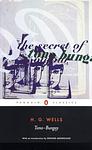
62. Tono Bungay by H. G. Wells
An Experiment in Autobiography
This novel is a satirical narrative that delves into the life of George Ponderevo, who is swept into the world of late Victorian commerce and invention through his uncle's creation of a questionable medicine, Tono-Bungay. The story, narrated by George himself, explores themes of ambition, social climbing, and the hollow nature of financial success. As George rises to wealth through the marketing of this essentially worthless tonic, the novel critiques the capitalist society that enables such dubious enterprises to flourish. Through its exploration of personal and societal moral dilemmas, the narrative presents a vivid depiction of the era's social stratifications and the illusions of grandeur that often accompany the pursuit of wealth.
The 1483rd Greatest Book of All TimePurchase from Bookshop.org or Amazon -
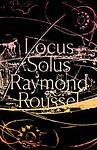
63. Locus Solus by Raymond Roussel
"Locus Solus" is an avant-garde novel that revolves around the eccentric millionaire inventor, Canterel, who invites a group of guests to visit his estate, Locus Solus. Here, he displays a series of bizarre inventions, each with a detailed backstory. The inventions include a diamond-encrusted machine that constructs intricate mosaics using human teeth, a large glass cage filled with preserved human heads that reenact key moments from their lives, and a device that uses preserved body parts to perform a grotesque ballet. The narrative is heavily detailed and surreal, creating a unique and intriguing exploration of art, life, and the human condition.
The 1486th Greatest Book of All TimePurchase from Bookshop.org or Amazon -
64. Pilgrim at Tinker Creek by Annie Dillard
This book is a personal narrative of the author's explorations near her home at Tinker Creek in Virginia's Blue Ridge Mountains. The narrative is filled with detailed observations on nature and philosophical musings. It reflects on themes of solitude, the presence of God in nature, and the interconnectedness of life. The author's deep reflections and contemplations about the mysteries and beauty of the world make it a profound meditation on the natural world.
The 1557th Greatest Book of All TimePurchase from Bookshop.org or Amazon -
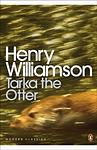
65. Tarka the Otter by Henry Williamson
His Joyful Water-Life and Death in the Country of the Two Rivers
"Tarka the Otter" is a novel that follows the life of an otter, Tarka, in the wild. The story is set in North Devon, England and provides a detailed account of Tarka's experiences, from his birth to his eventual death, exploring his interactions with other animals, his struggles for survival, and his encounters with humans. The narrative is noted for its vivid and realistic descriptions of wildlife and the natural world.
The 1589th Greatest Book of All TimePurchase from Bookshop.org or Amazon -
66. Point Counter Point by Aldous Huxley
"Point Counter Point" is a satirical novel that explores the dilemmas of a group of intellectuals living in 1920s London. The narrative delves into their personal lives, affairs, and philosophical debates, presenting a vivid portrait of post-World War I society. The characters' diverse viewpoints on science, art, religion, and politics reflect the cultural and ideological conflicts of the time, with the author skillfully interweaving their stories to create a complex, multi-layered narrative. The novel is notable for its experimental structure, which mirrors the form of a musical counterpoint, with multiple plot lines unfolding simultaneously.
The 1629th Greatest Book of All TimePurchase from Bookshop.org or Amazon -
67. Arrowsmith by Sinclair Lewis
The novel follows the life of a bright and dedicated young man, Martin Arrowsmith, who dreams of making significant contributions to medical science. He faces a constant struggle between his ambition and the demands of his professional and personal life. His journey takes him from a small Midwestern town to the prestigious universities of the East Coast, and eventually to a deadly outbreak in the Caribbean. Throughout his journey, he grapples with the corruption, greed, and mediocrity that he finds pervading the medical field, all while trying to remain true to his scientific ideals.
The 1656th Greatest Book of All TimePurchase from Bookshop.org or Amazon -
68. The Waste Books by Georg Christoph Lichtenberg
"Sudelbücher" is a collection of thoughts, observations, and philosophical reflections by a prominent German satirist. The book is a compilation of his personal notebooks, where he jotted down everything from scientific observations to social commentary and personal introspection. The author's unique perspective and witty voice provide a fascinating glimpse into the mind of an 18th-century scholar, making this book an important piece of German literature and Enlightenment thought.
The 1660th Greatest Book of All TimePurchase from Bookshop.org or Amazon -
69. Stories of Your Life and Others by Ted Chiang
"Stories of Your Life and Others" is a collection of science fiction short stories that explore complex scientific and philosophical concepts. Each story delves into unique themes such as the nature of time, the basis of knowledge, and the human capacity for love. The most notable story in the collection involves a linguist who learns an alien language that reshapes her perception of time, which was later adapted into a major motion picture. The book is renowned for its intellectual depth, emotional resonance, and masterful storytelling.
The 1698th Greatest Book of All TimePurchase from Bookshop.org or Amazon -
70. The Principia Mathematica by Alfred North Whitehead, Bertrand Russell
Mathematical Logic
The Principia Mathematica is a three-volume work on the foundations of mathematics, written with the goal of deriving all mathematical truths from a well-defined set of axioms and inference rules in symbolic logic. The authors aim to show that mathematics is a development of logic and avoid any hidden assumptions. The work covers topics like class theory, relation theory, and quantity theory, and it is known for its rigorous and meticulous approach.
The 1706th Greatest Book of All TimePurchase from Bookshop.org or Amazon -
71. The Voyage of the Beagle by Charles Darwin
Journal of Researches into the Natural History and Geology of the Countries Visited during the Voyage of H.M.S. Beagle Round the World
This book is a vivid and exciting travel memoir as well as a detailed scientific field journal covering biology, geology, and anthropology that demonstrates the author’s keen powers of observation, written at a time when Western Europeans were still discovering and exploring much of the rest of the world. The author's five-year journey took him from the coasts of South America, Australia, and Africa to the South Pacific islands, during which he collected and documented the natural history of these areas. The voyage and the specimens he brought back would later form the basis for his famous theory of evolution.
The 1727th Greatest Book of All TimePurchase from Bookshop.org or Amazon -
72. First Circle by Aleksandr Solzhenitsyn
"First Circle" is a gripping narrative set in a Soviet Union labor camp during the Stalin era, where the prisoners are intellectuals and scientists. The story revolves around these individuals who, despite their grim circumstances, engage in political and philosophical debates, striving to maintain their dignity and humanity. The novel explores themes of morality, corruption, and the human spirit, providing a vivid and harrowing depiction of life under Stalinist rule.
The 1749th Greatest Book of All TimePurchase from Bookshop.org or Amazon -
73. The Making of the Atomic Bomb by Richard Rhodes
This comprehensive book provides an in-depth account of the development of the atomic bomb during World War II. It explores the scientific advancements that made the bomb possible, the political decisions that led to its creation, and the moral dilemmas faced by the scientists involved. The book also details the personalities of key figures in the Manhattan Project, the effects of the bomb on Hiroshima and Nagasaki, and the impact of nuclear weapons on the world.
The 1750th Greatest Book of All TimePurchase from Bookshop.org or Amazon -
74. Farthest North by Fridtjof Nansen
Being the Record of a Voyage of Exploration of the Ship 'Fram' 1893-96 and of a Fifteen Months' Sleigh Journey by Dr. Nansen and Lieut. Johansen
"Farthest North" is a riveting firsthand account of a polar expedition undertaken in the late 19th century. The author, a Norwegian explorer, recounts his daring attempt to reach the North Pole by allowing his specially designed ship to be frozen into the Arctic ice and carried by the drift. The narrative includes fascinating descriptions of the Arctic environment, thrilling tales of survival against harsh conditions, and scientific observations. The expedition, although it did not reach the North Pole, achieved the highest latitude to that date and contributed significantly to Arctic exploration.
The 1786th Greatest Book of All TimePurchase from Bookshop.org or Amazon -
75. Kallocain by Karin Boye
This dystopian novel presents a totalitarian world where the government exercises complete control over its citizens' lives, even their thoughts. The protagonist, a loyal soldier, invents a truth serum named Kallocain, which the government uses to extract citizens' innermost secrets. As the story unfolds, the protagonist begins to question the morality of his invention and the regime he serves, leading to a deep personal crisis. The book explores themes of individual freedom, privacy, and the dehumanizing effects of totalitarianism.
The 1802nd Greatest Book of All TimePurchase from Bookshop.org or Amazon





Reading Statistics
Click the button below to see how many of these books you've read!
Download
If you're interested in downloading this list as a CSV file for use in a spreadsheet application, you can easily do so by clicking the button below. Please note that to ensure a manageable file size and faster download, the CSV will include details for only the first 500 books.
DownloadTo download this list as a CSV file, please log in to your account. Once logged in, you'll be able to download the data for use in spreadsheet applications.
Login to Download